
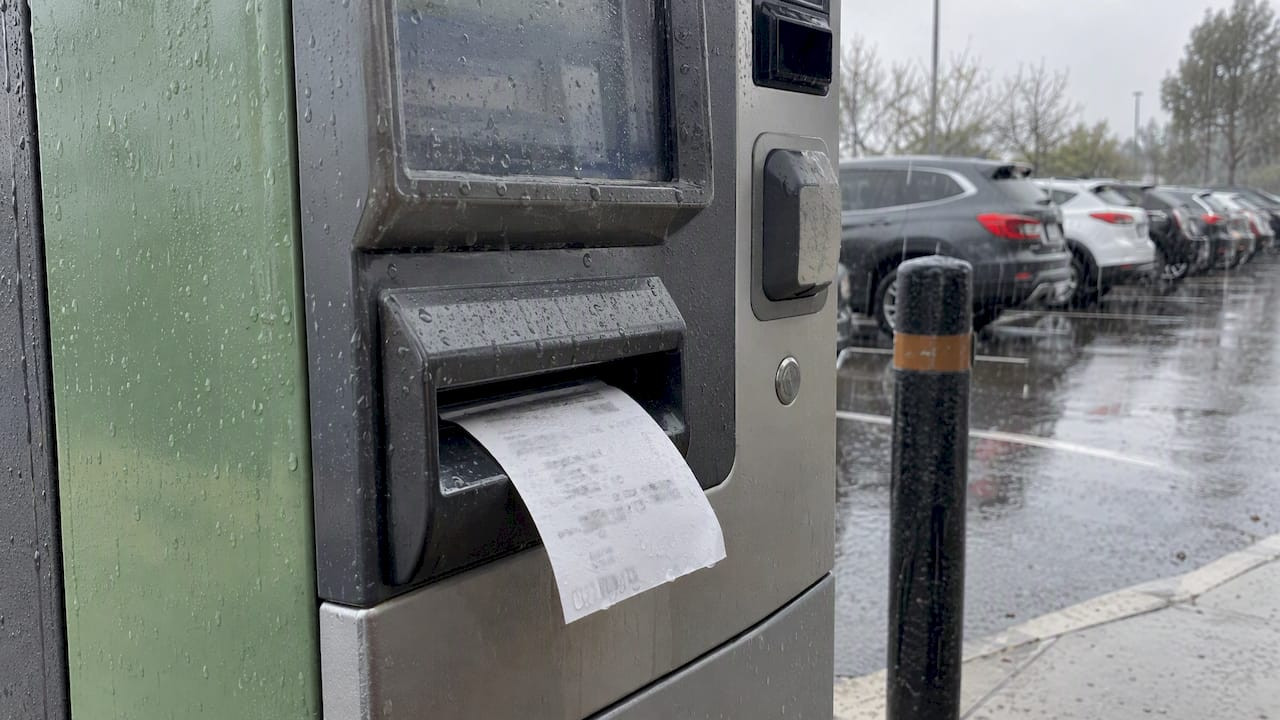
Ticket Paper and Moisture: Protecting Parking Tickets

Moisture affects ticket paper in two ways. Humid air makes paper swell, which causes jams and skewed prints. Liquid water and damp storage degrade the thermal coating, so printing fades or never appears. Both problems are preventable. The fix usually comes down to three choices: the right paper grade for the environment, disciplined storage, and a ticket format that matches how the ticket is issued and handled.
This guide is written for parking operators, valet companies, hotel and casino parking managers, and venue teams. It covers what moisture does to paper, how to tell a paper problem from a printer problem, and how to choose and store stock.
TL;DR
- Paper is hygroscopic. It absorbs and releases moisture, so humidity changes its dimensions and its behavior in a printer or kiosk.
- Thermal stock should be stored at roughly 40% to 60% relative humidity and between 18 °C and 25 °C (64 °F to 77 °F), per one major thermal paper manufacturer.
- Many “printer” jams in humid climates are really paper problems. Check the paper grade and the kiosk environment before replacing hardware.
- Outdoor lanes call for topcoated, moisture-barrier thermal paper. Valet ticketing in rain is often better served by carbonless multi-part stock.
- Treat thermal prints as temporary. Keep a separate plan for records you must retain.
Table of Contents
- What moisture does to ticket paper
- Thermal paper and moisture: why it fades
- Is it the paper or the printer?
- Choosing ticket paper for wet and humid conditions
- How to store ticket stock
- Protecting the kiosk environment
- Keeping records when thermal paper will not last
- Why paper tickets still matter
- Our perspective: match the paper to the weather
- Get tickets matched to your lanes
- FAQ
- Sources
What moisture does to ticket paper
Paper is made of cellulose fibers, and cellulose takes on water from the air. As it does, the fibers swell and the sheet or roll changes size. As it dries, it shrinks. Kiosk equipment specialists describe this directly: in high humidity a paper roll swells and buckles, raising friction and causing mechanical jams. In low humidity, typically below 40% relative humidity, static builds up and causes feeding failures.
For an operator, that translates into four visible symptoms:
- Jams and skew. A roll that has grown slightly in diameter rubs against its holder and the feed path. The feed mechanism was calibrated for dry paper.
- Curling and cockle. Cut tickets and fan-fold stacks wave or curl, so they feed unevenly or stack poorly in a dispenser.
- Weak or missing print. Thermal coatings react to heat. Damp, warm, or poorly stored paper can lose contrast before it is ever used.
- Smearing and bleed. On uncoated stock, liquid water can run the print or soak the ticket until it tears at the perforation.
The same source notes that a change of only about 10 points in humidity can be enough to cause serious registration problems in precision printing. A garage that swings from an air-conditioned office to a humid ramp will see that kind of range.
Thermal paper and moisture: why it fades
Thermal tickets carry no ink. A heat-sensitive layer darkens where the print head heats it. That chemistry is the reason thermal stock is fast and cheap to run in a gate or kiosk, and also the reason it is sensitive to its surroundings.
The Mitsubishi Paper product information sheet says unprinted thermal paper should be stored at 18 °C to 25 °C and 40% to 60% relative humidity. It also states a guaranteed shelf life of three years under those conditions for unprinted paper. Above roughly 40 °C or 65% relative humidity, the thermal function can be adversely affected.
Two practical points follow:
- Damage can happen before the roll is loaded. A pallet stored in a damp loading dock or a hot storage room can underperform on day one.
- A topcoat matters. A thermal paper guide from Brother explains that a top coating over the dye layer protects it from damage during handling. Uncoated grades are more exposed to moisture, oils and abrasion.
Operators who run outdoor kiosks should pay particular attention. According to one parking equipment resource, using indoor-grade, non-topcoated thermal paper in outdoor kiosks exposed to heat, moisture and UV is a leading cause of recurring failures and maintenance cost. Moving to a topcoated, moisture-barrier grade is a low-cost change compared with service calls.
Is it the paper or the printer?
When tickets skew, jam, or cut erratically, the first instinct is to blame the printer. That is sometimes right and often wrong.
A field example from System Scale describes recurring ticket printer jams in kiosks in the Baton Rouge area, a humid Gulf Coast climate. The lesson the technicians drew is that the paper’s physical state changes in moist air, and stabilizing the conditions inside the kiosk can remove the jams without replacing the printer. Heaters and desiccant packs are the common tools.

There is a second suspect that looks nearly the same. According to the same kiosk specialist, feed rollers often lose their grip after about 50,000 to 100,000 print cycles, and worn rollers produce skewed tickets and erratic cuts, just like moisture does.
Use this quick diagnostic before you spend money:
| Observation | Likely cause | First action |
|---|---|---|
| Jams cluster in rainy or humid weeks, then ease | Swollen paper | Check storage and paper grade, add desiccant or a heater in the enclosure |
| Jams worse on dry winter mornings, paper clings or sticks | Static | Raise humidity near the printer if possible, limit paper load, fan stacks |
| Jams steadily increase regardless of weather, high volume lane | Worn feed rollers | Inspect and replace rollers on a schedule |
| Print is pale across the whole ticket | Heat or damp damage to coating, or wrong paper grade | Check stock age, storage, and grade |
| Print is pale on one side only | Print head or pressure problem | Clean or service the head |
For static in dry conditions, one printer support portal notes that static problems are often caused by dry environments. It suggests fanning the stack before loading and limiting the tray load to around 6 to 10 sheets to reduce contact friction. That advice is aimed at sheet-fed transfer printers, so apply it to cut-sheet loads rather than continuous rolls.
Choosing ticket paper for wet and humid conditions
There is no single best ticket paper. The right choice depends on how the ticket is issued, where it is handled, and how long it must last.
Topcoated thermal rolls for kiosks and gates
For machine-issued tickets in outdoor lanes, topcoated thermal stock is the baseline. Some products use a polypropylene film for greater water resistance. Manufacturers of parking stock list topcoat, non-topcoat and polypropylene options, and heavier stock holds up better to folding and tearing in a driver’s hand. Match the paper to your printer’s sensor requirements, since some gates read a black mark or notch on the back.
Carbonless multi-part tickets for valet
Valet tickets are handled by attendants, tucked in a visor, and sometimes carried in the rain. Because carbonless multi-part forms are printed by pressure rather than heat, they do not depend on a heat-reactive coating. They still benefit from dry storage and a sturdy stock, and the guest’s copy should be thick enough to survive a pocket or a wet hand. Options include 2-part, 3-part and 4-part valet tickets, and the part count depends on how many copies your process needs: guest, key tag, vehicle, and office.
Barcoded and magnetic stripe tickets
Barcodes need clean contrast, and moisture reduces it. If a barcode must scan after a wet ramp or a rain shower, specify stock that holds its contrast, and test a sample in your own scanners. See our barcoded valet tickets for an example of a format built for scanning.
Machine-issued and dispenser tickets
Dispenser (“spitter”) tickets are pulled through a mechanism that depends on consistent paper dimensions. This makes humidity control more important than for hand-written forms. Our dispenser and spitter tickets and machine-issued valet tickets are made for common parking systems.
If you want a wider comparison of stock types, our guides to parking ticket paper and what really lasts and parking ticket material options go deeper.
How to store ticket stock
Storage is the cheapest protection you have. A few rules cover most of it:
- Aim for the manufacturer’s range. Thermal makers specify about 40% to 60% relative humidity and 18 °C to 25 °C. Our own storage guidance for ticket stock targets 23±5 °C and 50±10% RH with first-in, first-out rotation.
- Keep paper in its original packaging until use. Wrapping is a moisture and dust barrier. Open only the roll or box you will load.
- Stay off the floor and away from exterior walls. Concrete floors and uninsulated walls pull in damp.
- Avoid heat and sunlight. Thermal paper suppliers advise avoiding direct sunlight and hot, humid areas, since all papers yellow with time and light exposure.
- Do not leave tickets inside idle printers. A ticket printer maintenance guide warns seasonal businesses not to store tickets in printers during the off season.
- Rotate stock. Use the oldest paper first so you stay inside the shelf life.
- Let paper acclimate. Stock moved from a cold or humid room into a warm printer room should sit in its wrapping for a while before loading, so it equalizes with the room.
For a longer operational checklist, see our guide on how to stop thermal ticket fading.
Protecting the kiosk environment
When paper is right and storage is right but humidity is still the issue, address the enclosure:
- Add desiccant packs inside the printer compartment and replace them on a schedule.
- Install a small enclosure heater or thermostat-controlled heater to keep the compartment above the dew point. Confirm the equipment manufacturer approves it.
- Seal gaps and door gaskets to reduce the amount of humid air entering.
- Inspect the paper path for residue or paper dust that adds friction.
- Schedule roller replacement based on your cycle counts, not waiting for failure.
- Log jams by date and weather. A simple log shows whether the problem tracks humidity or wear.
If you are evaluating the durability of paper tickets handed to drivers, our article on garage parking ticket durability adds field tips.
Keeping records when thermal paper will not last
A moisture-protected thermal ticket still fades eventually. Heat, light and handling all play a part. The Mitsubishi information sheet says properly stored imaged thermal paper may remain legible up to ten years, but that is a best case, not a plan.
Record-keeping institutions take a stricter view. A guidance document from the National Archives of Australia treats thermal paper as unsuitable for permanent records. If you must retain proof of payment, validations or audit data, scan or photocopy the originals onto archival-grade paper, or capture the data electronically at the point of sale.
The retention rules differ by country and industry, so confirm requirements with your accountant or counsel. For a sense of how a hospitality business thinks about this problem, this German-language guide on hotel document archiving covers record retention for Austrian hotels. The legal specifics are Austrian, but the practical idea carries over: decide what must be kept, for how long, and in what format.
If your audits rely on tickets, see our guide to parking facility audits using tickets.

Why paper tickets still matter
Mobile delivery has taken over much event ticketing. Ticketmaster’s help center describes mobile entry as its main delivery option, and notes that some venues, such as MetLife Stadium for NY Giants games, no longer accept printed tickets. That is entry ticketing, though. Parking lanes, valet stands, coat checks, bell desks and validation still depend on physical tickets, because attendants and drivers need something to hand over and match to a vehicle or item. That is where paper quality and moisture resistance decide whether the process works on a rainy Saturday night.
Our perspective: match the paper to the weather
We have printed tickets for parking, valet, hotel and casino operators since 1937, and the moisture complaints we hear follow a pattern. Operators rarely think about paper until it fails, and then they replace the wrong part. In our experience, the paper decision should be made like any other equipment decision: look at the environment first.
Three habits separate operations that rarely have problems from those that fight them every summer:
- They specify the grade, not just the size. A topcoated, moisture-resistant roll for the outdoor lane and a standard grade for the indoor office are different purchases.
- They store paper like inventory. A shelf, a thermometer-hygrometer and first-in, first-out rotation cost very little.
- They test before ordering volume. A small sample run in the real lane, in the real weather, tells you more than a spec sheet.
For valet, we often suggest carbonless multi-part tickets, because the process is handled outdoors by people, not just by machines. For machine-issued formats, we make tickets compatible with systems such as Amano, TIBA, SKIDATA, FLASH Parking, Scheidt & Bachmann and Flowbird. Whatever you choose, confirm printer and sensor compatibility with a sample before you commit to a large order.
— Richard
Get tickets matched to your lanes
Caymil supplies stock and custom parking, valet and event tickets, with options for sequential numbering, barcoding, logos, security features and multi-part carbonless formats. Millions of tickets are in stock for fast nationwide shipping. Browse valet tickets, dispenser tickets and ticket racks, or start at caymil.com to request custom parking tickets sized for your equipment.
FAQ
How does humidity affect ticket paper?
Paper absorbs moisture from the air, so it swells in humid conditions and shrinks as it dries. In a printer or kiosk, that causes friction, buckling and jams. Very dry air has its own problem: static, which causes feeding failures.
What humidity should thermal ticket paper be stored at?
Manufacturers recommend about 40% to 60% relative humidity and 18 °C to 25 °C (64 °F to 77 °F) for unprinted thermal paper. Storage above about 65% relative humidity or 40 °C can harm the thermal coating. Keep rolls in their original wrapping until use.
Is thermal paper waterproof?
Not by default. Standard thermal paper can be damaged by moisture, and a topcoat adds protection but not total immunity. Polypropylene-film grades offer more water resistance, so ask your supplier which grade fits an outdoor lane.
Are my jams caused by moisture or by a worn printer?
Look at the timing. Jams that rise and fall with the weather point to paper and humidity. Jams that grow steadily may be worn feed rollers, which often wear out after roughly 50,000 to 100,000 print cycles. Logging jams by date and weather separates the two.
How long will a thermal parking ticket stay legible?
Under good storage, imaged thermal paper may stay legible up to ten years, according to one manufacturer, but heat, light and moisture shorten that. For records you must keep, make a scan or archival copy.
Sources
- Mitsubishi Paper: thermoscript product information
- bestkiosk: why parking kiosks jam
- System Scale: a practical fix for recurring kiosk ticket printer jams
- NS Scan: weather-proofing your revenue with topcoated thermal paper
- Brother: guide to thermal paper
- Advanced Support Portal: environmental conditions and heat transfer printing
- Tele-Paper: parking ticket paper options
- Jujo Thermal: correct storing
- KORONA POS: Boca ticket printer guide
- National Archives of Australia: managing records on thermal papers
- Ticketmaster Help: ticket delivery options
- Archivierungspflichten für Hotels