
Which Visitor Parking Permit Is Right for Your Facility?
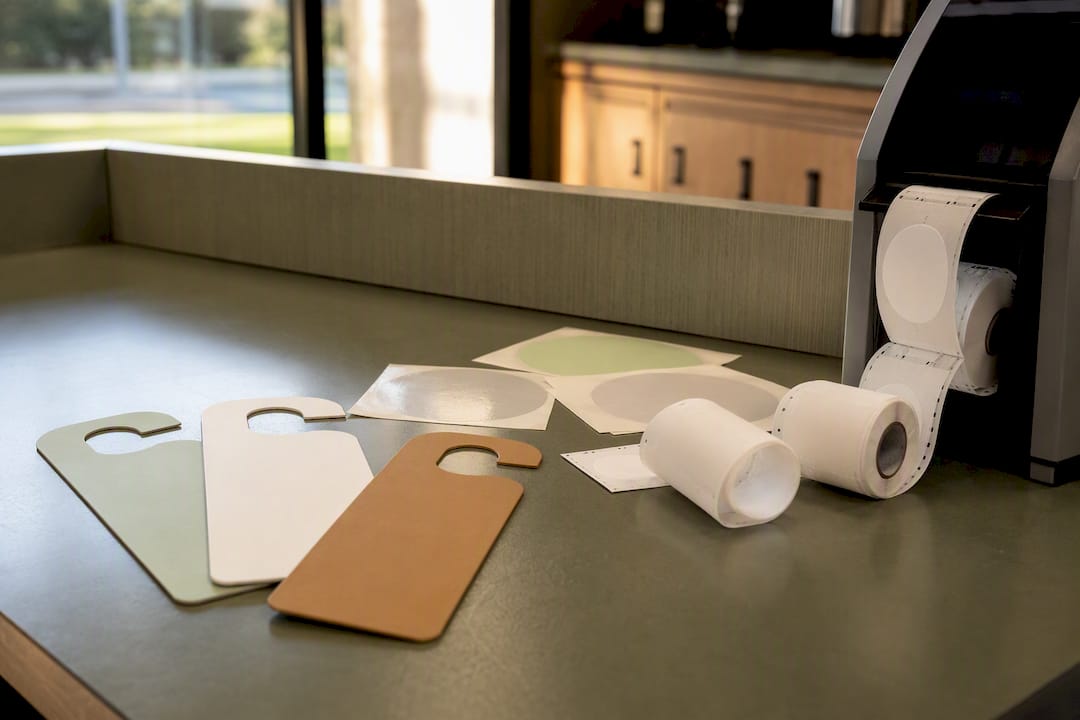
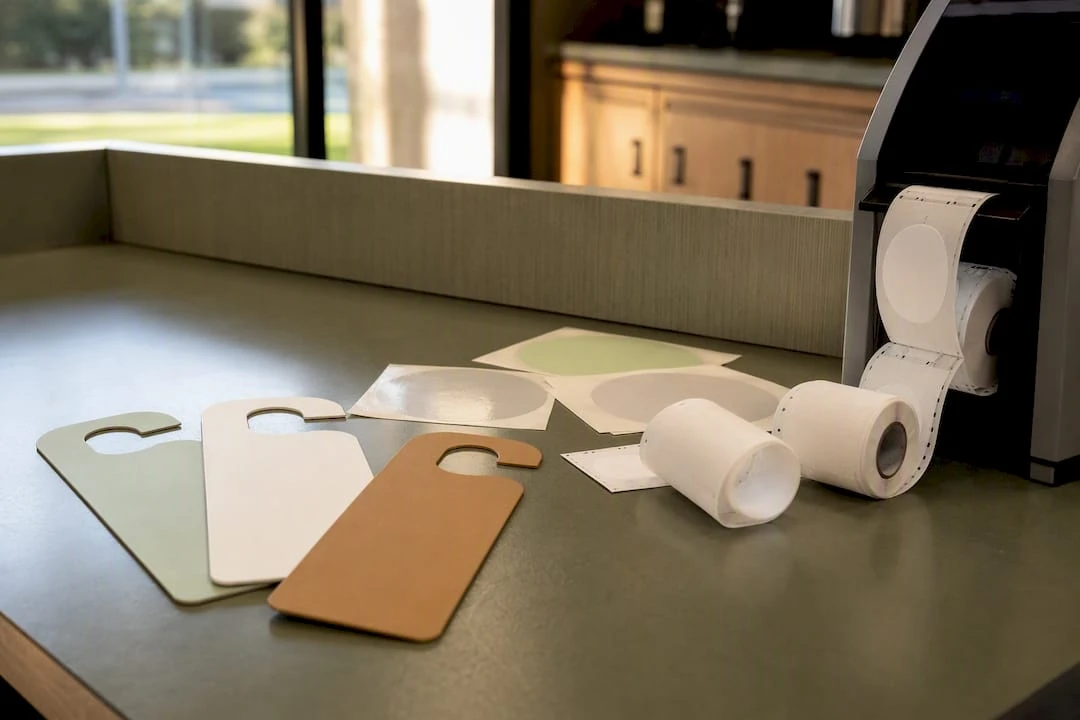
For most visitor and temporary parking programs, hang tags are the right call. They’re fast to issue, easy to read from a distance, and transferable between vehicles, which matters when your front desk or valet stand is handling a rotating stream of guests rather than fixed residents. Two exceptions flip that default:
- High-security or enforcement-heavy sites (casinos, hospitals with restricted lots) often need decals instead, since decals bond to one vehicle and resist sharing.
- Single-vehicle, long-duration visitors (a contractor on-site for months) are better served by a decal than a hang tag that can walk off with the wrong person.
Caymil manufactures both formats, in stock or custom runs, with sequential numbering and barcoding built in.
Key Takeaways
Hang tags remain the practical default for visitor parking programs, while decals, static clings, and roll tickets each solve a narrower operational problem.
| Point | Details |
|---|---|
| Default to hang tags | Use hang tags for visitor and temporary programs; switch to decals for long-term or high-security assigned parking. |
| Specify serialization and barcodes | Add sequential numbering and a barcode or QR code, with a human-readable serial for manual backup. |
| Match material to duration | Choose polyester or laminate for durability, static cling or paper stock for short-term or eco-conscious programs. |
| Plan lead times around custom proofing | Stock ships faster; custom runs need artwork approval time, so order buffer stock ahead of term starts. |
| Order through a manufacturer built for this | Caymil supplies both stock and custom visitor permits with barcoding, tamper features, and nationwide shipping. |
Table of Contents
- Hang Tags, Decals, and Other Visitor Parking Permits Compared
- How to Choose Between Hang Tags, Decals, and Tickets
- What to Specify: Materials, Serialization, and Security Features
- Planning Lead Times for Stock and Custom Permit Orders
- Keeping Visitor Permits Issued, Tracked, and Retired Cleanly
- Staying Compliant With Local Visitor Parking Rules
- Designing for Visibility and Fast Enforcement Checks
- Comparing Costs Across Permit Types and Order Sizes
- Are Eco-Friendly Visitor Parking Permits Available?
- What Actually Matters When You Specify a Visitor Permit
- Ordering Visitor Parking Permits Through Caymil
- Selected Supplier Guides and Caymil Resources
- Sources
- FAQ
Hang Tags, Decals, and Other Visitor Parking Permits Compared
Every physical permit format solves a slightly different operational problem, and picking the wrong one usually shows up later as a reconciliation headache or an enforcement gap.
Hang tags hook over a rearview mirror and move between vehicles in seconds, which is why supplier guidance consistently points to them as the flexible option for visitor and event access. They’re the standard for hotel guests, casino visitors, and university day passes.
Decals adhere directly to a windshield or bumper and stay with that vehicle for the life of the permit. Because they can’t be handed off, decals cut down on sharing and work best for long-term, assigned, or high-security parking.
Static cling decals split the difference: no adhesive residue, no long-term commitment. They’re a practical fit for same-day event passes where you don’t want a permanent decal on a car that’s leaving that afternoon.
Roll and machine-issued tickets cover the high-turnover end of the spectrum, valet stands, event lots, and gate arms, where a printer needs to spit out a numbered ticket in under a second per vehicle.
How to Choose Between Hang Tags, Decals, and Tickets
Run your facility through four questions before you specify anything, and the right answer usually becomes obvious.
- How much enforcement risk can you tolerate? If a shared or resold permit costs you real revenue or a security incident, lean decal. If flexibility matters more than lockdown, hang tag wins.
- What’s your volume? A boutique hotel issuing 40 guest tags a month has different pricing math than a stadium moving 20,000 event vehicles in a weekend. Volume determines whether stock pricing or a custom minimum order quantity makes more sense.
- How far away will staff be reading it? A garage attendant checking permits at 15 feet needs bigger print and higher-contrast colors than a valet checking tags at arm’s length.
- What does your system need to read? Confirm barcode symbology, QR size, and any license-plate-recognition compatibility before you finalize artwork, not after the first print run arrives.
Pro Tip: Run a two-week pilot with a small stock order before committing to a full custom print run. It’s the cheapest way to catch a readability or scanning problem before it’s baked into 10,000 units.
A hybrid model is common in practice. Suppliers frequently recommend decals for permanent staff and tenants, hang tags for visitors, and digital or plate-based permits for short self-serve stays, which lets you match enforcement effort to actual risk instead of applying one format to every use case.
What to Specify: Materials, Serialization, and Security Features
A comparable quote starts with a complete spec sheet, not a phone call describing “something like what we had before.” Build your request around these fields:
- Material: Polyester or laminated substrates resist tearing, fading, and moisture far better than uncoated paper stock, especially for tags that live on a mirror through a full summer.
- Serialization: Sequential numbering, a barcode, or a QR code, ideally all three, with the human-readable serial printed near the scannable code so staff can verify a permit manually when a scanner is down or a battery dies.
- Tamper-evident features: Void patterns that appear if someone tries to peel and reapply a decal, holographic overlays, or overlaminates that protect print from abrasion.
- Color coding and dates: Rotating colors by month or event help enforcement staff spot an expired permit at a glance, without reading a single digit.
- Format: Multi-part carbonless tickets if you need a matching stub for your own records.
Manufacturer testing shows tamper-evident laminates, barcodes, and color coding all add to a permit’s cost, but only modestly, a small premium against the cost of a single fraud incident or a lost audit trail. Whatever symbology you choose, confirm it against your scanner or parking-system requirements before the artwork goes to print, not after.
Planning Lead Times for Stock and Custom Permit Orders
Order timing is where good specs go to die if procurement doesn’t plan around it. Stock items ship faster and cost less per unit up front, while custom runs need artwork proofing and a longer production window, so the two paths suit different situations.
- Choose stock when you need permits fast, your branding needs are minimal, and per-unit predictability matters more than a logo.
- Choose custom when you need your logo, specific colors, or security features that stock inventory can’t offer.
- Build in buffer stock. A reorder SKU with a standing minimum order quantity prevents the scramble that happens when a semester or lease term starts and you’re 200 tags short.
- Ask about rush production and samples. A physical sample in hand catches color, size, and readability issues that a PDF proof never will.
A typical custom order moves through artwork approval, proof sign-off, the print run itself, finishing (die-cutting, laminating), then shipping. Treat that whole sequence, not just “printing,” as your lead time when you set reorder dates.
Keeping Visitor Permits Issued, Tracked, and Retired Cleanly
The permit itself is only half the system. What happens between issuance and disposal determines whether your program actually controls access or just looks like it does.
- Assign issuance by role. Front desk staff hand out hotel guest tags, valet attendants issue their own ticket stock, and event gate staff work from a separate batch, each tied to a distinct serial range.
- Log serials at the point of issue. A quick scan or handwritten note against a visitor’s name or plate turns a stack of tags into an audit trail.
- Reconcile on a schedule. Weekly or monthly spot checks comparing issued serials against returns catch missing tags before they become a pattern.
- Enforce with a mix of visual checks and scans. Most rounds are a glance at color and expiration date, backed by occasional barcode scans for verification.
- Retire and destroy old stock securely. Shred or otherwise destroy expired serial ranges so an old tag can’t resurface as a valid-looking fake.
Pro Tip: Barcode or QR every visitor hang tag as standard, even for short programs. It turns a smartphone into an instant audit tool and cuts reconciliation errors that come from misread handwriting.
Staying Compliant With Local Visitor Parking Rules
Visitor parking permits don’t exist in a regulatory vacuum, even when they’re purely operational tools inside a private garage or hotel lot. Municipal fire codes, ADA accessibility requirements, and local zoning conditions often dictate how many visitor spaces a facility must maintain and how those spaces get marked and enforced.
Hospitals and universities face additional layers: campus safety departments frequently require permits to display specific information (issue date, expiration, and a contact number for towing disputes) before they’ll authorize enforcement action against an unpermitted vehicle. Casinos and hotels operating in jurisdictions with towing-notice laws need permits and posted signage that match, since a permit design that doesn’t align with local towing statutes can void an operator’s ability to enforce at all.
Before finalizing artwork, check with your local parking authority or legal counsel on:
- Required disclosures printed directly on the permit (contact info, terms, expiration format).
- ADA-compliant space counts and any permit differentiation required for accessible visitor parking.
- Local towing and immobilization notice requirements tied to permit display.
None of this changes your material or format choice much, but it does affect what text has to appear on the permit and how it’s positioned. Build a compliance review into your artwork proofing step, not as an afterthought after tags are already printed. A five-minute call to your municipal parking office before a print run ships is far cheaper than reprinting 5,000 tags because a disclosure line was missing.
Designing for Visibility and Fast Enforcement Checks
A permit that enforcement staff can’t read at a glance defeats its own purpose, no matter how secure the material is. Design for the distance and lighting conditions your enforcement team actually works in, not for how the artwork looks on a monitor.
Contrast matters more than most buyers expect. Dark text on a light background, or a bold color block against a neutral tag body, reads faster under garage lighting or headlights than a subtle two-tone palette. Rotating background colors by month, semester, or event date lets an attendant spot an expired permit from ten feet away without checking a single number, which speeds up patrol routes dramatically in high-volume lots.
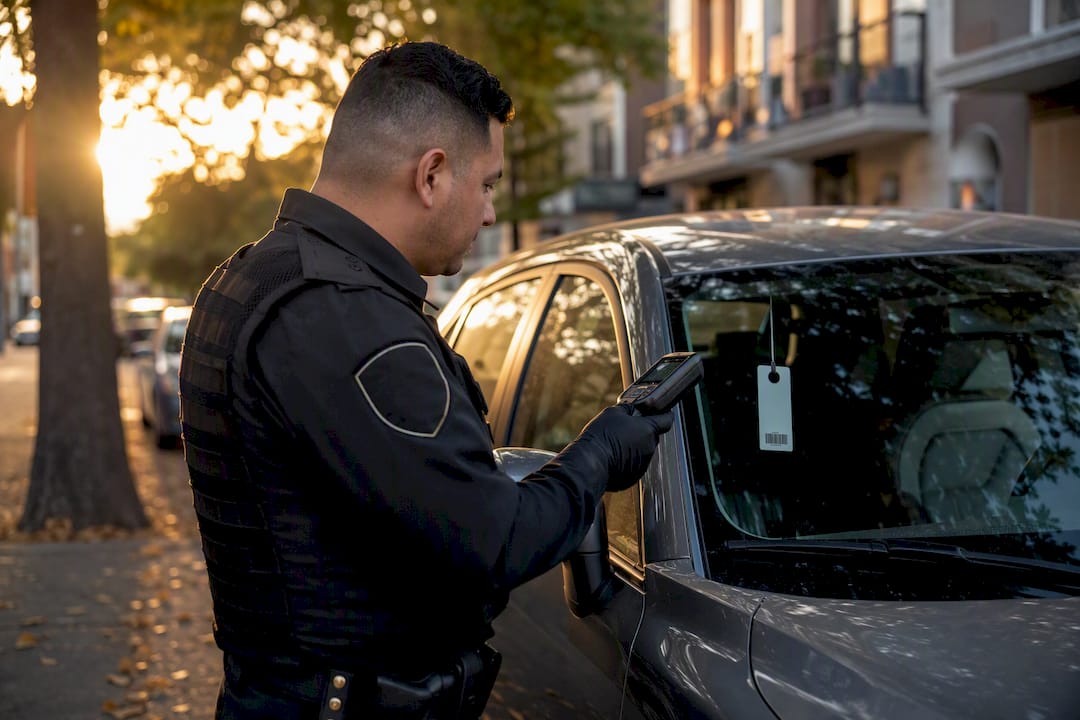
Print size matters just as much as color. A serial number or expiration date in an 8-point font might look clean on a proof, but it’s unreadable from a moving enforcement cart at dusk. Specify a minimum type size based on your actual enforcement distance, and test a physical sample under real lot lighting before locking in a full print run.
Placement of the barcode or QR code deserves the same scrutiny. Put it where a handheld scanner can reach it without the visitor having to remove the tag from the mirror, and keep a human-readable serial printed alongside it so staff can verify manually if a scanner battery dies mid-shift. That redundancy is a small design choice that saves real time during a busy gate rush.
Comparing Costs Across Permit Types and Order Sizes
Pricing on visitor parking permits scales with three variables: material, customization, and volume. Understanding how those interact keeps procurement from overpaying for features a program doesn’t need, or underspending on security a high-risk facility does.
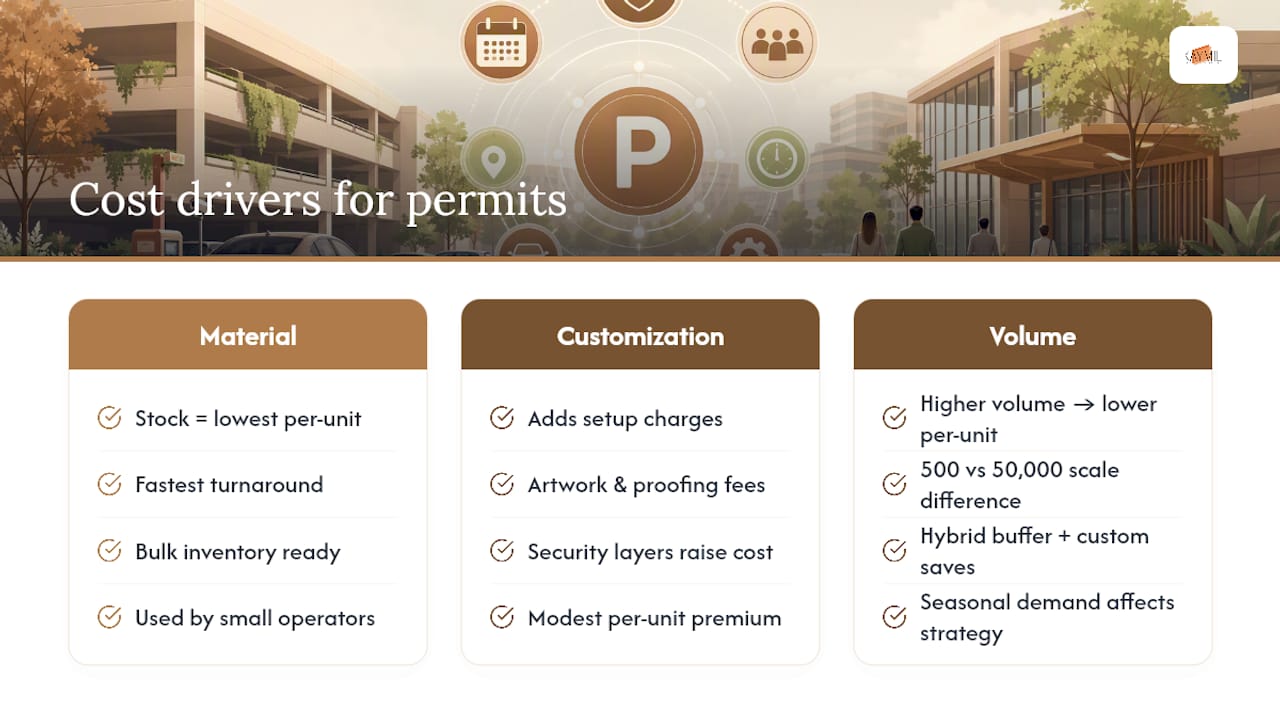
Stock hang tags carry the lowest per-unit cost and the fastest turnaround, since they’re already designed, printed in bulk, and sitting in inventory. That makes them the default for smaller operators, boutique hotels, or property managers who need standard visitor tags without a logo or custom color scheme.
Custom orders add cost at two points: setup (artwork design, proofing, plate or die charges) and any security layering (barcodes, tamper-evident laminates, holographic elements). Those additions typically add only a modest premium per unit, which is easy to justify against the cost of a single fraud incident, a lost audit trail, or a rebrand that makes old stock unusable.
Volume is the lever most buyers underuse. A facility ordering 500 tags a year pays a different per-unit rate than one ordering 50,000 for a stadium or casino floor. If your volume is unpredictable, month to month or seasonal, a hybrid strategy (a stock buffer for visitor spikes, a custom run for your permanent decal population) often costs less overall than committing every order to custom minimums.
Are Eco-Friendly Visitor Parking Permits Available?
Material choice affects environmental impact as much as durability. Traditional vinyl decals and laminated hang tags are built to last, but that same durability means they don’t biodegrade quickly once retired, and high-turnover programs (event lots, university visitor days) can generate real volumes of discarded tags each season.
Buyers looking to reduce that footprint have a few practical levers. Static cling decals, already useful for same-day visitor access, skip adhesive backing entirely and are easier to recycle than permanent vinyl. Paper-based ticket stock for valet and event workflows breaks down faster than laminated plastic and works well anywhere long-term durability isn’t the priority. Right-sizing orders against actual program volume, rather than over-ordering “just in case”, also cuts waste at the source, since unused stock permits eventually get discarded regardless of material.
For programs that need the durability of polyester or laminate (long-term decals, weatherproof hang tags), the trade-off is straightforward: fewer replacement orders over a permit’s life cycle, which offsets some of the material footprint against reduced production and shipping frequency. Ask your supplier directly about recyclable substrate options and paper-stock alternatives for shorter programs before defaulting to laminate on every order.
What Actually Matters When You Specify a Visitor Permit
Most guidance on visitor parking permits treats the format choice, hang tag versus decal, as the whole decision. It isn’t. The bigger risk I see in procurement conversations is buyers locking in a print run before anyone has confirmed barcode symbology against the scanner already sitting at the gate. Get that sequence backward and you’re stuck with 10,000 tags your own hardware can’t read.
The conventional advice also underweights the human-readable serial. Everyone specs a barcode; fewer buyers insist on a printed number next to it. That redundancy is what saves an enforcement shift when a scanner battery dies, and it costs almost nothing to add at the design stage.
If I had to prioritize one thing for a first order, it’s this: order a small stock batch and pilot it for two weeks before committing to a custom run with security features. Readability problems and workflow friction show up fast in real use, and they’re far cheaper to fix on 100 tags than on 10,000.
Ordering Visitor Parking Permits Through Caymil
Caymil has manufactured parking, valet, and hospitality ticketing since 1937, and that manufacturing depth is exactly what a procurement-heavy visitor permit order needs: stock hang tags ready to ship fast, plus custom runs with sequential numbering, barcoding, color coding, and tamper-evident features built to your spec. Products are compatible with major parking systems including Amano, TIBA, SKIDATA, FLASH Parking, Scheidt & Bachmann, and Flowbird, so a new permit order won’t force a hardware change.
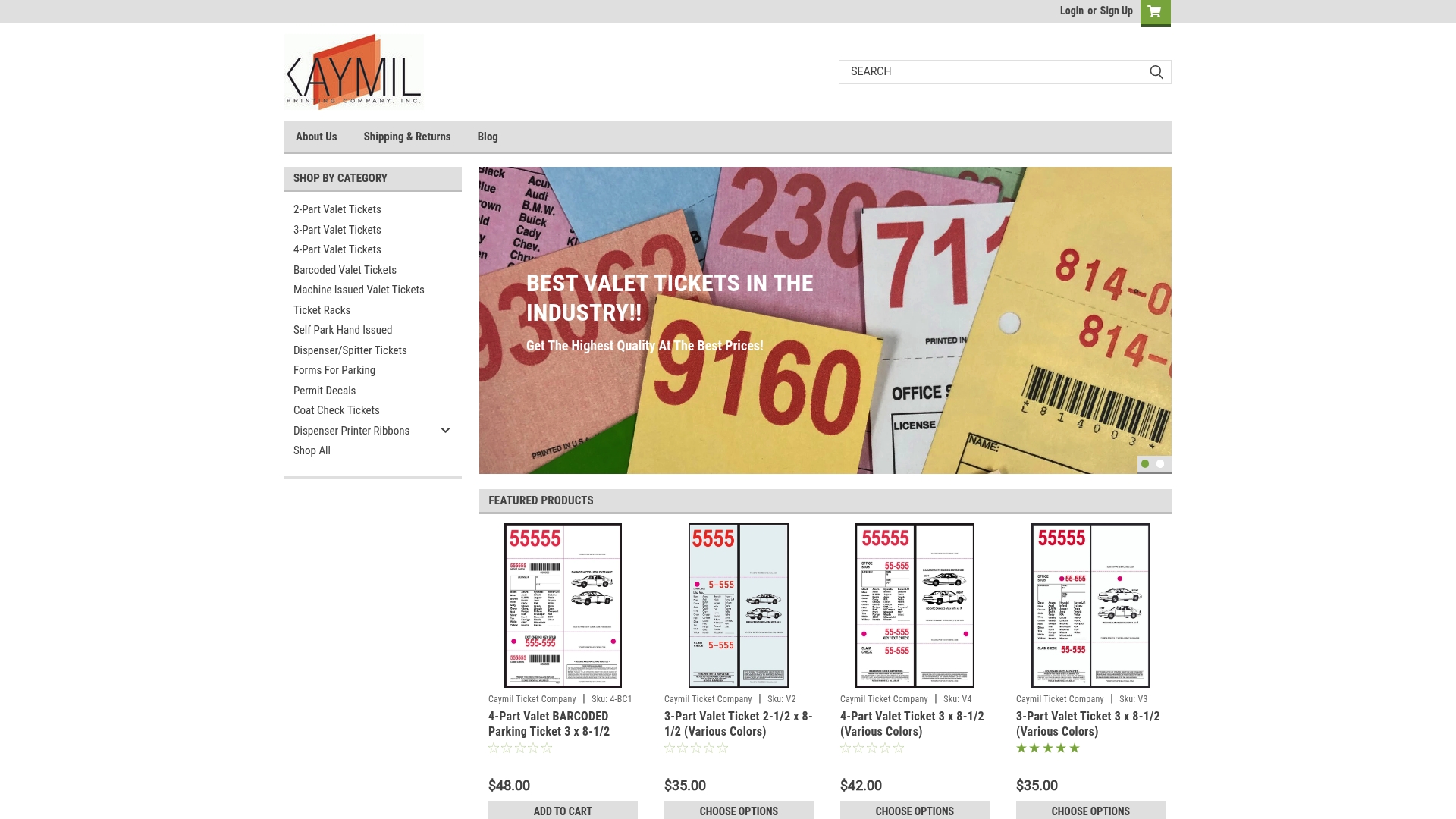
Whether you’re stocking a hotel front desk, outfitting a casino garage, or running a university visitor lot, Caymil carries the format for it. Explore stock and custom hang tags and permits for standard visitor programs, or check barcoded valet ticket options if your workflow needs scan-based audit trails at a valet stand or event gate. High-turnover operations can also review machine-issued roll tickets for gate-arm and valet dispensers.
With millions of tickets in stock and fast nationwide shipping, Caymil can turn around a rush order without making you choose between speed and print quality. Request a quote or order stock items directly through the Forms For Parking page to get your next visitor permit run moving.
Selected Supplier Guides and Caymil Resources
For deeper reading on formats and program setup, see temporary parking permit basics, launching a hang tag program, and day-of-event permit guidance.
Sources
- Hang Tags vs. Parking Decals: Which One Is Right for Your Facility?
- Parking Permit Durability: Why Some Tags Fail and How to Choose One That Lasts - Metalcraft, Inc.
- Parking Decals: Types, Uses, Cost, and Where to Buy Online – Safety Decals
- Parking Permit Hang Tags That Hold Up
FAQ
What’s the Difference Between a Hang Tag and a Decal?
A hang tag hooks over a mirror and transfers between vehicles, while a decal adheres permanently to one vehicle, which makes decals better suited to long-term or high-security assigned parking.
Do Visitor Parking Permits Need Barcodes?
They don’t need one to function, but a barcode or QR code makes audit trails and reconciliation far simpler, and most operators now include one as standard on visitor hang tags.
How Long Does a Custom Permit Order Take?
Custom orders take longer than stock because they require artwork proofing and approval before the print run starts, so build that proofing time into your procurement schedule.
Can Caymil Print Custom Colors and Logos on Visitor Tags?
Yes, Caymil produces custom visitor hang tags and decals with logos, custom colors, sequential numbering, and barcoding alongside its stock permit inventory.
Are Static Cling Decals Reusable?
Static cling decals are designed for same-day or short-term visitor access and are generally not meant for repeated reuse across different vehicles or extended periods.
Recommended
- Day-of-Event Parking Permit: Guide for Parking Managers - Caymil Printing Co., Inc.
- Real-world temporary parking permit examples and best practices - Caymil Printing Co., Inc.
- How to launch a parking garage permit hang tag program - Caymil Printing Co., Inc.
- Hotel Parking Permit System Explained for Managers - Caymil Printing Co., Inc.