
Weatherproof Parking Permits: Materials That Actually Hold Up
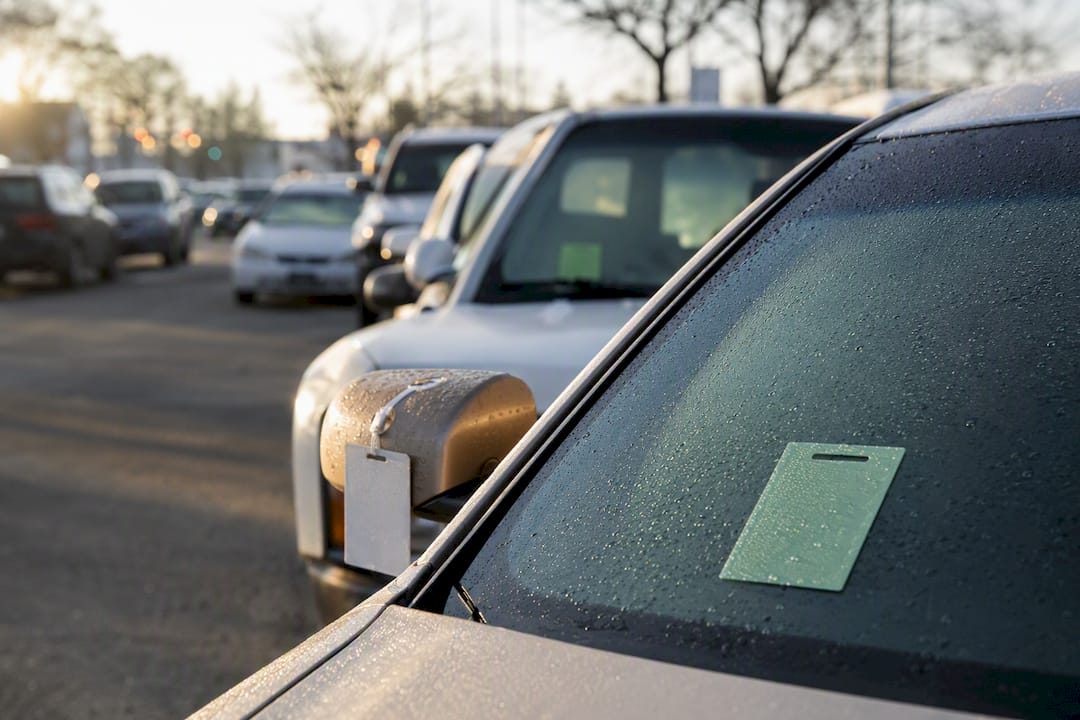
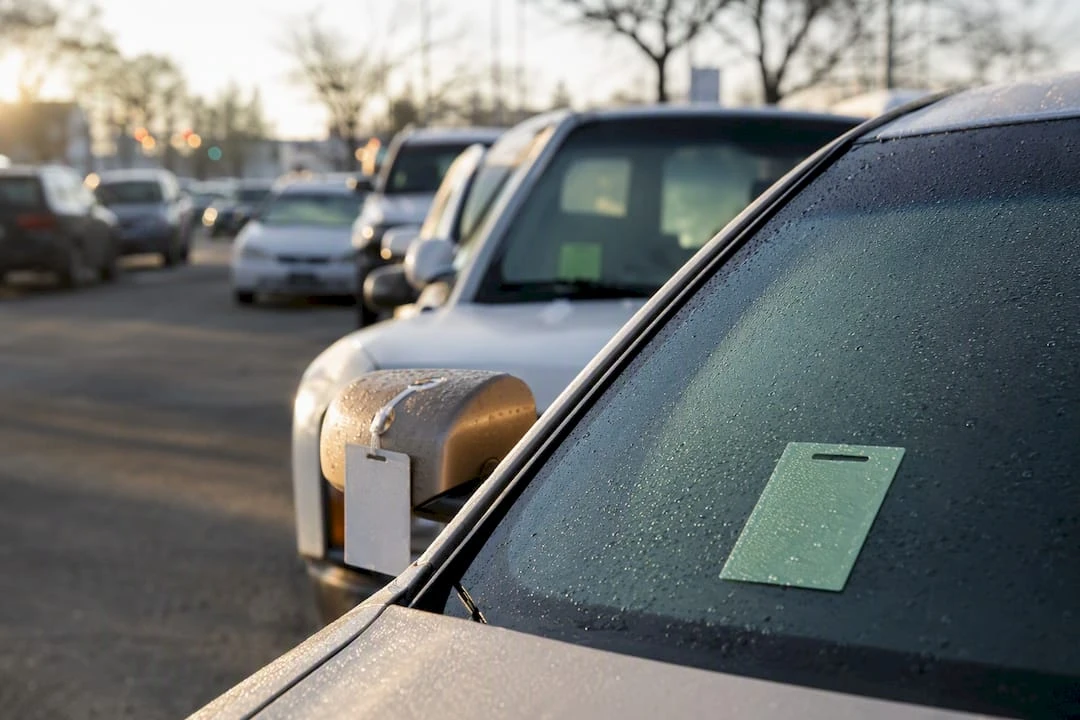
For outdoor lots and event sites, choose PVC or heavy-duty vinyl permits with an outdoor-rated laminate and a permanent, non-transferable adhesive. If the permit needs to move with a visitor or last only a few days, a laminated PVC hang tag beats an adhesive decal every time.
Quick specs to put in your RFP:
- Material: 8–10 mil vinyl or waterproof PVC, not standard paper or thin film.
- Ink: UV-stable, printed for outdoor sun exposure without fading within a season.
- Lamination: Edge-to-edge, gloss or matte, rated for scratch and moisture resistance.
- Adhesive: Permanent and non-transferable for decals; grommeted for hang tags.
Before you commit to a full run, request a sample or proof from Caymil and test it yourself: soak a corner in water for ten minutes, check for print smearing, then try to peel the adhesive off glass to confirm it tears rather than lifts clean.
Key Takeaways
Weatherproof permits hold up outdoors when they combine 8 to 10 mil PVC or vinyl, UV-stable ink, edge-to-edge lamination, and adhesive matched to the mounting method.
| Point | Details |
|---|---|
| Choose the right base material | Use PVC or 8 to 10 mil vinyl for decals; PVC hang tags for temporary or marine use. |
| Laminate every outdoor permit | Edge-to-edge lamination prevents the fading and scratching that shortens permit life. |
| Match adhesive to security needs | Use permanent, non-transferable adhesive anywhere transfer between vehicles is a risk. |
| Add serialization and barcodes | Consecutive numbering plus a barcode gives fast visual checks and a reliable audit trail. |
| Order direct for compatibility | Caymil supplies barcoded, laminated permits built to work with major gate systems out of the box. |
Supplier and reference pages for specs and examples
- Parking Permit Decals for material specs and ordering.
- Forms For Parking for full product and ordering categories.
- Temporary event permit examples for format ideas.
Table of Contents
- What Materials Actually Withstand Rain, Sun, and Abrasion?
- Which Adhesive and Mounting Option Fits Your Lot?
- How Do Serial Numbers and Barcodes Improve Enforcement?
- What Should You Expect When Ordering Custom Permits?
- Which Permit Format Fits Your Specific Setting?
- Why Trust Caymil for Weatherproof Permit Production
- What the Industry Gets Wrong About Weatherproof Permits
- Get Weatherproof Permits Built for Your Lot
- Sources
- FAQ
What Materials Actually Withstand Rain, Sun, and Abrasion?
Vinyl, PVC, and polyolefin all get marketed as “waterproof,” but they perform differently once they’ve spent a summer on a windshield. Vinyl is flexible and takes ink well, which is why it’s the standard for permit decals that need sharp logos and small serial numbers. PVC is stiffer and naturally water-resistant without a separate coating, which is why PVC hang tags hold up in constant wet conditions without warping. Polyolefin sits in between: it’s a lower-cost, tear-resistant option that works for printable in-house tags, though it typically won’t match molded PVC for long-term rigidity.
Lamination is the variable most buyers underestimate. Gloss laminate resists moisture better and shows barcodes more crisply under scanner light; matte laminate cuts glare for windshield placement in direct sun. Either way, lamination protects against fading and scratching that raw vinyl can’t withstand on its own, and it’s the reason most reputable suppliers include it standard rather than as an upsell.
Thickness matters more than most spec sheets admit:
- Under 6 mil: prone to tearing at the mounting hole within weeks of outdoor handling.
- 8 to 10 mil: the practical minimum for a permit expected to survive a full season.
- Reflective or high-visibility stock: worth the extra cost for nighttime enforcement lots.
Expect a well-specified decal or tag to last 12 to 24 months outdoors. The common failure points are edge lift from cheap adhesive, ink fading on unlaminated stock, and hairline cracks at grommet holes on tags that skip reinforcement.
Which Adhesive and Mounting Option Fits Your Lot?
The mounting choice changes the durability math more than the material does. Here’s how the three main options compare:
- Inside-window permits. Applied to the interior glass, these stay shielded from direct rain and UV bleaching, which extends their working life even on a mid-grade vinyl.
- Outside-face decals. More visible to patrol staff and easier to scan from a distance, but they take the full brunt of weather and need premium vinyl with UV-resistant inks and a permanent, non-transferable adhesive to survive.
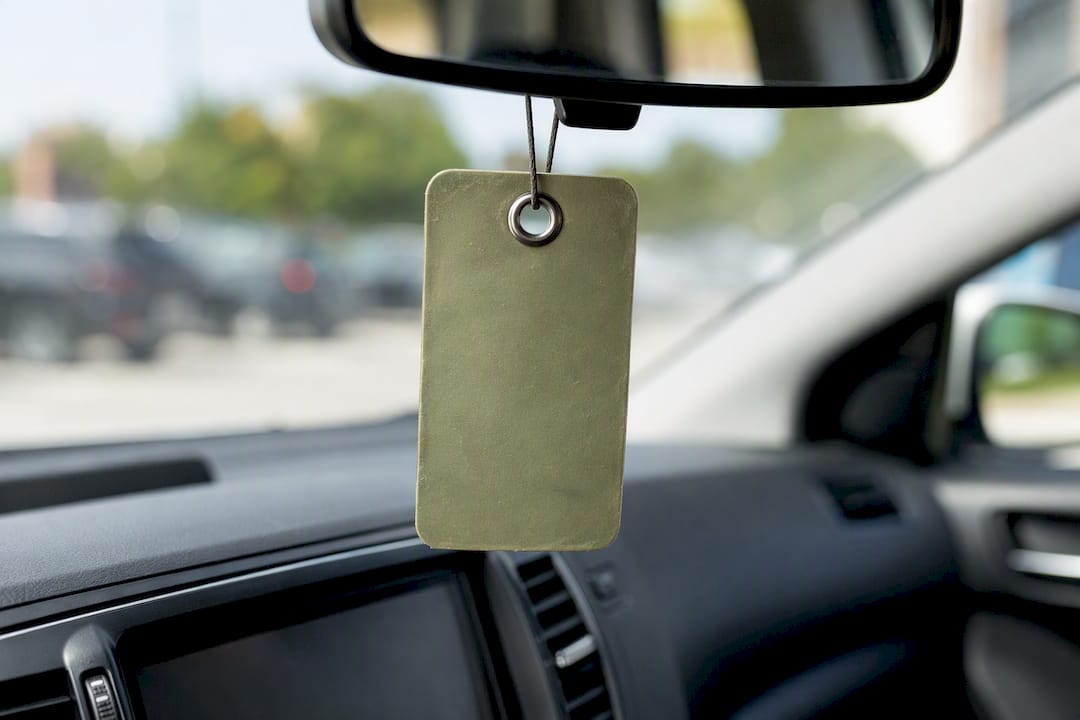
- Rearview mirror hang tags. No adhesive at all, which sidesteps peeling entirely, but the tag needs a reinforced hole to survive repeated handling.
Adhesive grade should match your security needs, not just your budget. Removable adhesive suits short-term loaner permits. Permanent, non-transferable adhesive is the right call anywhere resale or transfer between vehicles is a concern, since it tears or shreds rather than releasing intact.
For hang tags, a metal eyelet with a reinforced punch hole outperforms a plain hole punch by a wide margin. Grommeted tags with reinforced eyelets hold up far longer under the vibration and flexing of daily mirror use than a tag with an unreinforced hole. Mount decals low on the windshield’s passenger side, out of wiper contact and clear of any inspection sticker overlap, to reduce both weather wear and tampering.
How Do Serial Numbers and Barcodes Improve Enforcement?
Consecutive numbering is the cheapest fraud deterrent you can buy. It lets a patrol officer or gate attendant spot a duplicate or out-of-sequence permit in seconds, and it makes end-of-season audits a matter of checking a range instead of chasing individual records.
Barcodes and QR codes matter once you’re scanning at a gate or kiosk rather than checking by eye. Code 128 and QR formats are the most common symbologies in parking access systems, and pairing a scannable code with a printed number gives you both machine speed and a human backup when a scanner fails.
Security features worth specifying:
- Tamper-evident adhesive that leaves a “VOID” pattern if peeled.
- Perforated edges that tear rather than transfer cleanly to another vehicle.
- Holographic foil for high-value or long-term reserved permits.
- Color-coding by year or season for instant visual sorting during shift changes.
Design for a five-second glance: large, high-contrast numbers, a logo placed consistently in one corner, and a small verification phone number or email printed on every permit so lost or disputed tags can be traced back.
Pro Tip: In gated or high-turnover lots, never rely on a visual element alone. Combining a color-coded, numbered design with a scannable barcode gives staff a fast visual check and a reliable digital audit trail if a dispute comes up later.
What Should You Expect When Ordering Custom Permits?
Minimum order quantities vary by material and feature set. Standard vinyl decals typically run lower minimums than PVC hang tags with grommets, and every security add-on, from holographic foil to sequential barcoding, adds a small per-unit cost along with production time.
Expect three proofing stages before a full run ships:
- Digital proof for layout, color, and text accuracy.
- Pre-production proof for exact numbering sequence and barcode placement.
- Physical sample to test adhesive grip and print clarity firsthand.
Standard production runs a few business days once art is approved; rush options exist for tight event timelines but should be confirmed at quote time, not assumed. Serialization and barcoding generally extend lead time slightly because each unit needs individual data, which is one reason ordering direct from a manufacturer that already supports your gate system’s format, like Caymil, tends to move faster than routing through a reseller.
Before requesting a quote, have this ready:
- Material and mil thickness
- Lamination type
- Adhesive grade (permanent, removable, non-transferable)
- Size and shape
- Numbering or barcode requirements
- Quantity and finish (reflective, matte, gloss)
Which Permit Format Fits Your Specific Setting?
Not every lot needs the same spec sheet. Match the format to how the permit will actually be used:
- Permanent employee or tenant parking: 8 to 10 mil vinyl decals with UV laminate and permanent adhesive, built for a full year or more of exposure.
- Temporary event permits: Laminated stickers or durable hang tags with strong sequential numbering and fast turnaround, since event permit needs shift with each booking.
- Valet and guest operations: Multi-part tickets or barcoded rolls for high-volume throughput and clean reconciliation at shift’s end.
- Marinas and coastal lots: Waterproof PVC with corrosion-resistant grommets and UV-stable inks, since salt air accelerates the edge lift and metal corrosion that inland lots rarely see.
Heavy-haul and logistics yards face a related challenge with oversize equipment access, and the durability logic runs the same way; a good reference is this state-by-state guide to oversize load permits for facility teams managing similar credentialing across multiple jurisdictions. Municipal lots, HOAs, schools, and marinas all show up repeatedly among common outdoor permit uses, and the material choice each time comes down to exposure duration and handling frequency rather than budget alone.
Why Trust Caymil for Weatherproof Permit Production
Caymil has manufactured parking and ticketing products since 1937, which means the specs recommended here (mil thickness, lamination, adhesive grade) come from decades of producing permits that hold up outdoors, not from a marketing brief.
- Compatible with major parking systems including Amano, TIBA, SKIDATA, FLASH Parking, Scheidt & Bachmann, and Flowbird.
- Sequential numbering, barcoding, and laminate options available on both stock and fully customized orders.
- Nationwide shipping with production capacity built for parking operators, municipalities, hotels, and universities.
- Ordering resources and category specs available through Caymil’s parking forms page for teams building an RFP.
Sourcing barcoded, serialized permits directly from a manufacturer that already supports your gate system’s format cuts down on the integration headaches that show up when a third-party reseller can’t match your access-control specs.
What the Industry Gets Wrong About Weatherproof Permits
Most buying guides treat “weatherproof” as a single checkbox rather than a spec with real tradeoffs. That’s backwards. The material that survives a coastal marina isn’t the same one that makes sense for a two-day festival lot, and treating them as interchangeable is how facility managers end up either overpaying for holographic foil on a permit that lasts a weekend, or underspecifying a permanent decal that peels by spring.
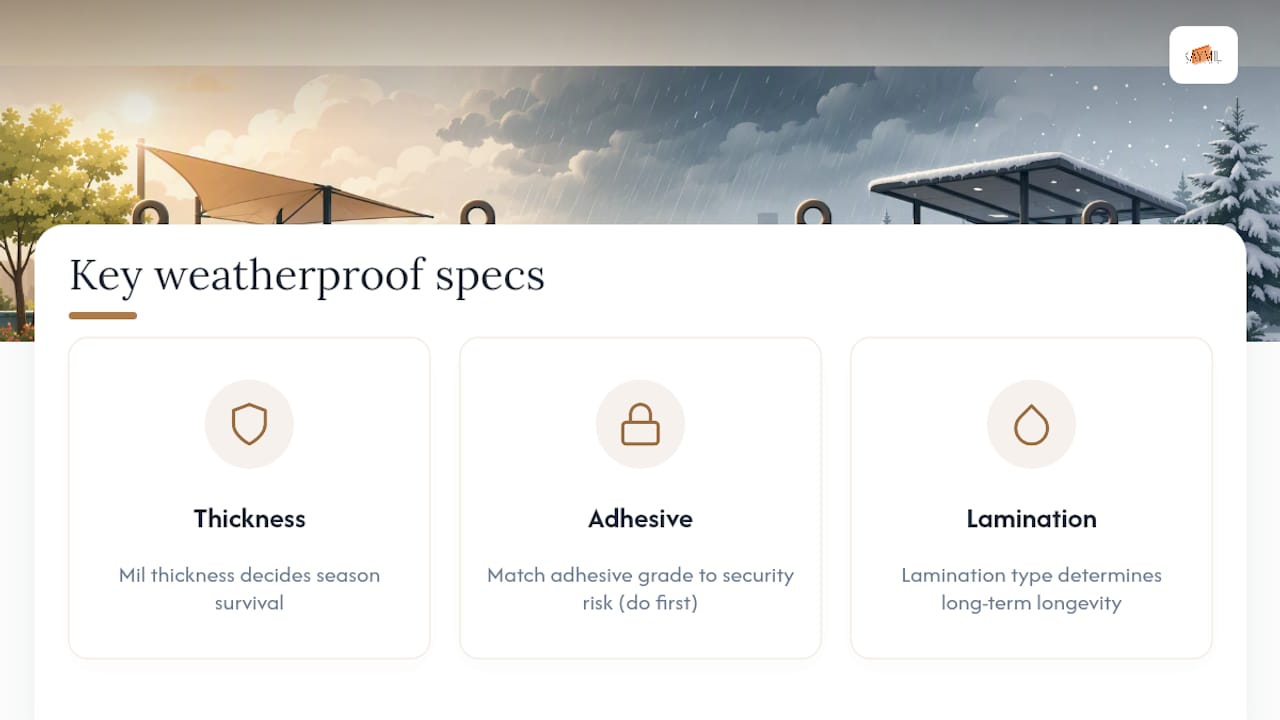
The conventional advice to “just pick something waterproof” skips the part that actually determines cost and performance: mil thickness, adhesive grade, and lamination type. Those three specs, not the marketing language on a supplier’s homepage, decide whether a permit survives a season or needs reordering in eight weeks.
If there’s one priority worth fixing first, it’s this: match the adhesive to the security risk before worrying about color or logo placement. A beautifully designed permit with removable adhesive on a lot with resale problems solves nothing. Get the adhesive grade, the material, and the numbering scheme right, then let design follow.
— Richard
Get Weatherproof Permits Built for Your Lot
Caymil manufactures the exact specs this guide recommends, laminated PVC and vinyl, permanent adhesive options, sequential numbering, and barcoding compatible with the gate systems you’re already running, so you’re not translating a generic spec sheet into your own operation after the fact.
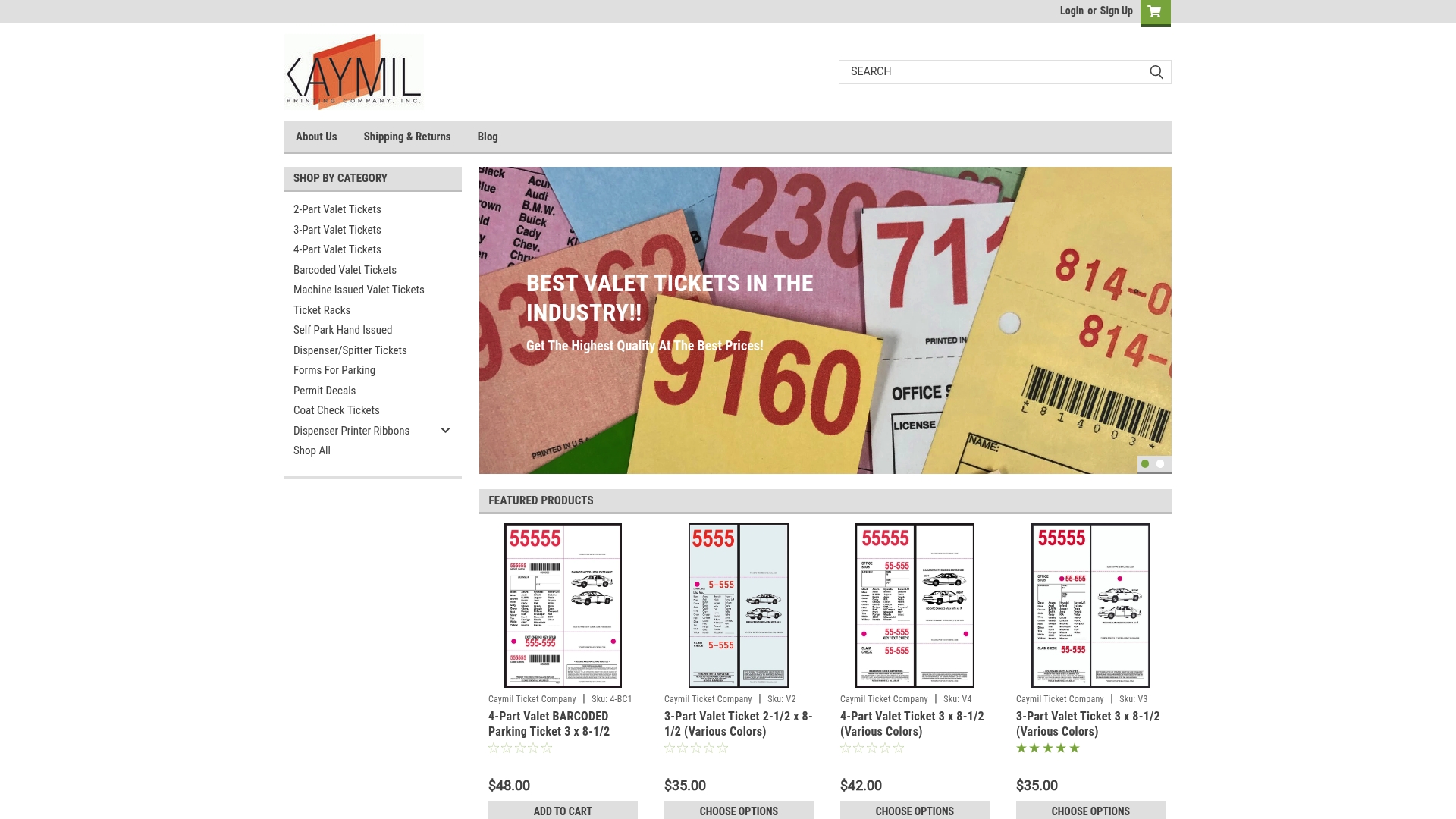
That compatibility is the real advantage over ordering from a generic print shop: Caymil’s permits are built to work with Amano, TIBA, SKIDATA, FLASH Parking, Scheidt & Bachmann, and Flowbird systems from the start, so there’s no gate reconfiguration or rescanning setup after your order arrives. Whether you’re outfitting a permanent employee lot, a marina, or a weekend event, the parking forms and permit ordering page lays out material, lamination, and numbering options so you can build a spec sheet and request a proof today.
Sources
FAQ
How much does a parking permit typically cost?
Cost depends heavily on material, security features, and quantity. Basic vinyl decals cost less per unit than PVC hang tags with grommets, holographic foil, or sequential barcoding, so get a quote against your specific spec sheet rather than a generic per-unit price.
How do I get a weatherproof parking permit for my lot or event?
Specify your material (PVC or 8 to 10 mil vinyl), lamination, adhesive grade, and any numbering or barcode needs, then request a digital proof and physical sample from a manufacturer like Caymil before committing to a full print run.
What are residential parking permit zones?
Residential permit zones (sometimes called RPP zones) are designated areas where only vehicles with a valid zone permit can park without time restrictions, typically enforced through visible decals or hang tags checked by patrol staff or license-plate scanners.
Can accessible parking placards be used without paying at metered spots?
Rules vary by city and state, so check your local parking authority’s policy directly. Many municipalities do offer free or extended metered parking for vehicles displaying a valid accessible placard, but the exemption isn’t universal.
What’s the difference between a hang tag and a window decal?
A hang tag mounts on the rearview mirror with no adhesive, making it reusable and easy to transfer between vehicles, while a window decal adheres directly to glass and is better suited for permanent, non-transferable assignments.
Recommended
- Garage Parking Ticket Durability Tips for Operators - Caymil Printing Co., Inc.
- Fake Parking Permit Detection: A Field Guide for Officers - Caymil Printing Co., Inc.
- Parking Ticket Material Options: Top 10 for 2026 - Caymil Printing Co., Inc.
- Real-world temporary parking permit examples and best practices - Caymil Printing Co., Inc.