
What Is a Time-Stamped Parking Ticket? A Clear Guide
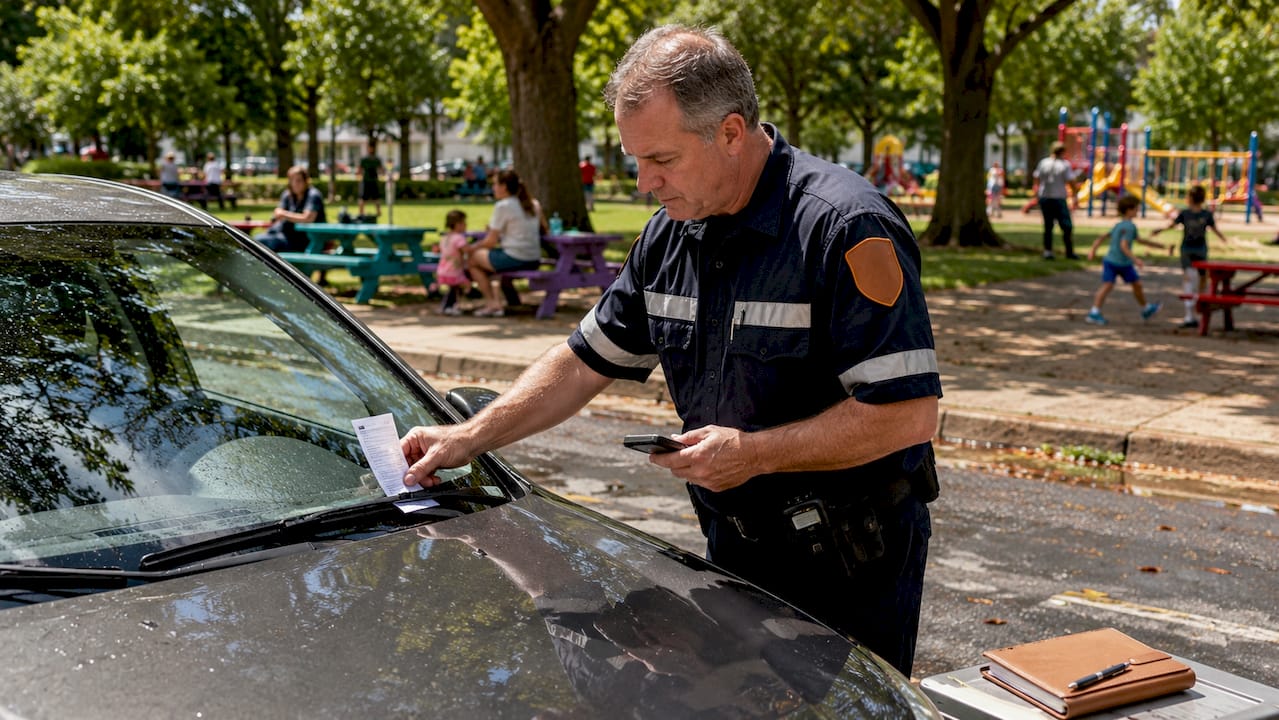
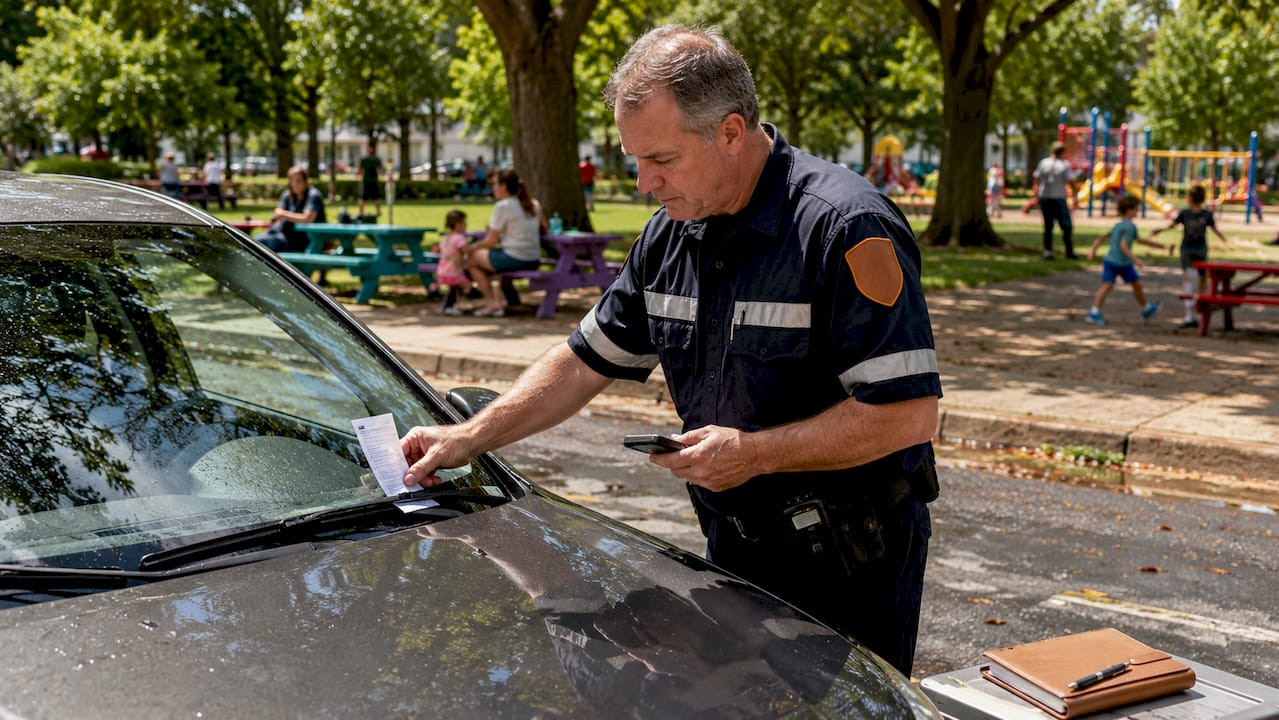
A time-stamped parking ticket is an official record that captures the exact time a vehicle’s parking session begins or a violation occurs, serving as the primary evidence for enforcement authorities. The term “time-stamped ticket” is the common shorthand; the industry standard phrase is a “time-recorded citation” or simply a “dated parking citation.” Both terms describe the same document. Whether you receive one from a meter officer, a parking garage dispenser, or a digital enforcement system like OperationsCommander, the timestamp is the single most important piece of information on that ticket. Understanding what it means and how it works protects you from paying fines you do not owe.
What is a time-stamped parking ticket and how does it work?
A time-stamped parking ticket records the date, time, and location of a parking event or violation at the moment it is issued. That timestamp is not a formality. It is the factual foundation for every charge, appeal, or dismissal that follows.
Parking enforcement relies on two broad categories of time-stamped tickets. The first is an enforcement citation, issued when a vehicle exceeds a posted time limit or parks without payment. The second is a transactional ticket, issued by a garage dispenser or valet system to record when a vehicle entered a facility. Both types use the timestamp to calculate duration, determine fees, or establish whether a rule was broken.
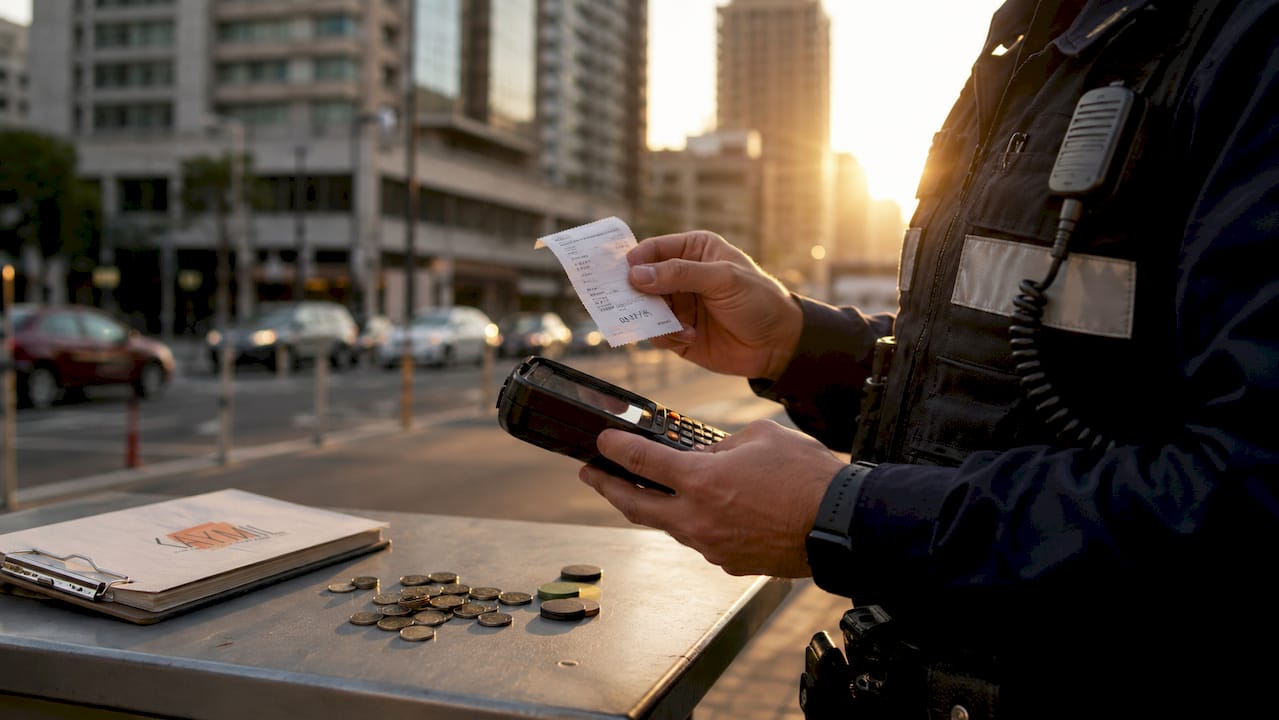
Modern systems like those built on license plate recognition record each vehicle’s plate, location, and observation time automatically. The system calculates dwell time and triggers a citation if the limit is exceeded. This removes the human error that older chalk-marking methods introduced.
Physical tickets printed by machines compatible with Amano, TIBA, SKIDATA, FLASH Parking, Scheidt & Bachmann, and Flowbird systems carry the timestamp directly on the ticket stock. Digital logs back up that printed record. The two formats work together to create an auditable chain of evidence.
How do enforcement officers use timestamps in the field?
Traditional chalking vs. digital patrol
Traditional tire chalking required an officer to mark a tire with chalk, return later, and issue a citation if the vehicle had not moved. The timestamp was written by hand or stamped manually, which left room for errors and disputes. Digital tire chalking replaced that process entirely.
Digital tire chalking systems use license plate recognition cameras mounted on patrol vehicles. Each pass records the plate number, GPS location, and exact time. If the same plate appears in the same spot beyond the allowed window on a second pass, the system automatically generates a citation with both observation timestamps attached.
How the timestamp triggers a violation
The violation is not triggered by a single observation. It requires two timestamps separated by more than the posted time limit. That two-point record is what makes the citation legally defensible. A driver who moved their car and returned would show a different first-observation timestamp, which would reset the clock.
Pro Tip: If you park in a time-limited zone, photograph your car’s position and the meter or sign when you arrive. That photo carries your phone’s embedded timestamp and can serve as counter-evidence if the enforcement record is wrong.
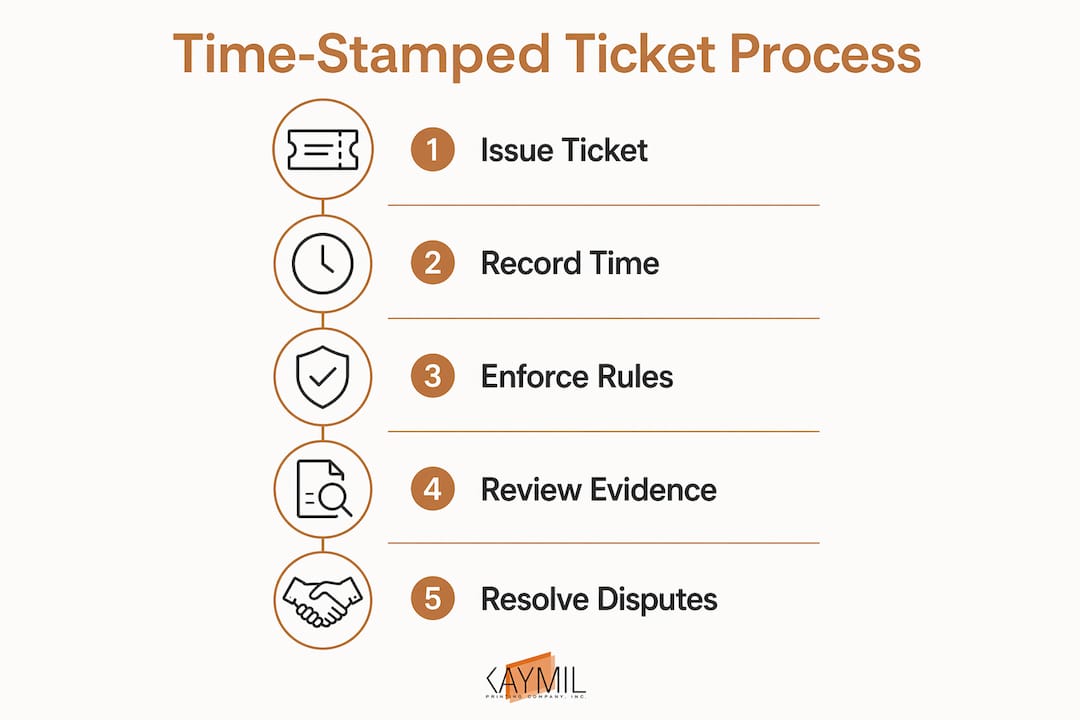
- Officer or system records first observation: plate, location, time.
- Officer or system returns after the posted limit expires.
- Second observation confirms the vehicle has not moved.
- Citation is generated with both timestamps and the calculated overstay duration.
- Physical ticket is placed on the vehicle or a digital notice is sent to the registered owner.
Can you contest a ticket based on timestamp errors?
Timestamp accuracy is the cornerstone of every parking dispute. Incorrect times on a citation are strong grounds for dismissal, and legal professionals consistently identify timestamp discrepancies as one of the most effective defenses available to drivers.
Common grounds for appeal based on timestamp issues include:
- Incorrect time recorded. If the citation shows a time when you were not parked at that location, the charge lacks factual support.
- Meter malfunction. If a meter failed to register your payment, a time-stamped receipt from a nearby kiosk or a parking app log showing payment before the citation time can cancel the fine.
- Payment overlap. A time-stamped proof of payment showing a transaction close to the citation time is accepted by many enforcement agencies as valid evidence to cancel the fine.
- Grace period violations. Some jurisdictions allow a short window after a meter expires. A citation issued within that window may be dismissible if local rules support it.
Digital enforcement systems shift the burden of proof to the driver. The system creates an auditable record that authorities treat as reliable. You must supply your own counter-evidence to overcome it.
Pro Tip: Save every parking app receipt, credit card transaction record, and meter photo. These create a personal timestamp log that matches or contradicts the enforcement record. Without them, your appeal rests on your word alone.
One nuance many drivers miss: a ticket remains valid from the moment it is placed on the vehicle, even if it blows away or you do not notice it. “I didn’t see it” is not a legal defense. The obligation to pay or appeal begins at the timestamp on the citation, not when you discover it.
Time-stamped tickets across different parking scenarios
The function of a time-stamped ticket changes significantly depending on where and how it is issued. The table below compares four common scenarios.
| Scenario | Primary function | What the timestamp controls | Consequence of exceeding time |
|---|---|---|---|
| Metered street parking | Enforcement citation | Duration of stay vs. posted limit | Fine issued; fines may double if unpaid within deadline |
| Parking garage | Transactional record | Entry and exit time for fee calculation | Higher fee tier applied; possible overstay charge |
| Valet parking | Access and liability record | Vehicle check-in and check-out time | Disputed liability window; operational delay |
| Event or tourist venue | Reservation confirmation | Arrival window for priority entry | Loss of reserved access slot |
Garage tickets issued by dispensers compatible with systems like SKIDATA or Flowbird record entry time on the ticket stock itself. The exit fee is calculated by comparing that entry timestamp to the exit scan. A barcode ticket makes that comparison instant and accurate at the exit gate.
Valet tickets serve a different purpose. They document when a vehicle was received and by whom, creating a liability record as much as a time record. Multi-part carbonless valet tickets give one copy to the driver and retain copies for the operator, so both parties hold a timestamped record of the transaction.
Time-stamped tickets in public venues act as reservations. Visitors must arrive within their allocated time window to use dedicated entry lines or risk losing priority access. That is a fundamentally different use of the timestamp than enforcement, but the underlying logic is identical: the time printed on the ticket defines your rights and your obligations.
Practical tips for drivers: reading and managing time-stamped tickets
Reading a parking ticket correctly takes less than a minute and can save you significant money. Every citation or garage ticket contains the same core data points.
- Issue time. The exact time the citation was generated or the vehicle entered the facility. This is the timestamp you compare against your own records.
- Location code. The block, lot number, or meter ID. Cross-reference this with where you actually parked.
- Violation code. The specific rule broken, such as exceeding a two-hour limit or parking in a no-parking zone.
- Payment deadline. Fines increase substantially if unpaid within the stated window, which is often 10 days. The timestamp on the citation starts that clock.
- Appeal instructions. Most citations include a web address or phone number for contesting the ticket. Note the appeal deadline, which is separate from the payment deadline.
When you pay for parking, always request or save a receipt. Parking apps like ParkMobile and PayByPhone generate time-stamped digital receipts automatically. Those receipts are your first line of defense if a citation appears. A receipt showing payment before the citation timestamp is strong evidence for dismissal.
If you plan to contest a ticket, document everything at the scene. Photograph the meter, the posted signs, your vehicle’s position, and any relevant surroundings. Note the exact time you took each photo. That documentation, combined with a time-stamped receipt, gives you a complete counter-record to present during an appeal.
Key takeaways
A time-stamped parking ticket is the definitive factual record of a parking event, and the accuracy of that timestamp determines whether a citation stands or falls in any dispute.
| Point | Details |
|---|---|
| Timestamp is legal evidence | The time on a citation is the factual basis for charges; errors are grounds for dismissal. |
| Digital systems shift burden of proof | Drivers must supply time-stamped counter-evidence to overcome auditable digital records. |
| Context changes ticket function | Garage and valet tickets record transactions; enforcement tickets document violations. |
| Payment deadlines start at issue time | Fines often double after 10 days; the citation timestamp starts that payment clock. |
| Documentation prevents disputes | Time-stamped receipts, photos, and app logs are the most effective appeal tools available. |
Why the timestamp matters more than most drivers realize
Watching parking enforcement shift from chalk marks to license plate recognition over the past decade has made one thing clear: the timestamp was always the most important element on a ticket. The technology just made it harder to argue with.
The most common mistake I see drivers make is treating a parking ticket as a bill rather than a legal document. It is a legal document. The timestamp on it defines your rights, your obligations, and your window to act. Drivers who understand that respond faster, document better, and win more appeals.
The second most common mistake is assuming that digital systems are infallible. They are not. GPS drift, camera angle errors, and system clock mismatches all create incorrect timestamps. I have seen citations where the recorded observation time was physically impossible given the officer’s patrol route. Those tickets get dismissed when drivers present solid counter-evidence.
My advice is straightforward: treat every parking transaction as a potential dispute. Save your receipts. Photograph your surroundings. Know the posted time limits before you walk away from your car. The drivers who lose appeals are almost always the ones who had no documentation, not the ones who had a weak case.
Local enforcement rules vary more than most people expect. A grace period that applies in one city may not exist in the next. Checking your municipality’s published parking rules takes five minutes and can clarify exactly what a timestamp on a local citation means for your specific situation.
— Richard
Caymil’s parking ticket solutions for operators
Parking operators need tickets that print clearly, hold up under real-world conditions, and carry accurate timestamps every time.
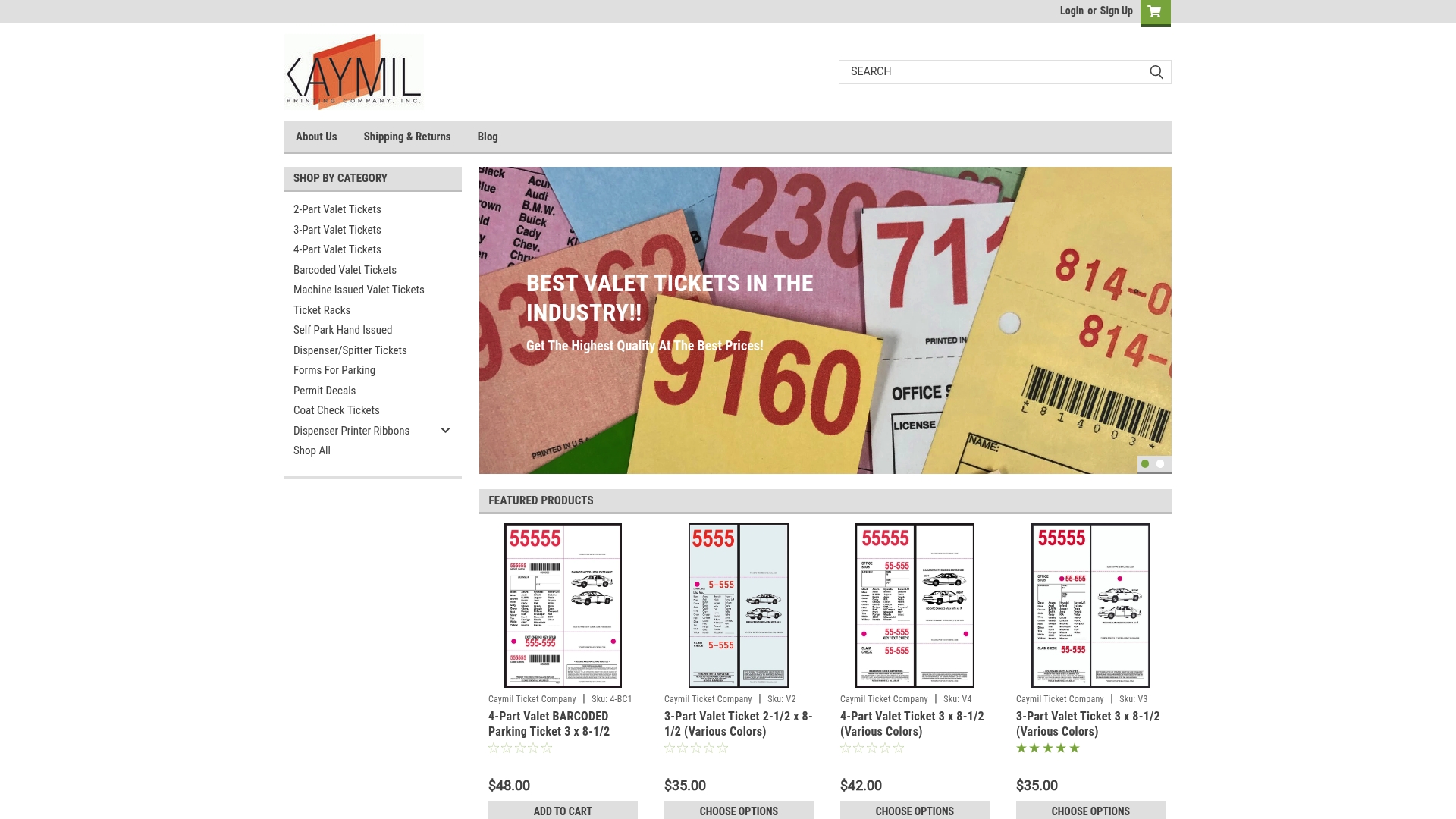
Caymil has manufactured reliable parking ticket stock since 1937, supplying machine-issued valet tickets, barcoded tickets, and multi-part carbonless formats to garages, municipalities, hotels, and event venues across the United States. Caymil’s tickets are compatible with major parking systems including Amano, TIBA, SKIDATA, FLASH Parking, Scheidt & Bachmann, and Flowbird. Operators can choose from parking forms and ticket stock in stock or fully customized formats with sequential numbering, barcoding, and security features. Accurate timestamps start with quality ticket stock. Caymil delivers both.
FAQ
What does “time-stamped” mean on a parking ticket?
“Time-stamped” means the exact date and time of the parking event or violation is printed directly on the ticket. That recorded time serves as the official evidence for enforcement and fee calculation.
How do I read the timestamp on a parking ticket?
The timestamp appears near the top of most citations and shows the date and time the ticket was issued. Compare that time against your payment receipt or arrival photo to verify accuracy.
Can a wrong timestamp get a parking ticket dismissed?
Yes. Timestamp discrepancies are recognized grounds for dismissal. If the recorded time contradicts your documented evidence, submit that evidence through the official appeal process.
What happens if I ignore a time-stamped parking ticket?
Ignoring a citation does not cancel it. The ticket is legally valid from the moment it is issued, and fines increase substantially after the payment deadline, often within 10 days.
Do valet and garage tickets work the same way as enforcement tickets?
No. Garage and valet tickets use timestamps to calculate fees and record liability, while enforcement citations use timestamps to document violations. The timestamp serves the same mechanical function but carries different legal weight in each context.
Recommended
- What Is a Stock Parking Ticket? A Clear Guide - Caymil Printing Co., Inc.
- What Is a Transient Parking Ticket? 2026 Guide - Caymil Printing Co., Inc.
- What Is a Gate-Issued Parking Ticket? Explained - Caymil Printing Co., Inc.
- Parking Receipt vs Parking Ticket: Know the Difference - Caymil Printing Co., Inc.