
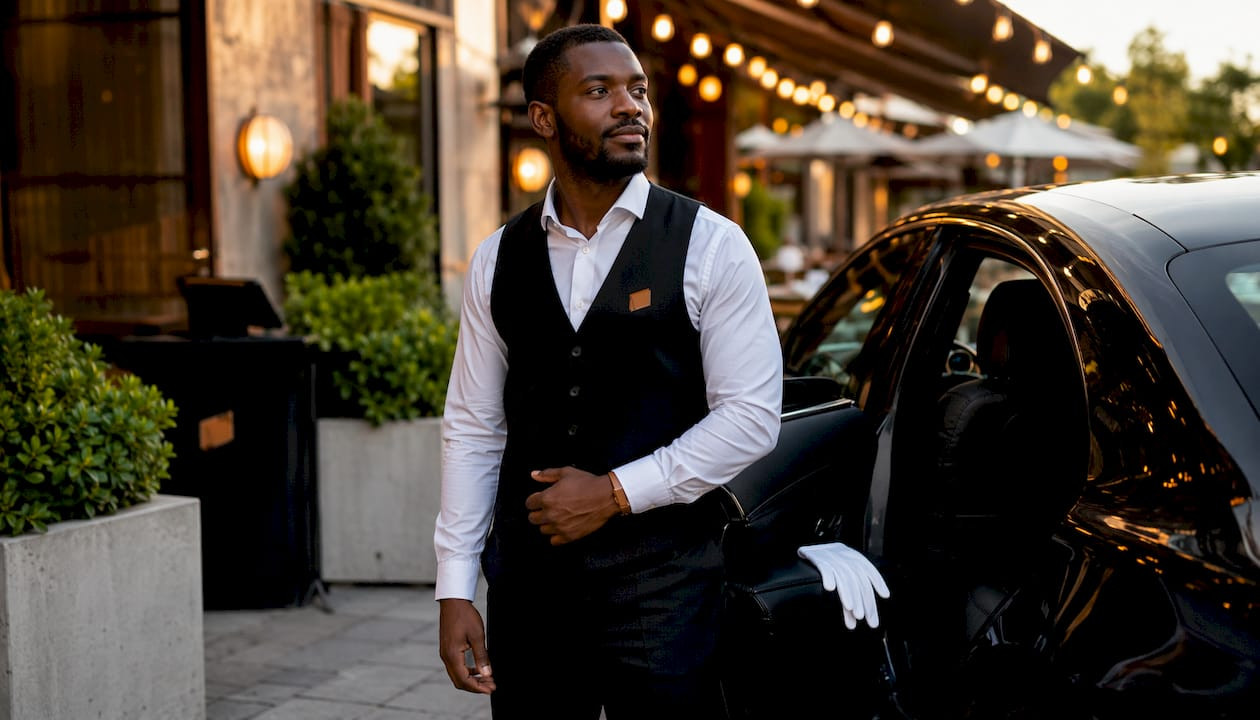
What Is White-Glove Valet Service? A Complete Guide
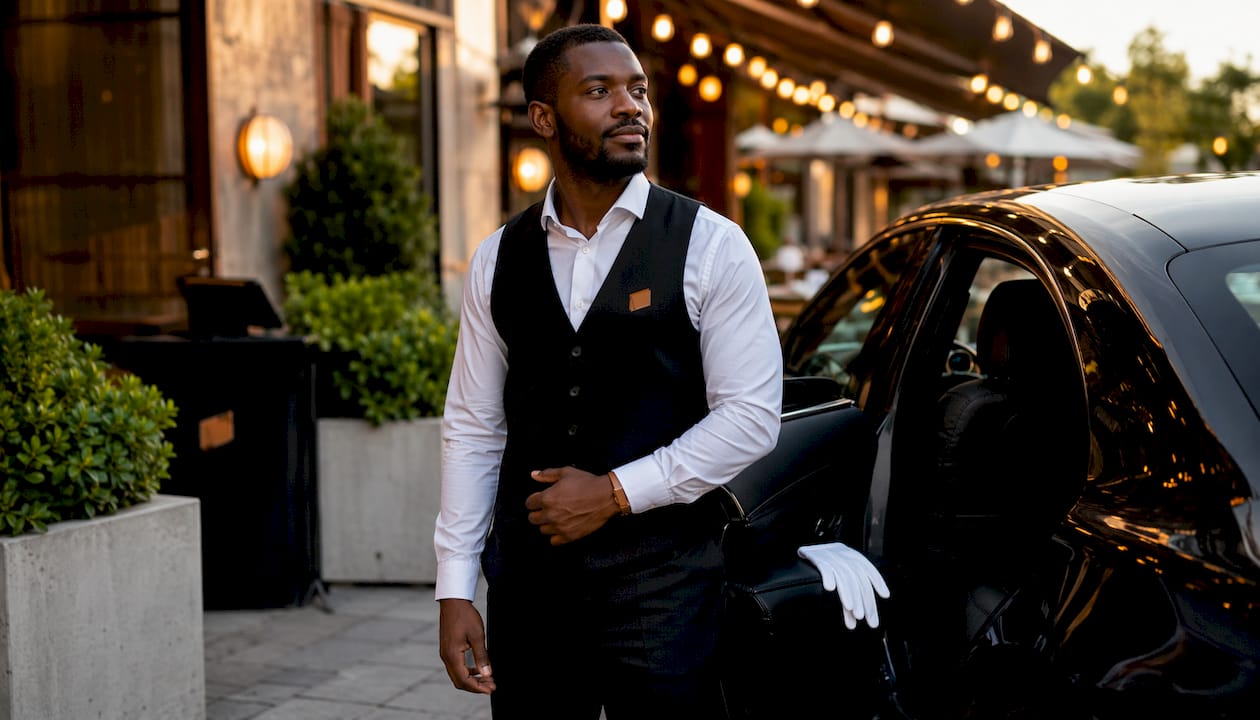
White-glove valet service is a premium, full-service parking experience built on exacting operational standards, hospitality-trained attendants, and meticulous vehicle care protocols that go well beyond what standard valet delivers. Where a typical valet operation focuses on moving cars efficiently, white-glove service treats every vehicle handoff as a brand moment. Attendants use disposable seat and steering wheel covers, conduct walk-around inspections to document vehicle condition, and preserve mirror and electronic settings exactly as the driver left them. Industries including luxury retail, fine dining, corporate events, and five-star hotels rely on this level of service because it directly reflects their brand’s reputation.
Key features that define white-glove valet service:
- Disposable protective covers for seats, steering wheels, and floor mats
- Walk-around vehicle inspections with photographic or written documentation
- Preservation of driver-set mirrors, climate controls, and seat positions
- Uniformed, hospitality-trained attendants acting as brand representatives
- Pre-event site mapping and traffic flow planning
- Real-time vehicle retrieval coordination using radio or digital communication
- High-quality printed valet tickets for secure vehicle tracking and guest confidence
Table of Contents
- What operational standards define white-glove valet service?
- Why do businesses invest in white-glove valet service?
- How custom valet ticketing supports white-glove service quality
- How should operators plan and implement white-glove valet service?
- What training do white-glove valet attendants need?
- What technology supports white-glove valet operations?
- How do operators manage customer expectations and feedback?
- Key Takeaways
- FAQ
What operational standards define white-glove valet service?
The protocols separating white-glove valet from standard operations are specific and non-negotiable. Attendants arrive 30–45 minutes before an event begins to map traffic flow, assign staging zones, and brief the team, eliminating the bottlenecks that damage guest impressions at arrival. Every vehicle receives a documented inspection before the attendant drives it anywhere.
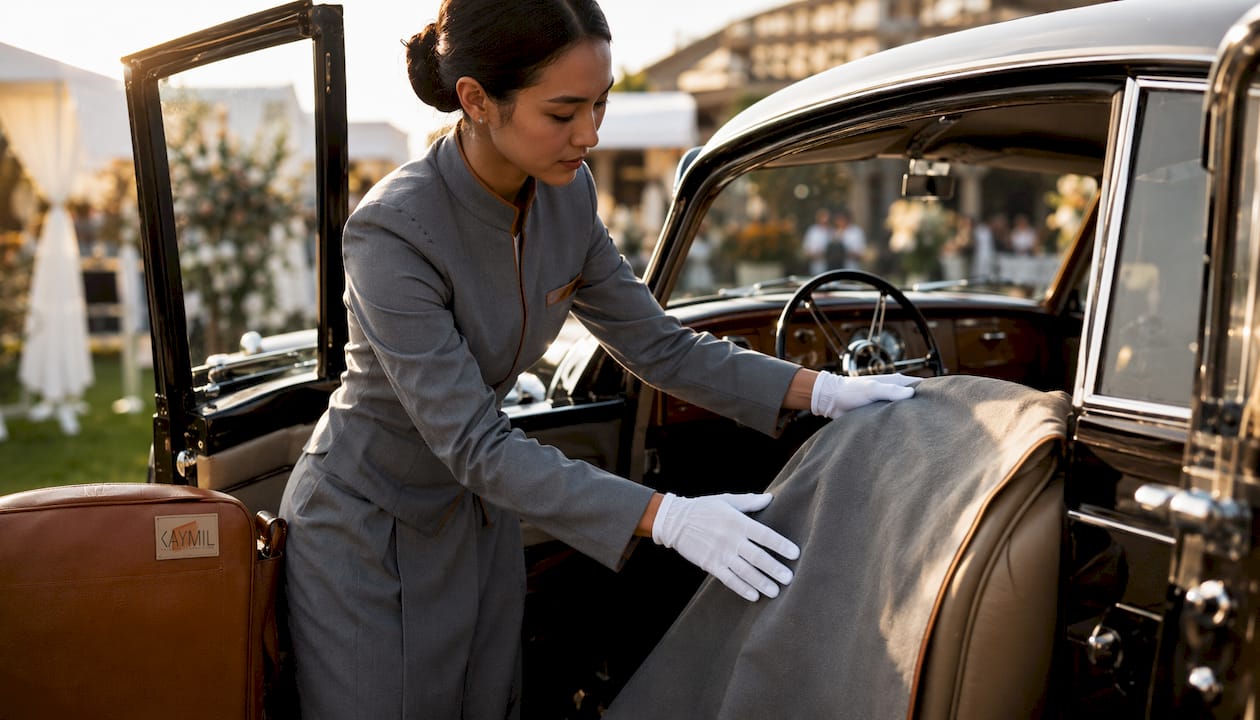
Handling high-value or classic vehicles adds another layer of responsibility. Attendants trained under white-glove standards learn the specific controls of exotic and vintage models, including manual transmissions and unconventional starting procedures, and apply physical protections like seat covers alongside photo documentation at check-in. Retrieval is equally deliberate: vehicles are pre-staged, engine running, climate set, and ready before the guest reaches the stand.
Attendant presentation matters as much as vehicle handling. Uniformed, background-checked staff trained to five-star hotel standards protect the guest’s first and last impression of any venue. Grooming standards, greeting scripts, and brand-specific conduct are all part of the training package.
Key operational elements:
- Pre-event site mapping and traffic design
- Documented vehicle inspections at check-in and return
- Specialized training for high-performance and vintage vehicles
- Formal uniforms and brand-aligned hospitality conduct
- Real-time radio or digital retrieval coordination
- Comprehensive liability insurance coverage
Pro Tip: The quality of your printed valet ticket signals your service standard before an attendant says a word. A durable, clearly numbered ticket with your logo tells guests their vehicle is in professional hands.
Why do businesses invest in white-glove valet service?
White-glove valet functions as a direct extension of a venue’s identity. When attendants act as brand ambassadors, wearing tailored uniforms and delivering scripted hospitality, the valet stand becomes the first and last touchpoint of the guest experience rather than a logistical afterthought. For luxury hotels, high-end restaurants, and corporate event venues, that distinction carries real commercial weight.
Risk management is an equally compelling reason. Shifting vehicle handling to trained, insured personnel reduces exposure to damage claims, vandalism, and theft. Venues that self-manage parking without professional oversight carry liability they rarely account for in advance.
Business benefits at a glance:
- Reinforces brand prestige at every guest arrival and departure
- Reduces vehicle damage liability through insured, trained staff
- Shortens guest wait times with pre-staged retrieval protocols
- Creates personalized, high-touch interactions that drive repeat visits
- Differentiates the venue from competitors offering standard parking
- Supports revenue justification through premium service positioning
How custom valet ticketing supports white-glove service quality
The printed valet ticket is the operational backbone of any white-glove program. It identifies the vehicle, tracks its location, and coordinates retrieval, and when it fails, the entire service chain breaks down. Valet tickets with sequential numbering, barcodes, and multi-part carbonless formats reduce errors, prevent loss, and convey professionalism at every handoff.
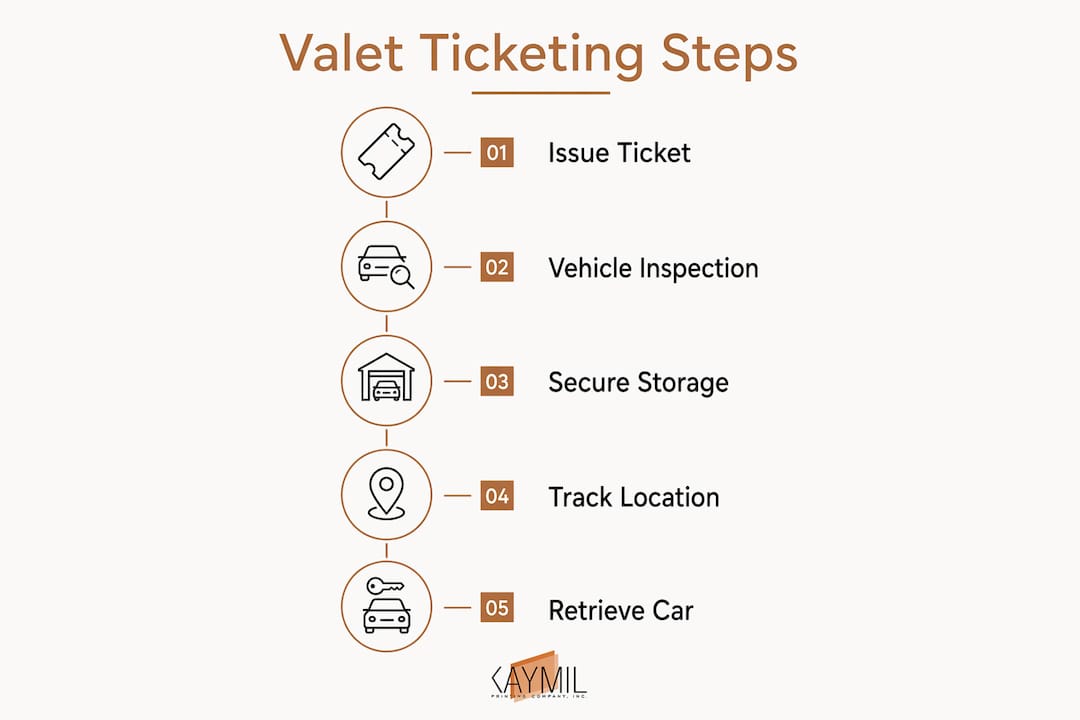
Caymil Printing Co. has manufactured custom valet tickets since 1937, supplying operators across hotels, casinos, hospitals, and event venues nationwide. Their tickets are available with logos, custom colors, security numbering, barcodes, and multi-part formats that give operators full control over documentation and brand presentation.
| Feature | Operational Benefit |
|---|---|
| Sequential numbering | Prevents duplicate claims and tracks vehicle order |
| Barcode integration | Enables fast, error-minimizing digital scanning |
| Multi-part carbonless format | Provides simultaneous copies for attendant, guest, and records |
| Custom logo and color printing | Aligns ticket appearance with venue brand standards |
| Durable stock material | Withstands outdoor conditions without fading or tearing |
Customizable options from Caymil’s valet ticket catalog include:
- Sequential numbering with anti-duplication security features
- Barcode and QR code integration for digital tracking
- Two-part, three-part, and four-part carbonless formats
- Full-color logo and venue branding
- Custom sizing compatible with major valet management systems
A well-designed ticket does more than track a car. It tells the guest that the operation behind it is organized, accountable, and worth trusting.
How should operators plan and implement white-glove valet service?
Adopting white-glove valet requires deliberate planning before the first attendant takes a key. Operators who skip the assessment phase often understaff events or mismatch service intensity to their guest profile, both of which undermine the premium positioning they paid for.
Practical steps for operators:
- Assess venue size, guest volume, and arrival patterns before setting staffing levels
- Select attendants with hospitality backgrounds and conduct structured vehicle-handling training
- Source professional printed tickets with security features before launch, not after
- Design traffic flow and staging zones during site visits, not on event day
- Establish radio or app-based communication protocols for retrieval coordination
- Schedule post-event debriefs to identify service gaps and refine procedures
- Build pricing models that reflect the true cost of trained staff, insurance, and quality materials
Budget planning should account for ticket quality as a fixed operational cost, not a variable to cut. Operators who reduce ticket quality to save money typically spend more resolving disputes and reprint costs than the savings justify. Reviewing common valet ticketing mistakes before launch prevents the most frequent and costly errors.
What training do white-glove valet attendants need?
White-glove attendants require training that covers both vehicle handling and hospitality conduct. On the vehicle side, that means proficiency with automatic and manual transmissions, familiarity with high-performance and luxury vehicle controls, and strict adherence to protective equipment protocols. On the hospitality side, attendants learn greeting standards, guest communication, and brand-specific conduct that matches the venue’s tone.
Background checks are standard practice. Many operators also require attendants to hold valid driver’s licenses with clean records and complete defensive driving coursework. Ongoing training, not just onboarding, keeps standards consistent across a full team.
What technology supports white-glove valet operations?
Digital dispatch and retrieval apps have become standard tools in high-end valet operations. Guests text or use a venue-branded app to request their vehicle, triggering an alert to the attendant team and starting the pre-staging process before the guest reaches the stand. This eliminates the wait that undermines premium service perception.
Radio communication between attendants and the valet stand remains reliable for large outdoor events where cellular coverage is inconsistent. Barcode-enabled valet tickets integrate with these systems, allowing attendants to scan a ticket and pull up vehicle location instantly rather than searching manually.
How do operators manage customer expectations and feedback?
Guest expectations in white-glove valet are set by the venue’s overall positioning. A five-star hotel guest expects their car returned spotless, climate-controlled, and waiting. Any deviation from that standard generates a complaint regardless of how minor the lapse seems operationally.
Operators who collect structured feedback after events, through post-visit surveys or direct follow-up, identify service gaps before they become patterns. Documenting vehicle condition at check-in with photos protects both the operator and the guest, and sharing that documentation proactively builds trust. Clear, professional ticket documentation is part of that trust chain: a legible, durable ticket with the right information reduces disputes at retrieval and reinforces the guest’s confidence in the operation.
Key Takeaways
White-glove valet service combines strict vehicle care protocols, hospitality-trained attendants, and professional printed ticketing to deliver a premium guest experience that directly reflects a venue’s brand.
| Point | Details |
|---|---|
| Operational protocols are non-negotiable | Seat covers, walk-around inspections, and setting preservation define the white-glove standard. |
| Attendants are brand representatives | Uniformed, background-checked staff trained to hospitality standards protect the guest impression. |
| Ticketing quality drives operational reliability | Sequential numbering, barcodes, and multi-part formats prevent errors and convey professionalism. |
| Risk management is a core benefit | Trained, insured personnel reduce vehicle damage liability for the venue. |
| Planning determines service quality | Early site mapping, staffing assessment, and traffic design separate successful programs from reactive ones. |
FAQ
What is white-glove valet service?
White-glove valet service is a premium parking experience that combines protective vehicle handling, hospitality-trained attendants, and strict operational protocols to deliver a high-touch, brand-aligned guest experience beyond standard valet.
Which industries use white-glove valet service most?
Luxury hotels, fine dining restaurants, high-end retail, corporate event venues, and healthcare facilities are the most common operators of white-glove valet programs in the United States.
How do valet tickets support white-glove service?
Valet tickets with sequential numbering, barcodes, and multi-part carbonless formats track vehicles accurately, prevent retrieval errors, and signal operational professionalism to guests at every handoff.
What separates white-glove valet from standard valet?
White-glove valet adds protective equipment, documented vehicle inspections, specialized attendant training, pre-event site mapping, and brand-aligned hospitality conduct that standard valet operations typically do not include.
Where can operators source custom valet tickets for white-glove programs?
Caymil Printing Co. manufactures custom valet parking tickets with sequential numbering, barcodes, logos, and multi-part formats, supplying operators nationwide since 1937.
Recommended
- How Upscale Valet Operations Work: 2026 Guide - Caymil Printing Co., Inc.
- Luxury Hotel Valet Ticket Explained for Guests and Pros - Caymil Printing Co., Inc.
- Custom Valet Solutions for Hospitality and Event Venues - Caymil Printing Co., Inc.
- Premium Valet Ticket Guest Experience: 2026 Guide - Caymil Printing Co., Inc.