
US Parking Ticket Ads: 3 Permission Checks Before Print

Yes, advertising on parking tickets can be an effective, measurable out-of-home channel when you choose the right format and secure the right permissions. The approach can put a message in front of a driver holding a physical ticket or confirmation email, though that does not guarantee they will notice or engage with it. The main constraint is permission. Municipal parking publications often carry procurement and content rules that private operators do not face. If you want measurable local foot traffic, favor coupons or QR codes placed on receipts or digital confirmation emails.
TL;DR:
- Confirm in writing who controls ticket advertising rights, review any municipal procurement or content rules, and obtain approval before producing proofs or stock.
- Match the format to the exposure window: tickets suit brief offers, while confirmation emails and wallet passes can carry trackable links and resurface later.
- Use one clear offer and tracking method, such as a unique code or QR code, and keep barcodes and sequential numbers unobstructed.
- Ask for ticket volumes, minimum purchase terms, redemption counts, and a sample report; networked buys may lower per ticket rates compared with single facility placements.
- Avoid layouts that resemble enforcement notices, and train staff to honor each offer so misleading creative or unfamiliar redemption rules do not deter customers.
Table of Contents
- How ticket-based advertising works and the formats available
- Legal, policy, and permissions: public vs. private parking publications
- Creative and offer tactics that convert on ticket media
- Pricing and revenue models: how operators and networks charge
- Measurement and tracking: how to prove ROI from ticket ads
- Campaign examples and common pitfalls
- How to start: a step-by-step checklist for vendors, operators, and printers
- What operators actually look for in a ticket-ad proposal
- Getting your ticket ads produced: what we handle at Caymil
- FAQ
- Sources
How ticket-based advertising works and the formats available
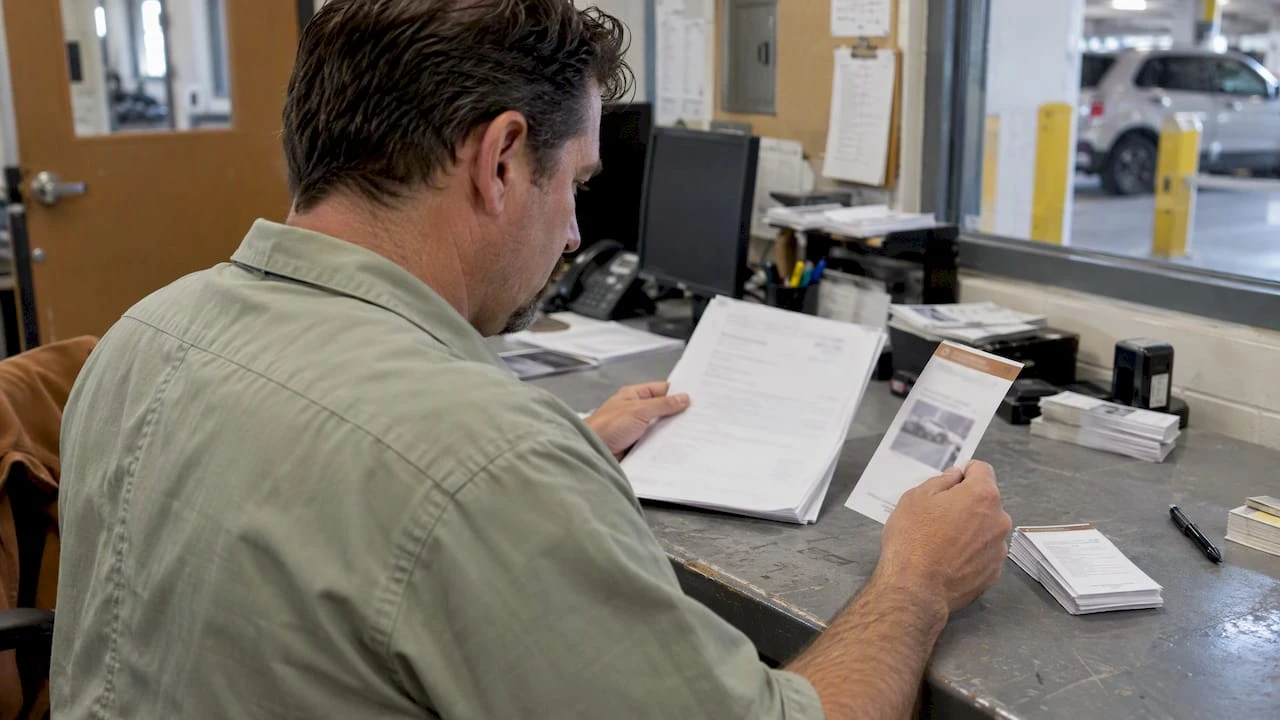
Ticket advertising covers several physical and digital surfaces, each with a different exposure window. Valet tickets are handed directly to a patron and can remain in a wallet or cupholder during a visit, making them a location-specific format. Dispenser or “spitter” tickets print automatically from machine-issued stubs at garage entries and get glanced at briefly before being tucked away. Barcoded receipts and print-at-home confirmations extend the message into a driver’s inbox or smartphone wallet, where it can resurface at checkout or pickup.
Where the ad lives changes what it can do:
- Ticket face: brief visibility, suited to a single offer or brand mark.
- Confirmation email: longer dwell time, supports a fuller message and a trackable link.
- Smartphone wallet pass: the message may be seen again when the driver checks parking details.
Production limits matter as much as placement. Multi-part carbonless formats need the ad art confined to a defined zone so it survives the perforation and tear-off process, and barcodes or sequential numbers must stay fully unobstructed for scanning and revenue tracking.
Legal, policy, and permissions: public vs. private parking publications
Who controls the ticket determines what you can print on it. Municipal and public parking publications are frequently treated as official city-produced materials. Portland’s own policy spells this out: the city can set minimum advertising rates, require procurement and content review, contract with third-party advertising sellers, and reserve the right to ban advertising outright, according to Portland’s parking advertising policy. Private garage operators may have more flexibility, but their arrangements can depend on contracts with the facility, parking management vendor, or a third-party ad network.
Before you commit budget or design time, confirm three things in writing:
- Who actually holds the ad rights for the ticket stock or facility, since it may not be the operator you first contact.
- Whether a written advertising policy or contract exists, including minimum-rate clauses and content-review steps.
- How proofs get approved, and by whom, before any print run begins.
Skipping this step can cause a campaign to stall after the creative is finished. Get operator or municipal sign-off before you produce ad stock, order proofs, or lock a media buy.
Creative and offer tactics that convert on ticket media
A ticket ad can offer a value exchange as well as a brand impression. Single-use promo codes, timed discounts, a small upgrade, or a modest freebie give the driver a reason to act during or right after the visit, which is what separates a converting ticket ad from a logo nobody remembers.
Design for small, fixed formats:
- Use landscape or square art so it fits both printed stock and digital print-at-home tickets.
- Choose high-contrast colors and a single, clear call to action rather than a crowded layout.
- Leave space around barcodes and sequential numbers to help avoid interfering with scanning and ticket control.
CTA mechanics should be built for tracking from the start: a QR code carrying UTM parameters, a scannable barcode tied to point-of-sale, or a promo code printed in a prominent spot on the ticket. Whichever mechanic you choose, confirm front-line staff know how to honor the redemption, since unfamiliarity with the offer could cost you a customer.
Pro Tip: Test one offer mechanic at a time, since stacking a QR code, a promo code, and a barcode on one small ticket usually confuses the driver more than it informs them.
Pricing and revenue models: how operators and networks charge
Ticket advertising gets sold a few different ways, and knowing which model you’re being offered changes how you budget. Some platforms charge a per-ticket fee only when a ticket actually issues, a pay-as-you-go structure described by ticket-ad network pricing models. Other arrangements split revenue with the operator, sell a flat-run buy for a fixed quantity of printed stock, or price against performance metrics like redemptions.
Scale changes the math. Networked buys across many facilities, like the multi-location model used by A Lot Media, can reach thousands of locations and generate large daily impression volumes, which tends to lower the effective rate per ticket. A single-facility buy may cost more per ticket because it lacks network scale. Before signing anything, ask for historical ticket volume, expected impressions, and any minimum-purchase clause buried in the contract.

Measurement and tracking: how to prove ROI from ticket ads
Ticket ads are trackable if you build tracking in from the start. Unique promo codes tied to a specific run, QR codes with analytics attached, and barcode scans linked to point-of-sale all give you a redemption count you can compare against tickets issued. Digital formats add another layer: open rates and clicks on confirmation emails, plus repeat views on a smartphone wallet pass, show engagement even before a redemption happens.

When you evaluate a media partner, ask for ticket issuance counts, timestamps, and redemption numbers, and request a sample report before you commit to a full run. That sample tells you whether the operator’s reporting is detailed enough to calculate a real conversion rate, not just an impression estimate.
Campaign examples and common pitfalls
A coupon printed directly on a parking ticket, paired with a matching offer repeated in the confirmation email, tends to drive the clearest foot-traffic lift because the driver sees the offer twice before they ever reach the register. That print-plus-digital combination can provide separate measurement points for each format.
The clearest cautionary example is creative that mimics an enforcement notice, a fake-fine look that has provoked complaints and bad press for brands that tried it. Avoid any language or layout that could read as an official citation.
- Do get written operator or municipal approval before production.
- Do proof tickets before the full run and train staff on redemption.
- Don’t cover or crowd barcodes and sequential numbers.
- Don’t borrow enforcement-style wording or formatting.
How to start: a step-by-step checklist for vendors, operators, and printers
Launching a ticket-ad campaign involves several steps, and skipping one can lead to a reprint.
- Confirm who holds the ad rights, whether that’s the facility operator, a municipality, or a third-party network.
- Request ad specs and historical ticket volumes so you know the format and realistic reach.
- Submit art proofs for review and wait for written sign-off before ordering stock.
- Agree on run dates, reporting cadence, and any indemnity language, especially with a municipal partner.
- Order sample proofs, confirm print quality, then move to final production.
When you talk to a printer, ask about bleed and safe-zone dimensions, barcode or numbering clearance, compatibility with multi-part carbonless formats, color limitations on thermal stock, and realistic lead times. A complete guide to ticket media covers how these specs interact with different parking systems if you want more detail before you brief a printer. If a garage is also adding complementary signage near entry points, queue pole signage options are worth a look for reinforcing the same message beyond the ticket itself.
What operators actually look for in a ticket-ad proposal
Operators care about revenue and daily operations first. Frame your proposal as something that adds revenue, subsidizes ticket stock, or makes the ticket itself more useful to the driver. Clear redemption mechanics and measurable offers are what earn buy-in, not polished brand messaging alone.
— Richard
Getting your ticket ads produced: what we handle at Caymil
Once you’ve secured approval and locked a creative direction, the printing side needs to keep pace. We manufacture custom and stock valet, barcoded, and multi-part carbonless tickets, and our stock works across major parking systems including Amano, TIBA, SKIDATA, FLASH Parking, Scheidt & Bachmann, and Flowbird. That compatibility can help an ad campaign run through an existing operator setup without requiring a system change.
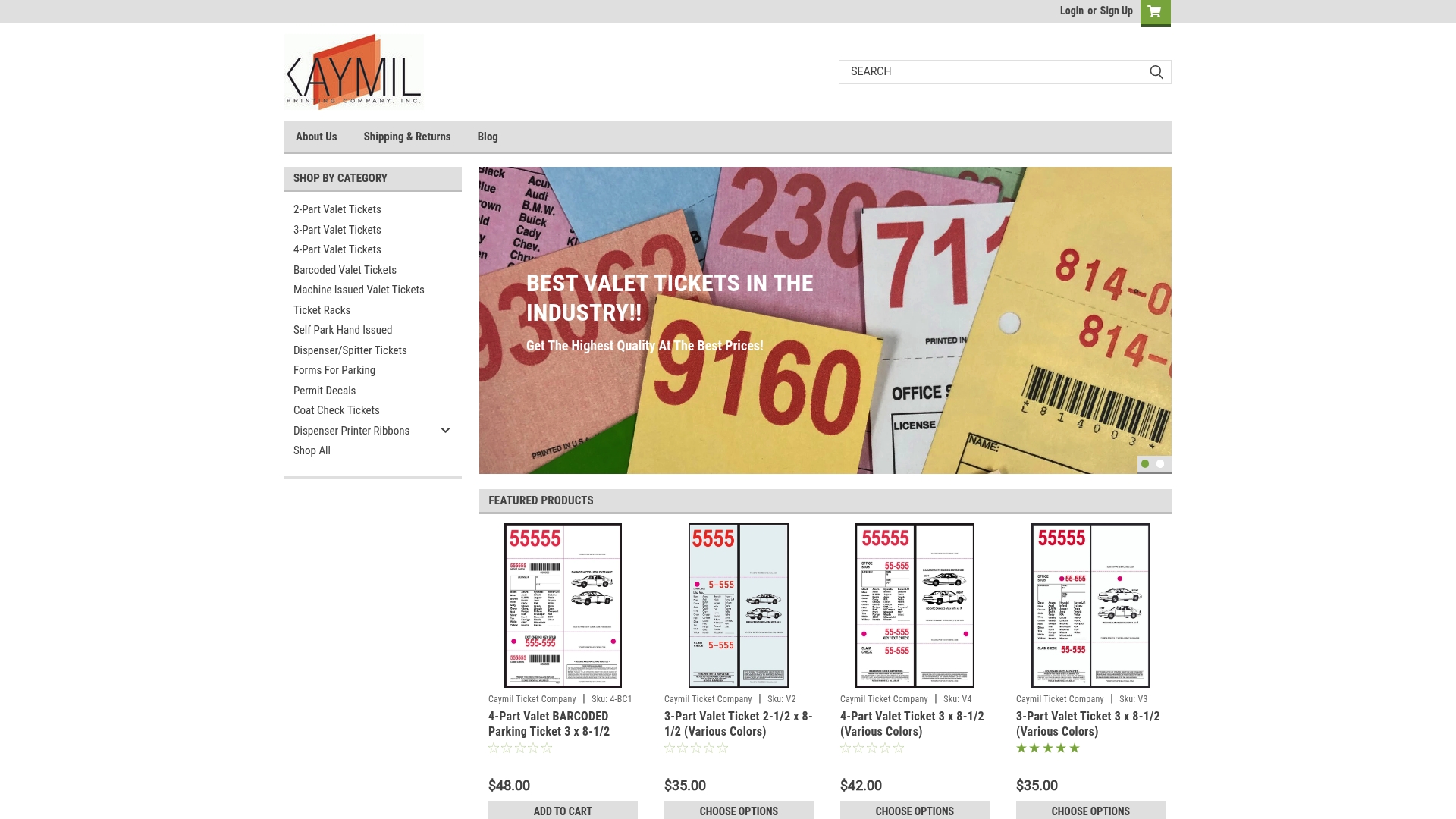
If you need barcode integration for redemption tracking, our barcoded valet tickets may be suitable, and our 3-part valet tickets can be customized for your needs. For operators exploring custom branding alongside an ad program, our guide to custom logo parking ticket options walks through what to specify. Request sample proofs or an ad-spec sheet from our full catalog and get a production timeline before your next campaign window closes.
FAQ
What are people that give out parking tickets called?
In the enforcement context, the people who issue citations are usually called parking enforcement officers or traffic wardens, depending on the city. That’s a separate role from the valet attendants or garage staff who hand out valet or entry tickets as part of normal parking operations.
Do parking tickets go on your record in Ohio?
This question refers to parking citations, not the ticket stock discussed in this guide, and the answer depends on the specific municipality’s enforcement and court procedures. Check with the issuing city or county court directly, since parking violation rules vary by jurisdiction even within the same state.
What’s the best excuse to appeal a parking ticket?
This again concerns citation appeals rather than advertising-ticket media, and outcomes depend on the issuing authority’s own appeal process and evidence standards. Contact the municipality or parking authority that issued the citation for its specific appeal procedure and deadlines.
What is pay and display?
Pay and display is a parking payment system where a driver pays at a central machine and displays a printed receipt or permit on the dashboard instead of using an individual meter. These receipts are one of the ticket formats that can carry ad space, since the driver typically keeps the receipt visible for the length of the stay.
Do I need the operator’s permission before printing ad-branded tickets?
Yes, secure written approval before producing ad stock. Municipal parking publications may involve procurement and content-review rules, as Portland’s policy outlines, and private operators may have relevant contractual requirements. Confirm who holds the ad rights and get sign-off on art proofs before committing to a print run.