
UV Protection for Disability Parking Permits: 6 Ways to Slow Fading

Use a UV-rated protective sleeve or a professionally made laminated or synthetic hang tag, and keep the permit out of direct sun whenever you park. UV light and heat break down paper and ink, so a barrier plus shade slows the damage. No cover is permanent, though, so check your permit often and plan to replace it before the text becomes hard to read.
TL;DR:
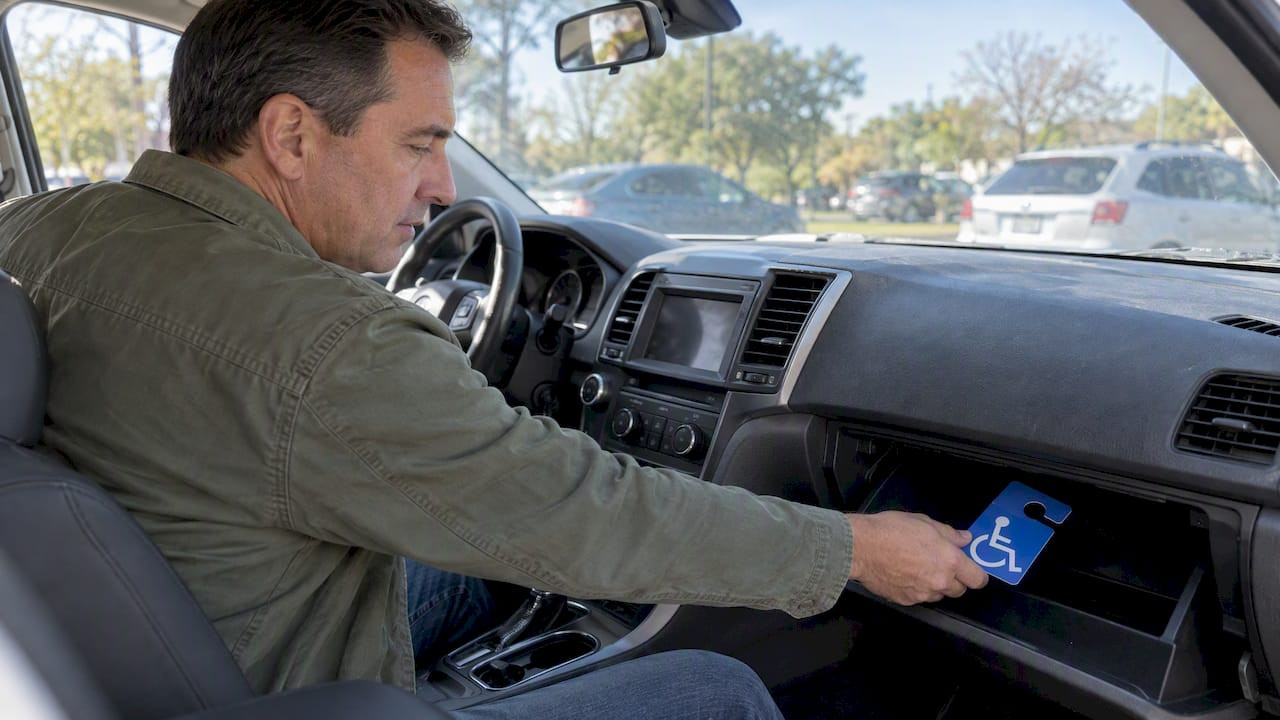
- Take the permit down whenever you park in sunlight, store it in a cool glove box, and avoid leaving it on the dashboard.
- Choose a UV rated sleeve or professionally made synthetic tag; ordinary clear sleeves and consumer laminating pouches may trap heat or lack UV protection.
- Inspect the permit monthly when your car sits in the sun, and more often in summer; replace it once the text becomes hard to read.
- Black text often stays legible longer than colored inks, but ink performance depends on the substrate, so request printing designed for window exposure.
- Photograph a fading permit as a backup, then ask the issuing authority about replacement or temporary permission; use a photocopy only with its approval.
Table of Contents
- What can you do today to keep a permit from fading?
- Which materials and coverings resist UV, and why do they differ?
- What mistakes make fading and damage worse?
- How long does protection last, and when should you replace a permit?
- What can you do while you wait for a replacement?
- How do UV resistant printing inks help a permit last longer?
- Which UV resistant permit solutions are the most cost-effective?
- How can professional hang tags and permit decals keep your permit readable?
- What matters most when you want your permit to stay readable?
- FAQ
- Sources
What can you do today to keep a permit from fading?
Start with the changes that cost almost nothing and work every day. The goal is to cut the hours of direct sun your permit sees, then add a proper barrier for the hours you can’t avoid. The sections below explain the materials in more detail, but this checklist is where most people see results.
Here are the actions to take, in priority order:
- Use a UV-rated sleeve or a professionally laminated or synthetic hang tag. Look for a product that is clearly labeled as UV-stabilized, not just “clear.”
- Take the permit down when you park in the sun. Hang it from the rearview mirror only when the car is in shade or driving, and tuck it into a visor or covered storage spot when parked outdoors.
- Store it somewhere cool and dark between uses. A glove box or center console keeps it away from the heat that builds on a dashboard.
- Avoid leaving it on the dashboard for long stretches. The dashboard is one of the hottest, brightest spots in a parked car.
- Flip or rotate it occasionally if it must stay on display, so the same surface isn’t always facing the glass.
- Allow some airflow when you can. Sealed covers can hold heat and humidity against the permit, which is the opposite of what you want.
If your permit adheres to the windshield instead of hanging, placement matters just as much. Our guide to windshield permit placement that lasts walks through choosing a spot that reduces sun exposure.
Pro Tip: Make “permit down, permit in the glove box” part of the same routine as locking the car. A habit you repeat every time costs less than any product you can buy.
Long exposure matters because damage adds up quietly. Researchers who exposed printing and writing papers to light over many years found chemical and mechanical changes that varied with the paper’s makeup, and even stable papers showed dramatic changes after multi-year exposure. A permit is a small piece of paper or printed substrate, and a sunny windshield is a demanding environment for it. Cutting the hours of exposure is the cheapest protection you have.
Mounting choice is the other half of the routine. A hang tag that stays on the mirror all day sits in the full path of the sun through the windshield, while a tag that comes down when you park only takes that exposure while you drive. If you work or shop in the same lot every day, think about where the sun lands at that hour and whether a covered or shaded space is available. Small adjustments like parking facing a different direction can change how much light reaches the dashboard. None of this requires a purchase, and all of it adds months to the life of the permit you already have.
Which materials and coverings resist UV, and why do they differ?
Not every permit is made of the same stuff, and the material changes how well it holds up. Understanding a few terms helps you choose a replacement or a cover that actually protects.
What lightfastness means
Lightfastness is how well a printed item keeps its color and legibility when exposed to light. Testing standards give manufacturers a shared way to measure it. ASTM D3424 and related standards provide a framework for measuring the relative lightfastness of printed matter, and they show that different papers and inks have different durability thresholds. They also make clear that no enclosure makes a document permanent in high-sunlight environments.
Different papers and inks have different durability thresholds, and no enclosure guarantees permanence under heavy sunlight. Standardized lightfastness testing gives you a way to compare products, but it does not promise any permit will last forever in a sunny car.
Paper, coated paper, and synthetic substrates
The base material and the ink work together, and the pairing matters. A study of water-based inkjet inks found that inks on coated papers can be more susceptible to UV degradation, and that black inkjet inks are often more lightfast than some colored inks. The same work showed that accelerated test chambers and natural exposure behind glass can be used to predict how a print will fare indoors or in a window. A car windshield is exactly that kind of behind-glass exposure.
Synthetic papers, such as polyethylene-based sheets, are a popular alternative because they resist moisture and tearing. They are not immune to aging, though. Accelerated testing in a preliminary study of synthetic papers found they can discolor and lose integrity under UV, heat and humidity, and that the type of sample determines which condition causes the most change. In practice, a good synthetic hang tag is a strong choice, but it still benefits from shade.
What “UV-stabilized” actually means
A UV-stabilized film or sleeve contains additives such as UV absorbers and antioxidants that slow the photochemical reactions behind yellowing and embrittlement. Preservation research on lamination notes that these additives can minimize degradation for a time, but may not last the full life of the film. The same work describes a properly formulated cellulose acetate film as a compromise for protection. Stabilizers slow the damage; they do not stop it.
Why not all laminating is equal
Common consumer-grade laminating pouches often lack true UV-stabilizing properties. They can protect against moisture and abrasion, but they may yellow or turn brittle in constant sunlight. A standard non-UV-rated sleeve can also speed up thermal damage or trap humidity, which can cause ink to bleed or the paper to warp. Professionally specified films are chosen and tested for the job, which is why they behave differently from an office pouch.
When you shop for a cover or a replacement, look for these features:
- A product described as UV-stabilized or UV-rated, not just “clear” or “protective.”
- A synthetic or properly coated substrate rather than plain uncoated stock.
- Inks chosen for lightfastness, with black text as the safest option for legibility.
- Edges and corners that stay sealed without trapping heat against the permit.
What mistakes make fading and damage worse?
Some well-meant fixes do more harm than good. Avoiding these mistakes protects both the permit and your time.
- Using consumer laminating pouches. They often lack UV stabilizers, and they can yellow, trap heat, or push ink to bleed.
- Trusting any clear sleeve. A sleeve that isn’t UV-rated may guard against scuffs but won’t block UV, and it can create a small hot, humid pocket that speeds degradation.
- Trying heat or solvent treatments at home. Heat and solvents can soften inks and cause adhesives to migrate into the printed area.
- Ignoring early warning signs. Yellowing, brittleness and ink bleeding mean the cover or the permit is already failing.
If you spot any of those signs, take the covering off and replace it promptly rather than hoping it holds. A suspect cover can do more harm than no cover at all. And if you ever need to remove an adhesive permit, our guide on removing permit adhesive without harming your tint, paint, or dash explains how to do it safely.
How long does protection last, and when should you replace a permit?
There is no single timeline, because exposure varies so much from one car to the next. Lab testing shows measurable degradation over time, and heavy sun exposure speeds that up. What you can do is understand the factors and watch for clear signals.
These factors change how long a permit stays readable:
- Direct sun hours. A permit on a dashboard in an unshaded lot ages faster than one stored away between uses.
- Window tinting. Some tint can reduce light reaching the permit, while a clear windshield lets more through.
- Material type. Coated paper, uncoated paper and synthetic stock each age differently.
- Ink and printing method. The ink and substrate pairing affects how quickly colors and text fade.
Use this simple routine to stay ahead of the problem:
- Check the permit once a month if your car sits in the sun, and more often in summer.
- Look for faded text or colors, loss of legibility, cracking in the material, and adhesive that is lifting.
- Replace the permit as soon as the text is hard to read, before an enforcement officer has trouble reading it.
- Choose a UV-stabilized, professionally produced replacement so the next one lasts longer.
Replacing a permit while it is still legible is easier than waiting until it fails. A faded permit that can’t be read may lead to a citation, and a replacement ordered ahead of time avoids a gap in coverage.
What can you do while you wait for a replacement?
If your permit is already faded, you can take lawful interim steps to stay visible and compliant until a new one arrives. Always confirm the rules with your issuing authority first, since requirements differ by location.
- Photograph the permit with your phone and keep the image easy to find as a backup record.
- Ask the issuing authority about a reissue or a temporary permit if legibility is already compromised.
- Place a clear photocopy behind the original as an interim measure only if your issuer allows it.
- Skip DIY laminating that uses a lot of heat. Professional reprints or lamination specified by the manufacturer are safer for the permit.
Contacting the issuer early is the strongest move. Many agencies would rather replace a fading permit than see a driver cited for an unreadable one, and a quick call can settle what is acceptable in the meantime.
How do UV resistant printing inks help a permit last longer?
Ink is one of the biggest factors in how long a permit stays readable. Permits on the same stock can age very differently if the inks differ, because dyes and pigments respond to UV in their own ways.
The research points to a few useful ideas. Black inks are often more lightfast than some colored inks, so permits that rely on strong black text tend to stay legible longer than permits that depend on pale or colored text. The substrate also matters, since an ink that holds up well on one surface can fade faster on another. That is why ink and material should be chosen together, not separately.
For a permit holder, the practical takeaway is to look for printing that was designed for outdoor or windowed use. Ink alone won’t make a permit permanent, because the same lab work shows that all printed matter ages under light. But the right ink on a stable substrate, paired with a UV-rated cover and sensible habits, gives you the longest readable life available. When you request a replacement, ask how the permit is printed and whether the inks are chosen for lightfastness.

Which UV resistant permit solutions are the most cost-effective?
The cheapest option up front is rarely the cheapest over time. A low-cost pouch that yellows in a few months can end up costing more than a better product that lasts through a full renewal period, once you count the time spent replacing and the risk of a citation.
Think of it as a ladder of effort and cost. At the bottom is free: shade, storage and rotating the permit. Next comes a UV-rated sleeve, which is a modest purchase and protects the permit you already have. Above that is a professionally produced laminated or synthetic hang tag, which builds protection into the permit itself. Consumer laminating pouches may look like a bargain, but because they often lack UV stabilizers, they can fail early and force a second purchase.

The best value for most people is a combination: build the free habits first, then choose a durable, professionally made permit or a properly rated sleeve. The habits cost nothing and extend the life of any product you add. If your permit is issued in bulk by an agency or property, ordering durable stock once is usually cheaper than reissuing faded permits again and again. For operators coordinating parking at events and venues, this guide to production parking and staging is a useful look at how vendors plan parking logistics.
How can professional hang tags and permit decals keep your permit readable?
We have been manufacturing parking products for many years, and permit hang tags and permit decals are a core part of what we make. For parking operators, property managers and administrators who need permits that survive the sun, we offer durable options built to be read clearly for as long as possible.
When you order replacements, these are the details worth requesting:
- A suitable base material for the permit.
- Hang tags designed for use at the mirror.
- Sequential numbering so every permit can be tracked and verified.
- Barcoding.
Our team can walk you through the options and help you match the construction to your sun exposure and renewal period. Our reinforced hang tag guide explains what separates a sturdy tag from one that fails early. When you’re ready, browse our permit decals and custom printing options and request a quote for durable permits that stay readable.
What matters most when you want your permit to stay readable?
I keep coming back to a few priorities. Protect the permit every day, inspect it on a schedule, and replace it before it becomes illegible. Most people reverse that order. They wait until the text is gone, then scramble for a fix, when a few minutes of routine would have prevented the problem.
The research is clear that nothing makes a printed permit permanent, so the smartest approach treats protection as a way to buy time, not to avoid replacement. A professionally produced permit on a stable substrate gives you a better starting point than any cover applied afterward, and that is the part people underestimate. Check your issuer’s rules, ask about durable replacements, and work with a vendor who can help you choose a suitable permit.
— Richard
FAQ
How can I stop my disability parking permit from fading?
Keep it out of direct sun when you park, and use a UV-rated sleeve or a professionally made laminated or synthetic hang tag. Store it in the glove box between uses. Even then, check it regularly, because lightfastness testing shows that no enclosure makes a document permanent in heavy sunlight.
Are regular laminating pouches safe for a parking permit?
Usually not. Consumer-grade pouches often lack UV stabilizers, so they can yellow, turn brittle and trap heat against the permit. A professionally specified UV-stabilized film is a better choice.
How often should I check my permit for fading?
Check it monthly if your car sits in the sun, and more often in summer. Look for faded text, yellowing, cracking or lifting adhesive. Replace it once the text becomes hard to read.
What should I do if my permit is already too faded to read?
Contact your issuing authority about a reissue or temporary permit, and photograph the permit as a backup. If your issuer allows it, a clear photocopy behind the original can serve as a short-term measure.
Sources
- Astm
- Aging of Printing and Writing Paper upon Exposure to Light. Part 2. Mechanical and Chemical Properties
- Preservation of documents by lamination
- Lightfastness Studies of Water-based Inkjet Inks on Coated and Uncoated Papers