
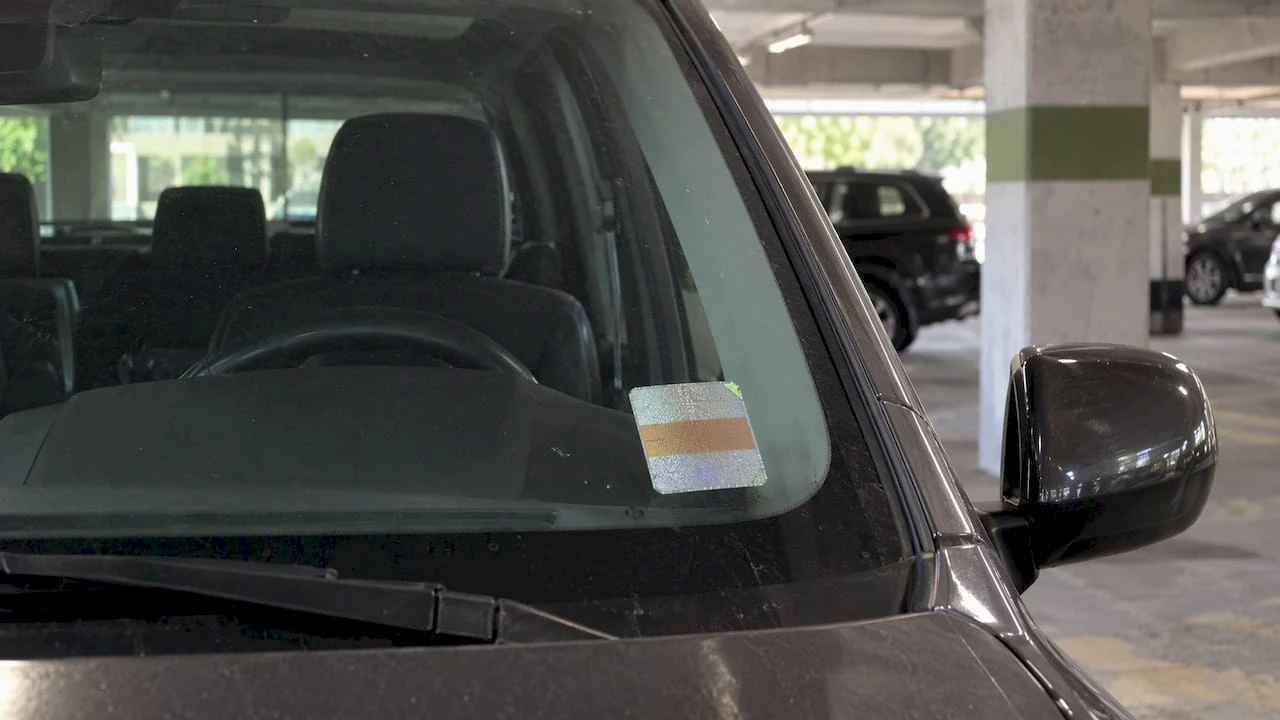
Stop Reprints: Reflective Permit Decal RFPs for Parking Operators

Specify custom reflective parking permit decals made from ASTM-class retroreflective sheeting with durable pressure-sensitive adhesive, sequential numbering, and a required art proof; this combination protects enforcement visibility and reduces costly reprints. Request material datasheets confirming the sheeting type and adhesive rating before approving any order, and send your permit classes, quantities, and artwork intent to a trusted supplier for a proof and quote.
TL;DR:
- Request the exact ASTM D4956 sheeting type and part number; LV-0700 lists about three years of vertical exposure under specified mounting and climate conditions.
- Interior glass decals need mirrored artwork viewed from outside; define class prefixes and separate sequences early, then require written proof approval before production.
- Hawaii’s specification limits security mark spacing to 0.50 inches for months and 0.75 inches for years, with daylight legibility at 10 feet.
- Before full production, test a sample on the actual glass after heat soaking and cooling, then verify enforcement distance legibility and barcode scanning.
- Institutional orders commonly cap cartons at 100 decals; label each with class, quantity, and numbering range, and schedule delivery from proof approval.
Table of Contents
- Which retroreflective materials and standards should you demand?
- What belongs in your artwork files and proof instructions?
- How do you specify security features that actually stop fraud?
- How should application and durability needs shape your material choice?
- How do you structure quantities, packaging, and delivery to avoid rework?
- What proofs and acceptance tests should you require before accepting a shipment?
- Lessons from institutional permit orders
- Caymil: how to get a quote and what to send
- FAQ
- Sources
Which retroreflective materials and standards should you demand?
Material claims mean little without a standard behind them. ASTM D4956 is the classification system that governs flexible retroreflective sheeting, covering glass-bead and microprismatic constructions and setting benchmarks for retroreflection, color, weathering, shrinkage, cracking, blistering, edge lifting, and curling. A decal that meets this standard behaves predictably across seasons and viewing angles. One that doesn’t may look fine on day one and fail by month six.

Manufacturer bulletins translate the standard into real products. The Avery Dennison LV-0700 product data bulletin lists an estimated vertical-exposure durability of about three years for LV-0700 variants, along with a minimum application temperature of negative 10 degrees Fahrenheit and available watermark and tamper-evident options. Treat these figures as conditional performance claims tied to specific mounting conditions, not blanket guarantees.
Before writing a purchase order, record these items in your RFP:
- The exact ASTM D4956 sheeting type and whether it matches decal use rather than roadway signage.
- The manufacturer part number (such as LV-0700 or a comparable 3M-referenced family) instead of the generic word “reflective.”
- Minimum service-temperature range and application temperature floor.
- Expected vertical-exposure durability in months, sourced from the datasheet.
- Shelf-life limits for unapplied inventory kept in storage.
A manufacturer datasheet from the Avery LV-0700 line cites roughly three years of vertical-exposure durability, a figure that only holds for the mounting orientation and climate conditions the bulletin describes.
What belongs in your artwork files and proof instructions?
Decals fail enforcement not because the material is weak but because the artwork was never specified clearly. A legible permit starts with the file, not the printer.
- Submit high-resolution vector files in AI, PDF, or EPS format with proper bleeds and defined process colors, following the layout guidance in the UNR parking permit design submission form, which calls for a large central number sized for readability at enforcement distance.
- Decide whether the permit needs front and back printing, and if so, place any QR code or barcode on the back where it supports reliable scanning without interfering with the visible number.
- Set numbering rules early: serial-number prefixes by permit class, separate sequences for motorcycle permits, and a distinct format for temporary hangtags.
- Confirm the viewing and application side before finalizing layout. A decal meant for interior glass, read from outside the vehicle, needs mirrored or reverse-printed elements that a flat-surface decal does not.
- Require a signed art proof as a hard gate. No production run starts until the proof is approved in writing.
Clear enforcement-readable design has its own payoff, covered in our piece on monthly parking permit design built for a three-second read.
Pro Tip: Ask your supplier to mark the proof with “viewed from outside” or “viewed from inside” directly on the file so nobody on the production floor has to guess.
How do you specify security features that actually stop fraud?
A reflective decal with no security layer is an invitation to counterfeit. The fix isn’t exotic, it’s specific and verifiable.
- Request overt features such as a watermark, security foil, or printed security marks visible without special equipment, as outlined in our guide to preventing parking ticket fraud.
- Add a machine-readable layer, a QR code or barcode tied to a permit database, so enforcement can confirm validity on the spot rather than relying on visual inspection alone.
- Write measurable acceptance criteria into the purchase order. The Hawaii DCAB specification required security mark spacing no greater than 0.50 inches for months and 0.75 inches for years, daylight legibility at 10 feet, and non-removability by chemical or physical means.
- Pair every visible security feature with a numbering rule, since a unique prefix tied to a permit class turns a quick glance into a reliable check.
Enforcement staff benefit from knowing what a genuine permit looks like, which our field guide to fake permit detection covers in more detail.
How should application and durability needs shape your material choice?
A decal engineered for a windshield won’t necessarily hold up as a hangtag, and a permit meant for interior glass needs different printing logic than one applied to a flat exterior surface.
- Confirm whether the permit will be viewed from outside a vehicle through glass or applied directly to an exterior surface, since this determines whether artwork needs mirroring and affects which adhesive family is appropriate.
- Check the manufacturer’s minimum application temperature. The LV-0700 bulletin lists a floor of negative 10 degrees Fahrenheit, a figure that matters for buyers issuing permits outdoors in cold climates, per the Avery Dennison LV-0700 bulletin.
- Specify a non-transferable adhesive that resists edge lift and temperature cycling, and that peels without leaving solvent residue, protecting both enforcement integrity and vehicle finishes, a concern we address in our notes on removing permit adhesive residue.
- Build in a field test: apply a sample to a heat-soaked surface and check adhesion after cooling, then confirm legibility from a typical enforcement distance.
Placement decisions carry real operational weight, which we unpack in our guide to windshield permit placement that lasts six months.
Pro Tip: Run your adhesion test on the actual glass or surface type your lot uses, not a generic sample panel. Tint, coatings, and surface temperature all change adhesive behavior.
How do you structure quantities, packaging, and delivery to avoid rework?
Institutional orders fail more often from vague logistics than from bad materials. The purchase order needs to spell out exactly what ships and how.
- Define a permit taxonomy by class (resident, visitor, motorcycle, temporary) with quantities assigned to each, following the pattern in the UCA-27-014 Invitation to Bid, which specified 2.375 by 4.125-inch decals alongside separate motorcycle permits and 3.25 by 6-inch temporary hangtags.
- Assign numbering ranges and prefixes per class so inventory and issuance logs stay separable.
- Require polybag or shrink-wrapped bundling with a carton maximum, commonly 100 units per carton, matching the packaging instructions found in large institutional bids like Hawaii DCAB’s order of 124,700 total units.
- Tie delivery windows to proof approval dates rather than the purchase order date, since production only starts after sign-off.
- Include replacement terms covering defective units found after delivery.
- Label every carton with permit class, quantity, and numbering range to speed receiving and storage.
What proofs and acceptance tests should you require before accepting a shipment?
Approval shouldn’t stop at a PDF on a screen. A small production sample catches problems a flat proof never will.
- Require a signed art proof and, for larger orders, a limited production sample to validate real-world adhesion, legibility, and scan performance before full production begins.
- Set pass or fail criteria in writing: adhesive must resist peeling after a heat-soak test, the serial number must read clearly from a defined enforcement distance, and security marks must stay within the spacing tolerances agreed in the proof.
- Document an inspection step at receiving that checks packaging integrity, carton counts, and a sample scan of QR or barcode data.
- Include a replacement or repair clause in the purchase order for any shipment that fails these checks.
Lessons from institutional permit orders
Most reprints trace back to a handful of repeatable mistakes: approving artwork before confirming which side faces out, leaving numbering schemes undefined until after production starts, skipping packaging instructions entirely, and never running an adhesive test before a full order ships. The fix is almost always procedural rather than technical. Standardize your permit families before you request a proof, require a signed sign-off before production, and build machine-readable data into every class so enforcement staff spend less time guessing and more time confirming. These habits are important to how permit decal orders are handled, supplying custom numbering, barcoding, and security options across parking, hospitality, and municipal accounts nationwide.
— Richard
Caymil: how to get a quote and what to send
Once your permit classes and material specs are settled, we can turn a clear request into a fast, accurate quote for reflective parking permit decals. Send us your permit classes and quantities, numbering and prefix rules, artwork files or design intent, required security features, packaging preferences, and your target delivery window, and we’ll return a proof and pricing built around those exact specs.
We print sequential numbering, barcoding, and custom security treatments in-house, ship from stock nationwide for fast turnaround, and have supplied parking, valet, hotel, casino, and municipal operators since 1937. If your procurement also covers valet ticketing, our 3-Part Valet Tickets and Barcoded Valet Tickets use the same numbering logic as your permit decals, keeping your records consistent across both. Request your art proof and quote through our permit decals page and we’ll walk the order from artwork to delivery.
FAQ
What ASTM standard should reflective permit decals meet?
Permit decals should reference ASTM D4956, the standard specification for flexible retroreflective sheeting that covers retroreflection performance, color, and weathering resistance. Ask your supplier which sheeting type and manufacturer part number the decal uses rather than accepting “reflective” as a marketing term alone.
How long should a reflective permit decal last once applied?
Durability depends on the sheeting used. A manufacturer bulletin for the Avery Dennison LV-0700 line lists roughly three years of vertical-exposure durability, while government specifications such as Hawaii DCAB’s decal requirements called for a minimum of 60 months of resistance to cracking and peeling, so always confirm the exact figure on your datasheet.
What security features should I require on permit decals?
Common requirements include a watermark or security foil, printed security marks with defined spacing, and a machine-readable QR code or barcode tied to a permit database. The Hawaii DCAB specification required security marks spaced no more than 0.50 inches apart for months and 0.75 inches for years, with legibility from 10 feet in daylight.
Does Caymil offer custom reflective permit decals?
Yes, we supply custom and stock permit decals with sequential numbering, barcoding, and security options for parking operators, hospitals, universities, and municipalities. Pricing for our standard permit decal product starts at $88, with custom quotes available based on quantity, security features, and artwork complexity.
What should I send to get an accurate quote on permit decals?
Supply your permit classes and quantities, numbering or prefix rules, final or draft artwork files, required security features, and preferred packaging and delivery timeline. This lets a supplier return both an accurate price and a production-ready art proof in one pass.
Sources
- UCA-27-014 - Parking Permit Decals Invitation to Bid
- ASTM D4956 standard specification (document copy)
- Parking Permit Expiration Decal Specifications (Hawaii DCAB)
- Avery Dennison LV-0700 product data bulletin