
Make Watermarked Tickets Work for Parking Buyers: 5 Custody Controls

Watermarked tickets are printed ticket stock with visible or covert watermark security applied by the manufacturer to deter counterfeiting and simplify verification for parking, valet, hospitality, and event operators. They work best when your operation relies on pre-printed stock and needs a physical check that staff can perform with basic verifier tools rather than software. For most facilities, the payoff is fewer forged tickets in circulation and a faster way to catch them at the gate.
TL;DR:
- Watermarks can be visible or covert and are embedded during manufacturing, making them difficult to reproduce with standard photocopiers.
- Pairing watermarks with other security features like barcodes, microprinting, or UV inks enhances overall protection against forgery.
- Proper inventory control procedures are essential because watermarks do not prevent internal theft or untracked unissued tickets.
- Ordering requires specifying the watermark type, verification methods, and confirming compatibility with existing systems, plus requesting samples before full production.
- Watermarked tickets are a useful layer of security, but they must be combined with procedural controls and daily reconciliation to prevent loss.
Table of Contents
- What watermarks are and how manufacturers apply them
- Security features that pair with watermarks and their trade-offs
- Why inventory control determines whether watermarks actually work
- How to specify and order watermarked tickets
- What buyers get wrong when ordering secure tickets
- How Caymil can help with secure ticket stock
- Sources
- FAQ
What watermarks are and how manufacturers apply them
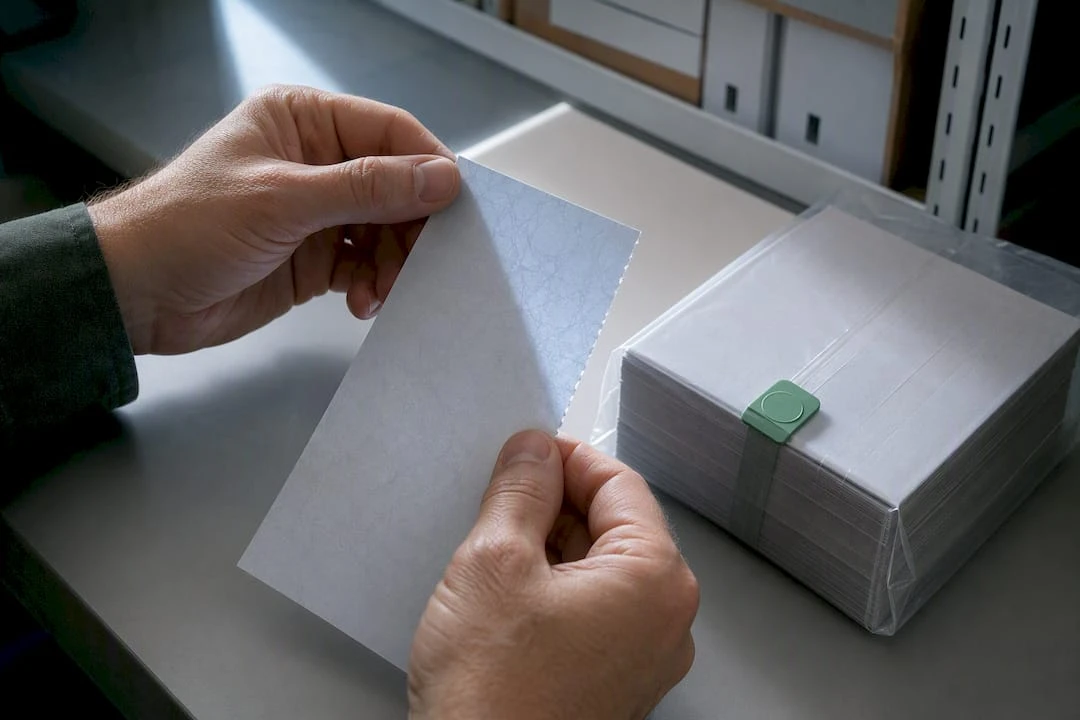
A watermark is a variation in paper density created during manufacturing, not printed on top of the sheet afterward. Traditional paper watermarks form when fiber thickness changes as the pulp is pressed, leaving a pattern visible when the ticket is held to light. Planchettes and fiber inclusions work differently: small colored fibers or discs are mixed into the paper stock itself, so they appear embedded in the sheet rather than printed on its surface.

Operators also choose between visible watermarks, meant for a quick light-back check, and covert markers such as UV or IR inks that only appear under specific light sources. Covert options resist casual duplication better, but they require a verifier tool, which adds a step to daily operations.
Watermarking works across most common ticket formats:
- Two, three, and four-part carbonless valet tickets accept watermarks without affecting the carbonless coating.
- Roll tickets and dispenser or spitter tickets can carry watermark security when the stock is manufactured for it.
- Machine-issued forms are compatible, though thermal printing heads require watermark placement that does not interfere with the print zone.
Before a full order, request a proof and a physical sample. Watermark visibility varies by lighting, and a sample lets your staff confirm they can verify it quickly under normal conditions.
Security features that pair with watermarks and their trade-offs
A watermark alone is one layer. Most operators pair it with at least one other feature to make forgery harder and verification faster.
- UV and IR inks stay invisible until scanned with a handheld light, adding a covert check behind the visible watermark.
- Microprinting places text too small to reproduce on standard copiers, a technique the Department of Homeland Security describes as implementable on standard high-end printing equipment without a fragile supply chain.
- Security fibers and planchettes embedded in the paper are difficult to replicate outside a manufacturing environment.
- Optically variable inks shift color depending on viewing angle, useful for high-value hospitality and casino tickets.
- Holograms and security threads add a further visual check, though at higher unit cost.
Advanced detection research shows watermarks can be verified even when concealed. Near-field scanning microwave microscopy can map watermark density and detect them behind dielectric or metallic layers, which means forensic teams have tools beyond a light table when a dispute needs resolving. This method requires specialized equipment, so it fits investigative or research use rather than daily gate checks.
A more advanced hybrid model combines physical and cryptographic protection. Research into smart ticket protection describes an architecture where a physically unique printed marker pigment is paired with a digitally signed Aztec code and verified against a Trusted Center. This approach limits the damage a stolen printer can cause, since a valid-looking ticket still fails cryptographic verification, and it supports offline checks in areas with unreliable connectivity.
Every added feature raises unit cost and staff training time, and covert features are useless without a verifier on hand. A practical baseline for most parking and valet operations is sequential numbering, a visible watermark, and a barcode: three layers that a gate attendant can check in seconds without special equipment. For more detail on layering these features, see our guide to parking ticket security.
Why inventory control determines whether watermarks actually work
A watermark stops a counterfeiter from printing a fake ticket. It does nothing to stop a genuine ticket from walking out the back door unaccounted for. Public audits of parking programs consistently find this exact gap: an audit of parking operations at a public university found pre-printed permits and tickets unaccounted for because of weak custody and reconciliation controls, even where the stock itself was properly secured. Security features protect against forgery, but they do not protect against internal loss.
The fix is procedural, not technical, and it costs far less than adding exotic print features:
- Store unissued stock in a locked location with access limited to named staff.
- Issue tickets by shift, with a signed check-out and check-in log for each batch.
- Reconcile ticket sequence numbers against sales or validations daily, or at the close of every event.
- Use drop safes for cash tied to ticket sales, separating the person who issues tickets from the person who reconciles them.
- Keep a documented chain of custody for every batch, from receipt to disposal of voided stock.
Separate audits of parking cash handling reach the same conclusion: per-shift sign-out and daily reconciliation are the controls that actually reduce loss, more than any single print feature.
Pro Tip: Run a spot reconciliation once a month even when your daily numbers look clean. Small, recurring discrepancies are easier to catch before they compound into a larger loss.
For operations with high staff turnover or multiple entry points, on-demand handheld or electronic issuance can reduce the risk that comes with holding large volumes of pre-printed stock. Our ticket inventory management guide walks through reconciliation routines in more detail.
How to specify and order watermarked tickets
Ordering secure stock goes smoother when your specification covers both the physical ticket and how your team will verify it in the field.
Start with the basics: ticket size, number of parts (two, three, or four), paper weight, whether the format is carbonless or includes tear-off stubs, perforation placement, and finish. Then specify the security layer: watermark type (visible, covert, or planchette), any UV or IR inks, microprinting, security fibers, whether you need barcode symbology, and where it sits on the ticket. Decide on your numbering format, sequence range, and whether numbering repeats across parts of a multi-part ticket.
- Confirm compatibility with your existing parking system before finalizing thermal or barcode placement.
- Request a physical proof and sample run before committing to a full print order.
- Ask about minimum order quantities and lead times, since custom watermark runs typically take longer than stock items.
- Set up a serialized reconciliation sheet that matches your numbering scheme on arrival.
At point of service, staff should check the watermark against light, scan the barcode, and confirm the sequence number falls within the expected range for that shift or event. Our practical guide for operators and our PARCS compatibility notes cover system-specific formatting in more depth.
| Spec item | What to confirm |
|---|---|
| Ticket format | Number of parts, size, perforations, finish |
| Watermark type | Visible, covert (UV/IR), or planchette |
| Machine-readable element | Barcode symbology and placement |
| Numbering | Sequential range and format across parts |
| Logistics | Proof approval, minimum order, lead time |
What buyers get wrong when ordering secure tickets
The most common mistake is not the watermark choice. It is skipping sequence reconciliation once the tickets arrive, treating the security feature as the whole solution instead of one part of a system. A close second is choosing a covert marker like UV ink with no verifier light on site, which makes the feature invisible in practice. A third is under-ordering samples, then discovering during a live shift that the watermark is too faint to check quickly under garage lighting.
If there is one recommendation worth following, it is this: pair sequentially numbered watermarked stock with a simple daily reconciliation routine and at least one machine-readable element, a barcode or serial scan, for fast verification. Operators who follow this combination catch discrepancies early, before they become a revenue problem.
— Richard
How Caymil can help with secure ticket stock
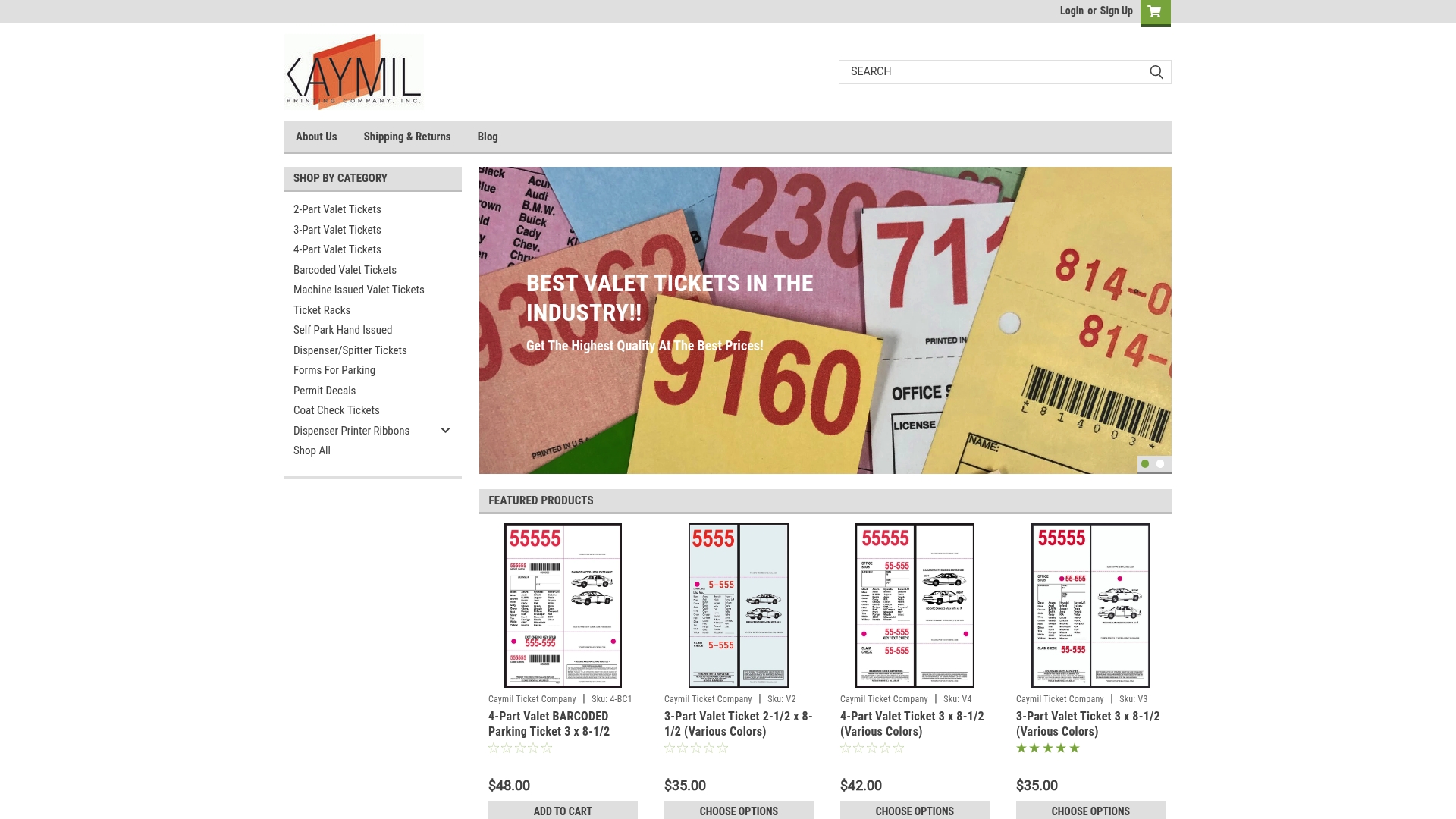
Ordering watermarked tickets does not need to mean managing a separate vendor relationship for security printing and another for your day-to-day stock. A supplier can provide both stock and custom watermarked ticket options alongside multi-part valet tickets, barcoded formats, and sequential numbering, with nationwide shipping.
If you are specifying a new run, a few paths get you moving quickly:
- Request a sample of watermarked or barcoded stock before committing to a full order.
- Ask about serialized reconciliation sheets matched to your numbering scheme.
- Get a quote for a custom watermarked run sized to your facility or event volume.
Browse 2-part, 3-part, and 4-part valet tickets for multi-copy formats, or start with barcoded valet tickets if machine-readable verification is your priority. For operators moving away from pre-printed stock, machine-issued valet tickets are worth a look. Request a quote today to get your specification in front of our team.
Sources
- Detection of anti-counterfeiting markers through permittivity maps using a micrometer scale near-field scanning microwave microscope (Sensors, 2021)
- Smart ticket protection: An architecture for cyber-protecting physical tickets using digitally signed random pattern markers (arXiv, 2018)
- Audit Report 23-23, Parking Operations, California State University, Bakersfield
- Advanced anti-counterfeit security elements (DHS slick sheet, 2026)
FAQ
What makes a ticket “watermarked” versus just printed?
A watermarked ticket has a density variation built into the paper during manufacturing, either as a light-back visible pattern or a covert marker like UV ink, rather than a design element printed on top. This distinction matters because a watermark cannot be reproduced on a standard copier or printer the way a printed logo can.
Can watermarked tickets still be counterfeited?
No security feature eliminates counterfeiting risk entirely, but a watermark raises the cost and skill required to reproduce a ticket, especially when paired with a barcode or sequential number. Layering features, rather than relying on the watermark alone, is what advanced anti-counterfeit guidance recommends for print-based security.
How long does it take to receive a custom watermarked ticket order?
Lead times vary by watermark type, order volume, and whether a proof approval cycle is required before printing begins. Requesting a sample early in your planning timeline helps avoid delays once your event or season approaches.
Do watermarked tickets replace the need for inventory controls?
No. Audits of parking and permit programs have found tickets unaccounted for even when the stock itself carried security features, which points to custody and reconciliation gaps rather than print quality. Daily sequence reconciliation and limited access to stock remain necessary alongside any watermark or barcode feature.