
What Is a Parking Stub at Events: A Clear Guide
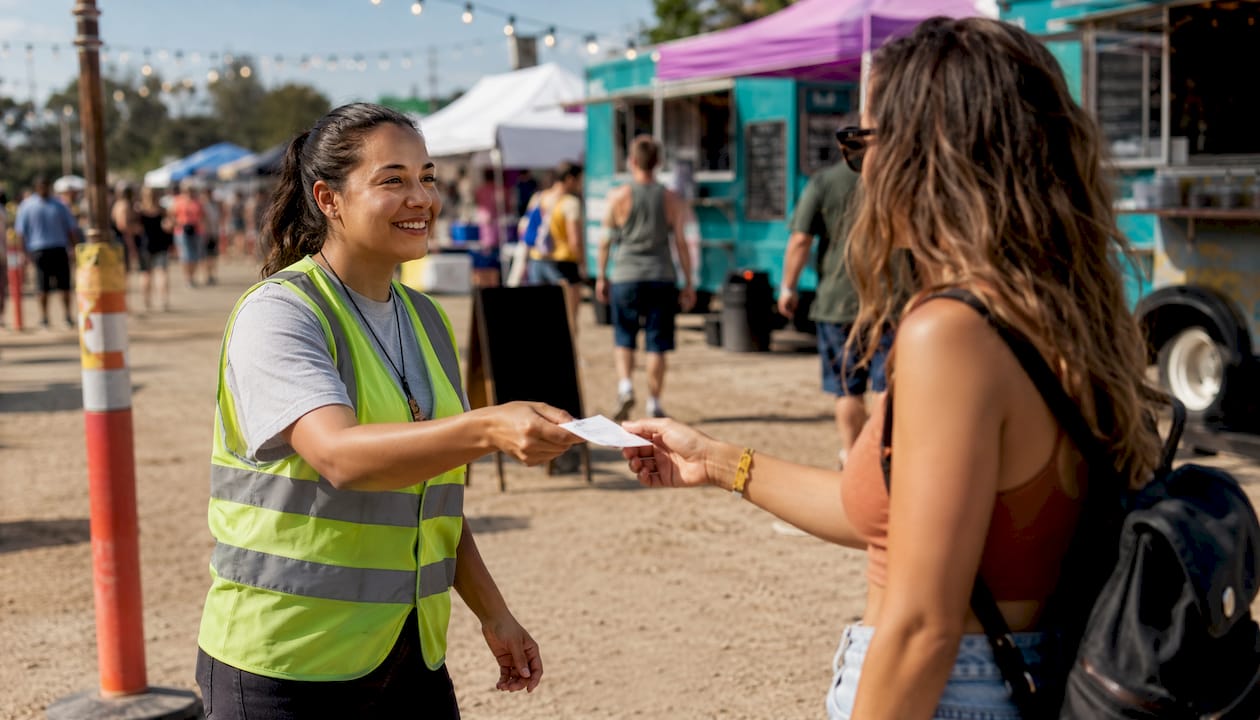
A parking stub at events is an official ticket or pass that authorizes a vehicle to occupy a designated parking space and serves as the primary record for entry, payment, and retrieval. The industry term for this document is a parking claim check or event parking ticket, and both physical and digital formats are in active use today. Caymil has manufactured these tickets since 1937, supplying valet operators, event venues, and parking garages across the United States. Whether printed on carbonless multi-part stock or encoded with a QR code, a parking stub does three things: it proves authorization, tracks the vehicle, and protects both the attendee and the operator from disputes.
What is a parking stub at events and how does it work?
A parking stub works by creating a verifiable link between a vehicle, its location, and the person who parked it. That link travels through every stage of the parking process, from entry to exit.
The operational flow follows a clear sequence:
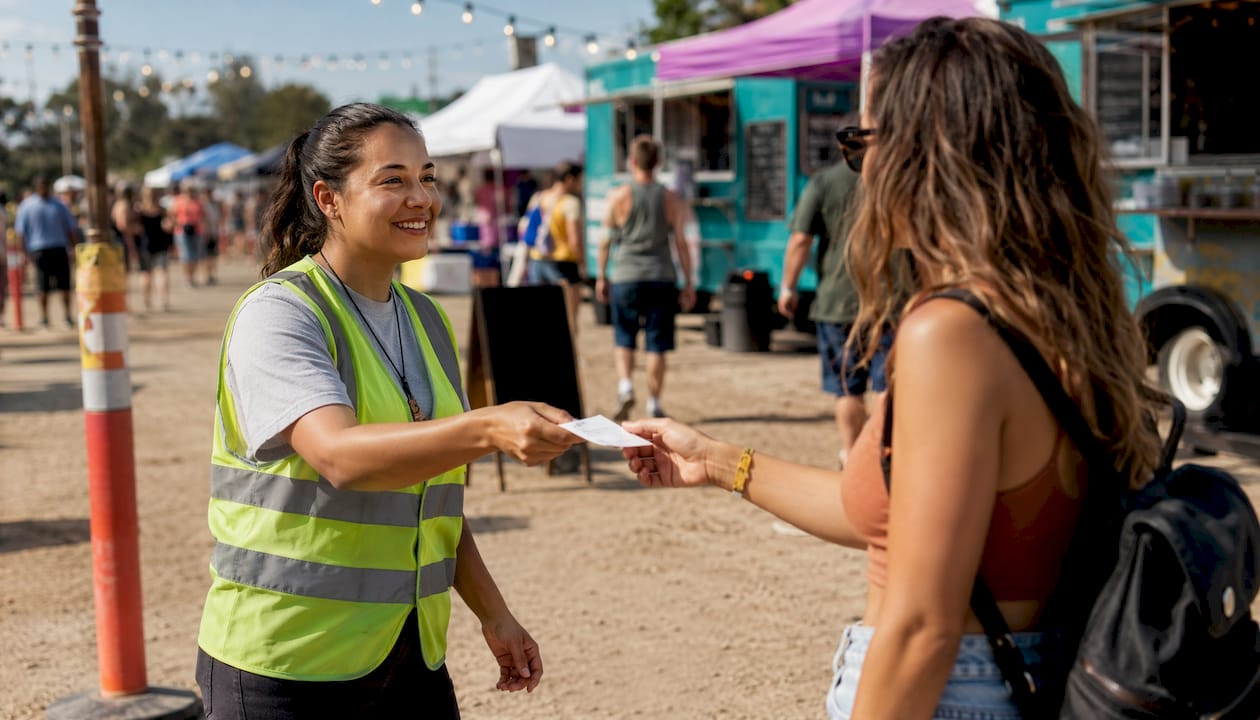
- Entry validation. The attendee presents a physical ticket or a digital pass. A gate attendant scans a QR code, or a machine-issued spitter ticket prints automatically as the vehicle enters. The stub records the date, time, and lot designation at this moment.
- Fee enforcement. For prepaid parking, the stub confirms payment has already been collected. For pay-on-exit systems, the entry timestamp enables duration-based fee calculation. Losing the ticket often results in being charged the maximum daily fee.
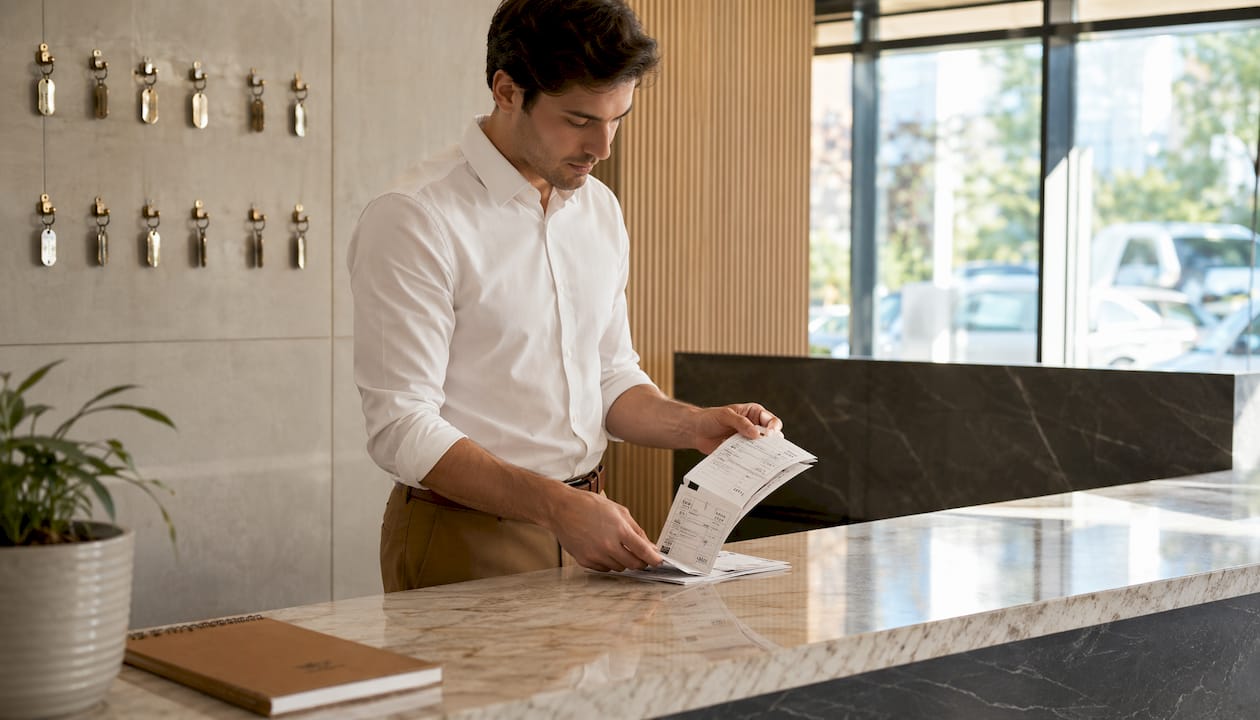
- Valet processing. In valet scenarios, multi-part valet tickets split into three to five sections. One part stays with the keys, one goes on the dashboard, one goes to the attendant, and one goes to the guest as a claim check. This structure links the vehicle, the key hook, and the customer in a single numbered sequence.
- Exit and retrieval. The attendee returns the stub. The attendant matches the number to the key hook, pulls the vehicle, and closes the transaction. In digital systems, a scan confirms the match in real time.
- Dispute resolution. The stub serves as a timestamped record. If a fee dispute arises, the entry time and validation marks on the ticket resolve it without guesswork.
Pro Tip: Number your stubs sequentially and match that sequence to your key-hook order. Strict sequence adherence avoids retrieval delays when large groups exit at the same time.
A well-designed stub also carries security features. Alternating ticket colors across event days prevent attendees from reusing tickets from a previous session. This single design choice eliminates a common source of revenue loss at multi-day events.
What is the importance of parking stubs for event organizers?
Parking stubs are the operational backbone of any event parking program. Without them, organizers lose visibility into lot capacity, payment status, and vehicle custody.
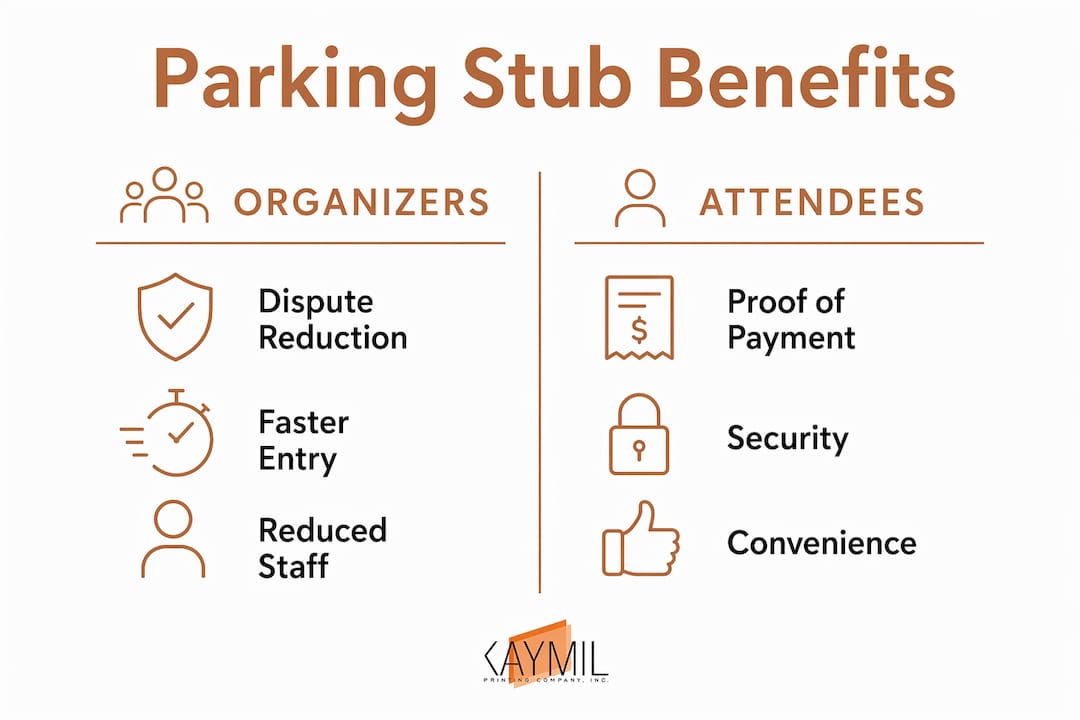
The core benefits for organizers include:
- Congestion control. Prepaid stubs with express lane access reduce entry time by 30–50% compared to gate payment transactions. Faster entry means shorter queues and fewer frustrated attendees before the event even starts.
- Vehicle and key tracking. In valet operations, multi-part claim checks link the vehicle to a specific key hook and attendant. That link prevents retrieval errors during peak exit periods.
- Payment verification. Stubs confirm whether a vehicle holds a prepaid pass or owes a fee at exit. This removes ambiguity at the gate and reduces the chance of drive-offs.
- Accountability for damages. A timestamped stub documents the condition window for a vehicle. If a damage claim arises, the ticket record narrows the timeframe and identifies which attendant handled the car.
- Integration with parking management systems. Digital stubs feed data directly into platforms compatible with systems like Amano, TIBA, SKIDATA, FLASH Parking, Scheidt & Bachmann, and Flowbird. Organizers get real-time occupancy counts without manual tallying.
Transitioning from manual to automated parking tickets reduces disputes and wait times while freeing staff to focus on guest services rather than traffic control. That shift pays off most visibly at high-volume events where even a 60-second delay per vehicle compounds into significant congestion.
Parking validation programs add another layer of value. Validation can cover 50–100% of parking fees, but clear communication about the terms is what prevents guest frustration. Organizers who print validation instructions directly on the stub eliminate the most common source of confusion at the exit gate.
What benefits do parking stubs offer to event attendees?
Attendees benefit from parking stubs in ways that go beyond simply knowing where they parked. A stub is a financial and legal record that protects them throughout the event.
Key attendee benefits include:
- Guaranteed spot access. Prepaid parking passes reserve a space before the event. Many venues do not sell parking at the gate, so a prepaid stub is the only way to guarantee entry.
- Faster arrival. Express lanes for prepaid pass holders bypass gate transactions entirely. Attendees scan a QR code or show a mobile wallet pass and drive through without stopping to pay.
- Protection from overcharges. The entry timestamp on a physical stub is the attendee’s proof of when they arrived. If the exit fee looks wrong, the stub resolves the dispute on the spot.
- Secure vehicle retrieval in valet. The claim check portion of a valet stub is the attendee’s only key to getting their car back efficiently. Keeping it safe is as important as keeping a coat check ticket.
- Clear validation records. When a venue offers parking validation, the stub carries the validation mark. Attendees who lose their stub before exit risk paying the full rate.
Pro Tip: Take a photo of your parking stub as soon as you receive it. If the physical ticket gets lost, the photo preserves the entry time and ticket number, giving you the same protection at the exit gate.
The attendee experience at an event starts in the parking lot. A well-managed stub system means attendees arrive with less stress and leave without standing in a retrieval line. That first and last impression shapes how they remember the entire event.
How are modern digital systems changing parking stub usage at events?
Digital parking stubs are not replacing physical tickets entirely. They are adding a faster, more secure layer on top of proven physical systems.
The shift shows up in three main areas:
QR codes and mobile wallet passes
A QR code stub functions like a physical ticket but lives on a smartphone. The attendee purchases parking online, receives a pass in their mobile wallet, and presents it at the gate for scanning. The scan logs entry time, confirms prepayment, and updates lot occupancy in real time. No paper changes hands.
License plate recognition
License plate recognition systems eliminate the stub entirely for some operations. The system reads the plate at entry, matches it to a prepaid reservation, and logs exit automatically. This works well for large surface lots where speed is the priority. It works less well for valet operations, where a physical claim check still provides the clearest chain of custody for keys.
Security and fraud prevention
Digital stubs carry unique identifiers that cannot be photocopied or reused. Physical stubs rely on design features like alternating colors, sequential numbering, and security printing to achieve the same result. Both approaches work. The right choice depends on the event’s scale, budget, and technology infrastructure.
| Feature | Physical parking stub | Digital parking stub |
|---|---|---|
| Entry method | Gate scan or manual check | QR code or plate recognition |
| Fraud prevention | Color alternation, sequential numbering | Unique digital identifiers |
| Valet compatibility | Full multi-part claim check system | Limited without physical receipt |
| Technology requirement | None for basic use | Smartphone or kiosk required |
| Real-time data | Manual count only | Automatic occupancy updates |
Event organizers adopting digital platforms should review parking management system options before committing to a format. The best operations use both: digital passes for self-parking and physical multi-part tickets for valet, where the claim check is still the clearest record of key custody.
Key Takeaways
A parking stub is the single document that connects vehicle authorization, payment, and retrieval at any event, and its design directly determines how smoothly parking operations run.
| Point | Details |
|---|---|
| Core function | A parking stub authorizes vehicle access and serves as the payment and retrieval record. |
| Valet stub structure | Multi-part tickets link the vehicle, key hook, and attendant in one numbered sequence. |
| Prepaid stub advantage | Prepaid stubs reduce entry time by 30–50% and guarantee spot access before the event. |
| Security design | Alternating colors and sequential numbering prevent ticket reuse across event days. |
| Digital integration | QR codes and plate recognition add real-time data but physical stubs remain best for valet. |
Why parking stubs still matter more than most organizers realize
I have watched event parking operations run smoothly and fall apart, and the difference almost always comes down to the ticket itself. Organizers spend months planning the event program and minutes planning the parking system. That imbalance shows up immediately when 2,000 cars arrive in 45 minutes.
The most common mistake I see is treating the parking stub as an afterthought. Organizers order generic tickets, skip sequential numbering, and use the same design across multiple event dates. Then they wonder why attendees are reusing tickets from last week or why the valet team cannot find a car during the post-show rush. The stub is not just a receipt. It is the operating system for your parking lot.
Physical tickets still outperform digital in valet operations. A smartphone cannot sit on a key hook. A QR code cannot be handed to a guest as a tangible claim check that they will actually keep in their pocket. The best valet operations I have seen use 4-part valet tickets with a dashboard tag, a key tag, an attendant copy, and a guest receipt. Every part has a job. Nothing gets lost.
My recommendation for organizers is straightforward. Use digital passes for self-parking lanes where speed is the goal. Use physical multi-part tickets for valet where accountability is the goal. Print your validation terms on the stub itself, not on a separate flyer that will end up on the ground. And order tickets with alternating colors if your event runs more than one day.
The attendee experience starts the moment someone pulls into your lot. A parking stub that works correctly is invisible. A parking stub that fails is the only thing they will remember.
— Richard
Caymil’s event parking ticket solutions
Event organizers who need reliable parking stubs have a direct path to the right product through Caymil. Since 1937, Caymil has manufactured multi-part valet tickets, machine-issued spitter tickets, barcode tickets, and custom-printed parking forms for venues, garages, and valet operators across the United States.
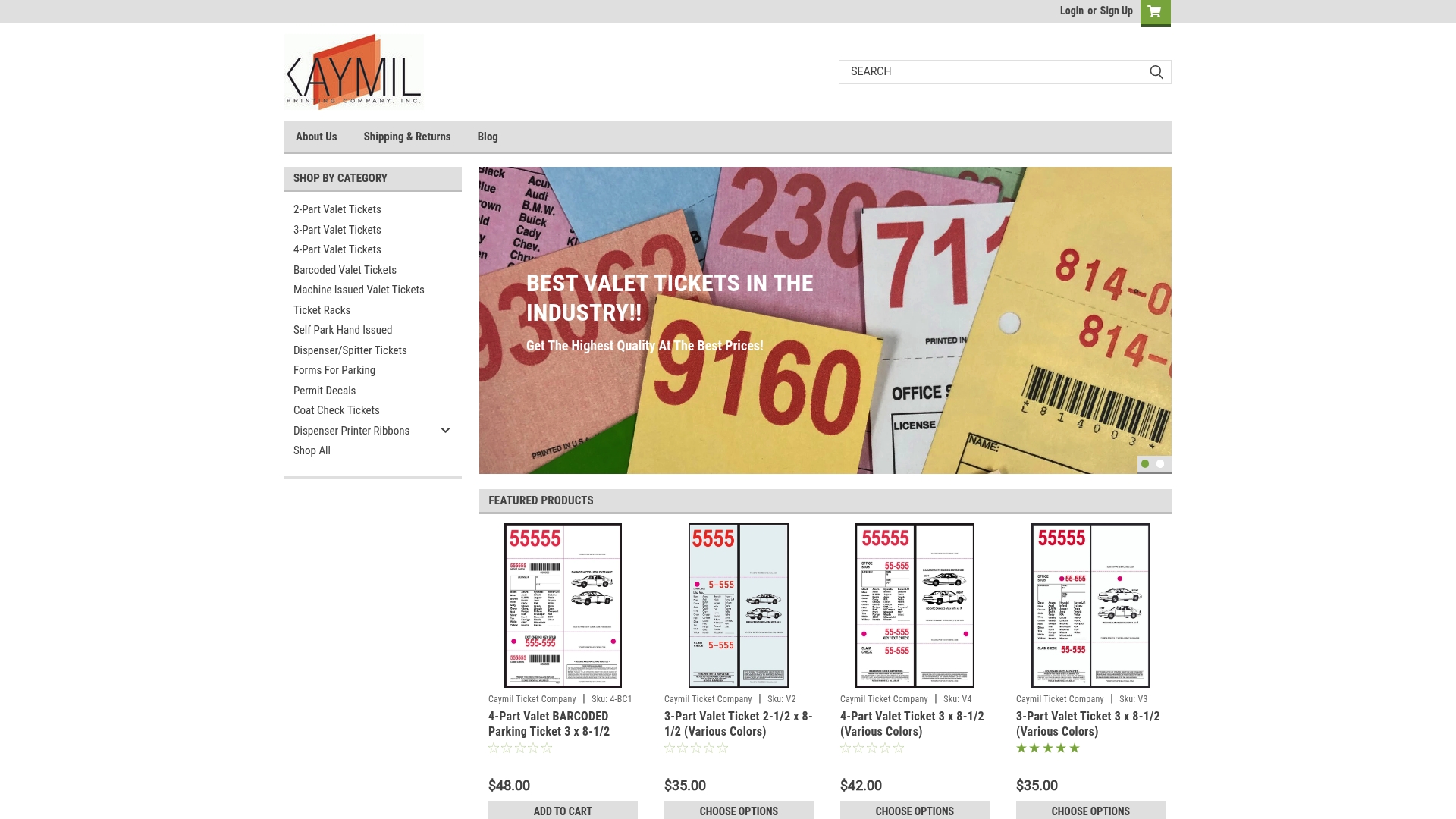
Caymil’s 3-part valet parking tickets include sequential numbering, carbonless copies, and optional security features like alternating colors. For high-volume events, machine-issued valet tickets print automatically at entry, reducing attendant workload and speeding up queue processing. Every product ships fast with millions of units in stock. Organizers can also request fully custom designs with logos, barcodes, and event-specific details. Visit Caymil’s parking forms catalog to find the right ticket format for your next event.
FAQ
What is a parking stub at events?
A parking stub is an official ticket or pass issued at an event that authorizes a vehicle to park in a designated space and serves as the record for entry, payment, and retrieval.
What should I do with my parking stub after parking?
Keep the stub on your person throughout the event. It is your proof of payment and, in valet situations, your claim check for vehicle retrieval.
How does a valet parking stub differ from a self-parking ticket?
A valet stub is a multi-part claim check with three to five sections linking the vehicle, key hook, and guest receipt. A self-parking ticket records entry time for fee calculation at exit.
What happens if I lose my parking stub at an event?
Losing a self-parking ticket typically results in being charged the maximum daily rate. In valet operations, staff will verify your identity through alternate means, but retrieval takes longer without the claim check number.
Are digital parking passes as secure as physical stubs?
Digital passes use unique identifiers that prevent duplication. Physical stubs use alternating colors and sequential numbering for the same purpose. Both formats are secure when properly designed and managed.
Recommended
- What is an event parking ticket? The pro’s guide - Caymil Printing Co., Inc.
- What Is a Stock Parking Ticket? A Clear Guide - Caymil Printing Co., Inc.
- Parking Receipt vs Parking Ticket: Know the Difference - Caymil Printing Co., Inc.
- What Is a Time-Stamped Parking Ticket? A Clear Guide - Caymil Printing Co., Inc.