

Why Casinos Use Validated Parking Tickets: A Manager’s Guide

Validated parking tickets are defined as parking credentials that a business stamps, encodes, or digitally authorizes to reduce or eliminate the fee a guest pays at exit. Casinos use validated parking tickets to remove a friction point that would otherwise discourage guests from visiting, and the practice connects directly to revenue management, operational control, and customer loyalty. Understanding why casinos validate parking means understanding the full chain from the moment a guest pulls into the garage to the moment they return to the floor. This guide covers the operational logic, fraud risks, material requirements, and practical controls that casino managers need to run a validation program that actually pays for itself.
Why casinos use validated parking tickets to improve the guest experience
Parking cost is a barrier. When guests face an unexpected fee at exit, it creates a negative final impression that can outweigh the quality of everything that happened inside. Validated parking removes that friction by linking the parking benefit to guest activity, such as a minimum spend at a table, a purchase at a restaurant, or enrollment in a loyalty program. The result is a guest who feels rewarded rather than charged.
Validated parking increases guest visit frequency and preserves revenue through billed-back models, where the cost shifts from the patron to an internal department or business unit. That shift matters because the casino still collects parking revenue. It simply routes it through a different accounting line, keeping the guest experience positive without sacrificing income.
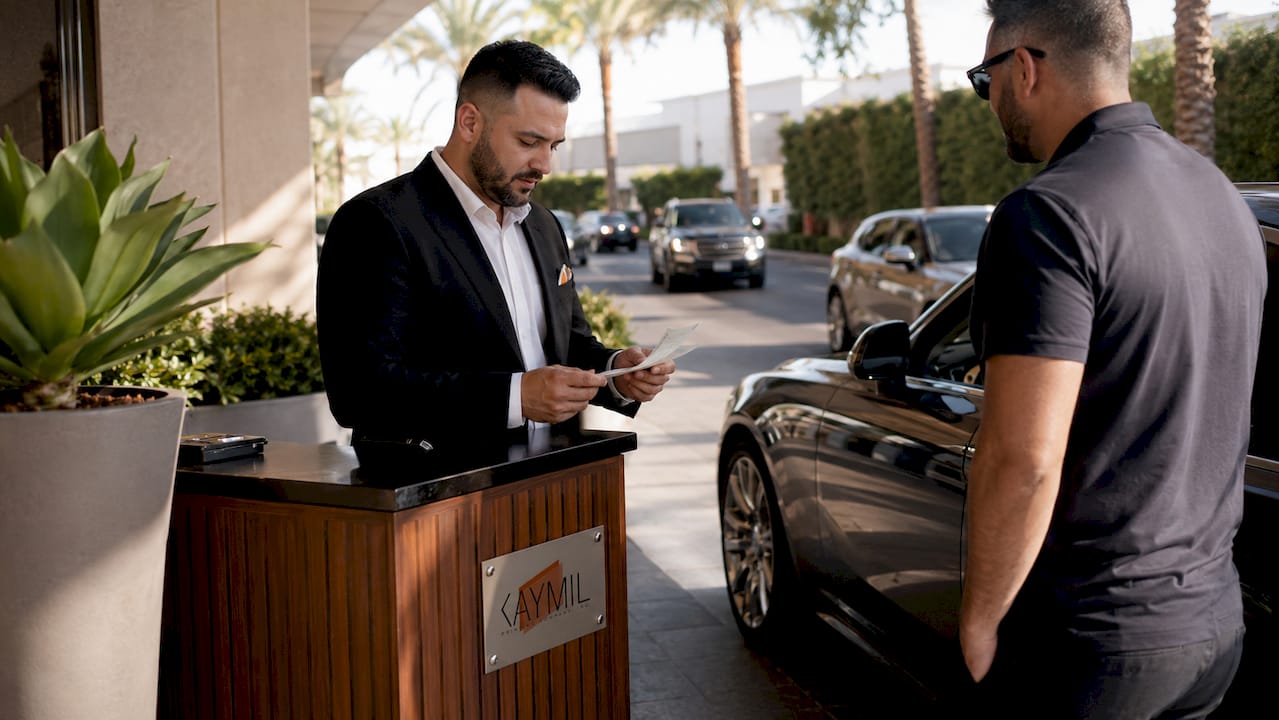
Loyalty program integration strengthens this effect considerably. When a guest scans their rewards card and receives automatic validation, the parking benefit becomes part of the casino’s retention tool rather than a standalone perk. Casinos that tie validation to tiered loyalty status give higher-tier members free parking while lower-tier members receive partial discounts, creating a visible incentive to spend more and return more often.
Key practices that connect validation to guest loyalty include:
- Requiring a minimum gaming spend or food and beverage purchase to qualify for validation
- Linking validation to loyalty card scans at entry or exit kiosks
- Offering tiered validation benefits that scale with membership level
- Providing valet validation as an exclusive perk for premium-tier members
Pro Tip: Set validation thresholds at amounts that reflect your average guest spend, not your highest spend. A threshold that most guests can realistically hit drives repeat visits. One that feels out of reach drives resentment.
Operational benefits of validated parking for casino management
Parking validation solves a structural problem that most casino managers underestimate: vacancy. Studies show 30–50% vacancy rates in unstructured parking without validation systems. That vacancy represents lost revenue and wasted infrastructure. Validation gives operators a direct mechanism to fill spaces by making parking accessible to the guests most likely to spend money inside.
The billed-back model is the operational core of a well-run validation program. Rather than absorbing parking as a cost, individual departments, such as the casino floor, the hotel, or the restaurant, absorb the validation cost against their own revenue. This creates accountability. Department managers track how many validations their area issues and compare that figure against the revenue those guests generate. The math becomes visible and manageable.
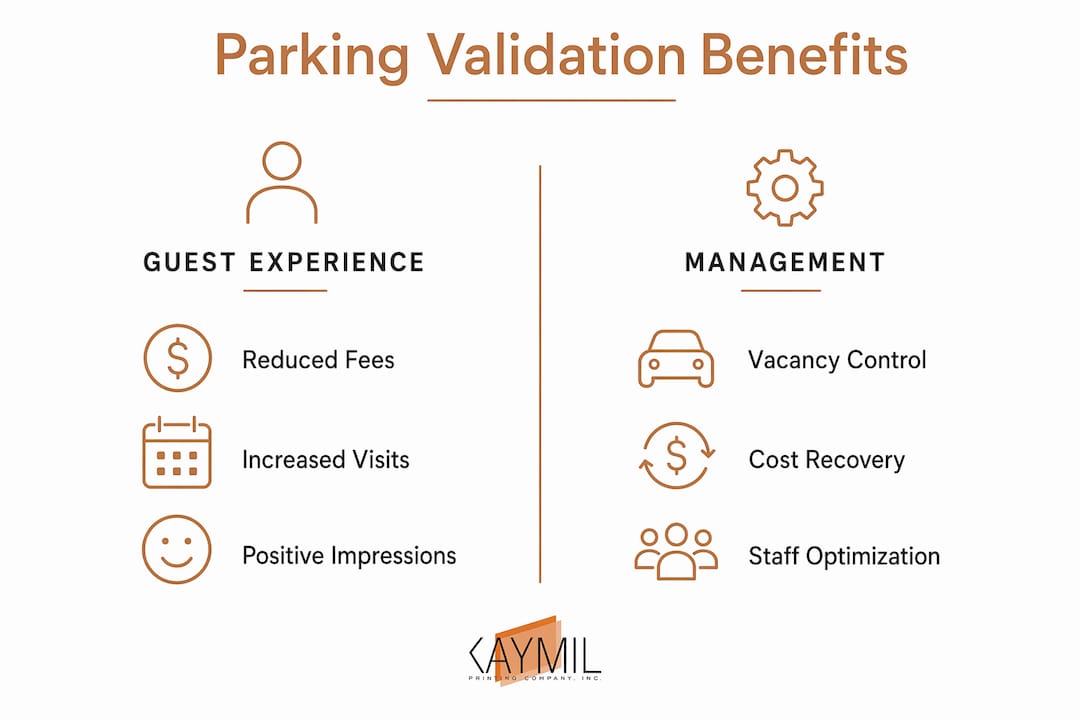
Validation also gives operators control during peak events. A casino hosting a major boxing match or a New Year’s Eve concert faces a surge in non-gaming guests who occupy parking spaces without contributing to the casino’s core revenue. A structured validation policy, one that requires a gaming or dining transaction to qualify, guides patron behavior without requiring confrontation. Effective validation uses clear expectations and digital tools to manage this behavior at scale.
The four operational levers that validation gives casino managers are:
- Space utilization control. Validation encourages turnover by tying parking access to active guest status, reducing long-term squatters in prime spaces.
- Revenue attribution. Billed-back models assign parking costs to the departments that generate the corresponding guest activity.
- Peak demand management. Validation thresholds filter non-spending guests during high-traffic events, protecting space for paying patrons.
- Guest flow data. Digital validation systems generate entry and exit timestamps that help managers staff parking operations more accurately.
Digital dashboards help optimize staffing and reduce human error during peak volumes. That real-time visibility turns parking from a passive cost center into a managed revenue function.
How do you prevent fraud in casino parking validation?
Fraud in parking validation is called validation leakage, and it is more common than most operators realize. The most frequent pattern is staff issuing validations to friends, family members, or non-paying individuals, either by stamping physical tickets or by entering unauthorized codes into a digital system. Coupon and discount fraud is the most common type of asset misappropriation cited by the Association of Certified Fraud Examiners (ACFE) in parking operations. The financial impact compounds quickly in a high-volume casino environment where hundreds of validations occur daily.
Manual, paper-based systems carry the highest risk because they lack an audit trail. A stamp or sticker applied to a ticket leaves no record of who authorized it, when, or for what reason. Digital validation systems reduce financial leakage by providing audit trails and real-time usage monitoring, enabling casinos to track every validation back to a specific employee, terminal, or transaction.
License plate recognition (LPR) technology adds another layer of control. Automatic number plate recognition systems log vehicle entry and exit times automatically, creating an independent record that managers can cross-reference against validation logs. Any vehicle that exits with a validation but has no corresponding transaction record becomes an immediate flag for review.
Best practices for reducing validation fraud include:
- Assigning role-based permissions so only authorized staff can issue validations
- Setting daily or per-shift validation limits by employee or terminal
- Running weekly reconciliation reports that compare validations issued against transactions recorded
- Using parking ticket security features such as sequential numbering and barcodes to make physical tickets harder to duplicate or misuse
Pro Tip: Treat your validation audit the same way you treat your cash audit. Run it daily, assign it to someone outside the department being audited, and investigate every variance above your threshold before it becomes a pattern.
Why casinos need durable parking ticket materials
Thermal paper is the standard material for machine-issued parking tickets, but standard thermal paper fails in casino parking environments faster than most operators expect. Thermal fogging and fading cause unreadable tickets that lead to customer disputes at exit lanes. A guest who cannot read their ticket, or whose barcode will not scan, creates a bottleneck that slows every car behind them.
The cause is photodegradation combined with heat. Vehicle cabins reach temperatures well above what standard thermal coatings can withstand, especially in climates with strong sun exposure. UV light accelerates the breakdown of the thermal layer, erasing print within hours in extreme conditions. Top coating protects against UV, moisture, and contamination, significantly extending ticket life in outdoor kiosk environments.
The table below shows how standard and top-coated thermal paper compare across the factors that matter most in casino parking operations.
| Factor | Standard thermal paper | Top-coated thermal paper |
|---|---|---|
| UV resistance | Low; fades within hours in direct sun | High; resists UV degradation significantly longer |
| Heat tolerance | Moderate; fogging occurs in hot vehicle cabins | Improved; coating stabilizes the thermal layer |
| Moisture resistance | Minimal; smears and softens when wet | Good; coating repels surface moisture |
| Barcode scan reliability | Degrades quickly in outdoor kiosks | Maintained through extended exposure |
| Dispute risk | High; unreadable tickets cause exit lane delays | Low; legible tickets reduce guest friction |
Investing in high-durability thermal paper reduces the total cost of ticket-related disputes, reissues, and lane downtime. The per-roll cost difference between standard and top-coated paper is small compared to the operational cost of a backed-up exit lane during a Saturday night rush.
Reliable parking validation systems incorporate integrated hardware and software, including ticket presenters, barcode scanners, and payment modules, that sustain continuous high-volume performance in casino environments. The ticket material is the foundation of that system. A weak ticket undermines every other component.
Key Takeaways
Validated parking tickets work because they connect guest behavior to parking access, giving casino operators control over space utilization, revenue attribution, and fraud prevention simultaneously.
| Point | Details |
|---|---|
| Validation removes guest friction | Linking parking benefits to spending activity improves guest satisfaction and repeat visit rates. |
| Billed-back models preserve revenue | Shifting parking costs to internal departments keeps income intact while improving the guest experience. |
| Fraud requires active controls | Role-based permissions, audit trails, and daily reconciliation prevent validation leakage from compounding. |
| Ticket material affects system uptime | Top-coated thermal paper resists UV and heat, reducing disputes and exit lane delays in high-traffic environments. |
| Digital systems enable accountability | Real-time dashboards and LPR technology give managers visibility into every validation transaction. |
What I’ve learned from watching casinos get parking validation wrong
Casino managers tend to treat parking as a facilities problem rather than a revenue problem. That framing is the root of most validation failures I’ve observed. When parking sits under facilities management, the focus is on maintenance and cost reduction. When it moves under revenue operations, the focus shifts to utilization, attribution, and guest behavior. The difference in outcomes is significant.
The second mistake is deploying a validation program without closing the fraud loop first. A stamp-based system with no audit trail is not a validation program. It is an honor system with a parking lot attached. Casinos that audit parking operations with the same rigor they apply to cash handling consistently report lower leakage and better data for staffing decisions.
The technology trend worth watching is the convergence of loyalty platforms and parking management systems. When a guest’s rewards card triggers automatic validation at the exit kiosk, the casino collects behavioral data, rewards the guest, and closes the revenue loop in a single transaction. That integration is where the real long-term value of validation programs lives.
— Richard
Caymil’s parking ticket solutions for casino operators
Casino operators running high-volume validation programs need tickets that perform reliably from the first car in to the last car out. Caymil has manufactured parking and valet ticketing solutions since 1937, and its product line covers every format a casino parking operation requires.
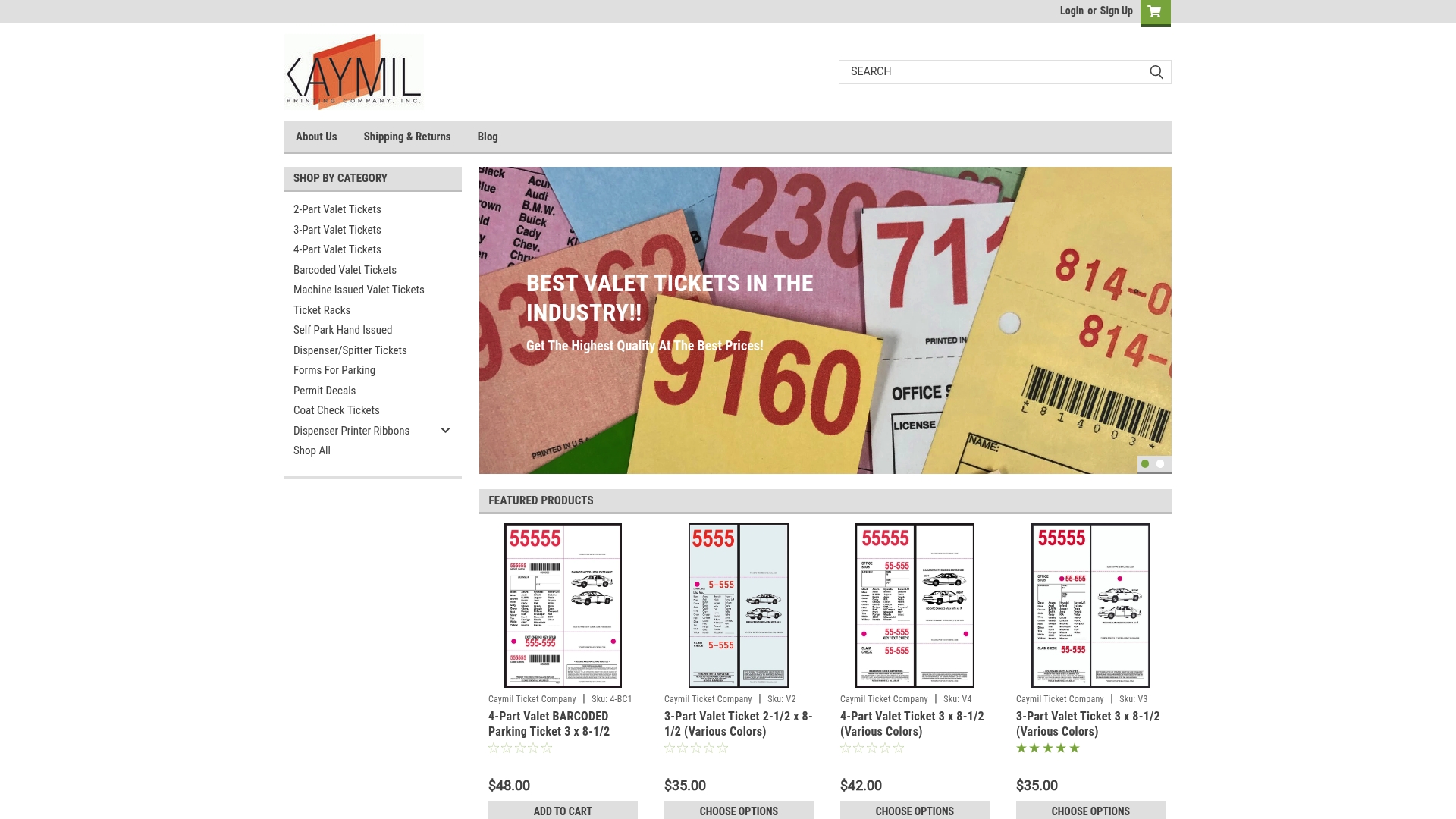
From machine-issued dispenser tickets built for high-speed entry kiosks to multi-part valet tickets with sequential numbering and carbonless copies for audit trails, Caymil’s catalog addresses the durability, customization, and compatibility requirements that casino managers face daily. Products are compatible with major parking systems including Amano, TIBA, SKIDATA, FLASH Parking, Scheidt & Bachmann, and Flowbird. Caymil’s parking forms and validation tickets ship nationwide with fast turnaround, so operators can maintain stock without disrupting operations.
FAQ
What is a validated parking ticket in a casino?
A validated parking ticket is a parking credential that a casino authorizes to reduce or waive the guest’s exit fee, typically in exchange for a qualifying transaction such as gaming, dining, or hotel check-in.
How does parking validation affect casino revenue?
Validation preserves revenue through billed-back models, where the parking cost shifts to an internal department rather than being absorbed as a loss, while increasing guest visit frequency.
What causes parking tickets to fade or become unreadable?
Thermal fogging and UV exposure degrade standard thermal paper in vehicle cabins, making barcodes unscannable and creating disputes at exit lanes. Top-coated paper resists this degradation.
How do casinos prevent parking validation fraud?
Casinos reduce fraud by using digital validation systems with audit trails, assigning role-based permissions to staff, and running daily reconciliation reports that flag unauthorized validations.
What parking ticket formats work best for casino valet operations?
Multi-part carbonless tickets with sequential numbering and barcodes provide the best audit trail for valet operations, supporting both manual tracking and automated scanning at exit.
Recommended
- Casino High-Volume Parking Ticket Systems Explained - Caymil Printing Co., Inc.
- The role of ticket dispensers in parking: A manager’s guide - Caymil Printing Co., Inc.
- Printed Parking Tickets: A Practical Guide for Operators - Caymil Printing Co., Inc.
- Carbonless Parking Tickets: A Manager’s Complete Guide - Caymil Printing Co., Inc.