
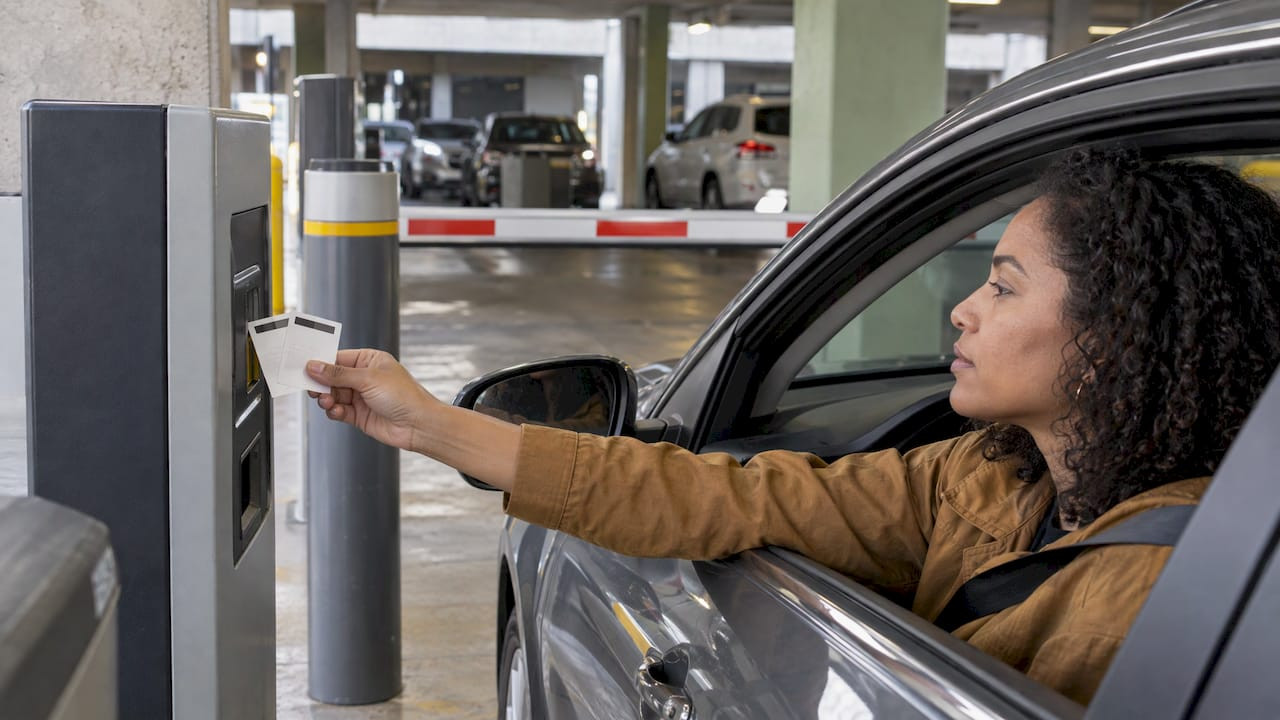
Double Ticket Issuance in Parking and Valet Operations

Double ticket issuance happens when a parking or valet operation produces two tickets, two records, or two charges for a single vehicle or transaction. It usually comes from a dispenser fault, a repeated scan, a handwriting or numbering slip at the valet stand, or a payment that looks doubled because of timing. The fix is the same in every case: find which of those it is, void the extra record with a documented reason, and put controls in place so the ticket number is the one source of truth.
This guide is for operators, facility managers, and hotel and casino parking teams. It covers what the term means on the ground, what causes it, how to confirm a duplicate, and how to prevent repeat incidents.
TL;DR
- Double issuance is one vehicle or transaction with two tickets, records, or charges. The first job is to work out which kind you have.
- Common causes are gates that fail to vend, vehicles that do not pull forward, repeated scans, empty or jammed printers, and pending payment authorizations that look like a second charge.
- Confirm a duplicate by matching ticket numbers, key tags, vehicles, and lot counts, then record the exception and the reason.
- Serialized, multi-part tickets with a clear void process make duplicates easy to find and cheap to correct.
- Review voids by shift, employee, and time. A steady baseline tells you when something has changed.
Table of Contents
- What double ticket issuance means in an operation
- Why it matters: custody, revenue, and customer service
- Common causes of duplicate tickets
- How to confirm a duplicate
- Troubleshooting by setting
- Preventing repeat incidents
- Our perspective
- Ticket options that make duplicates easier to catch
- FAQ
- Sources
What double ticket issuance means in an operation
The phrase covers three different situations, and each needs a different response.
Two physical tickets for one vehicle. A dispenser prints a second ticket, or a valet attendant tears off a second claim ticket for the same car. The customer or the staff now holds two numbers for one vehicle.
Two records for one ticket. The paper is fine, but the system logged the entry twice. A barcode was scanned twice, a license plate was read twice, or a network hiccup replayed an event.
Two charges for one stay. The parker sees two amounts on a card statement. Often this is a pending authorization and a settled capture of the same transaction, not a true double charge.

A ticket’s job is to tie a vehicle, a location, and a transaction together. The H2H2H Foundation’s explanation of 3-part tickets describes uniquely numbered parts that identify the car, locate it, and link it to a transaction. When two numbers point at one car, that link breaks, and everything downstream (custody, release, revenue) gets harder to prove.
Why it matters: custody, revenue, and customer service
Duplicates are small in volume but expensive in attention. Guidance on valet reconciliation from a workflow software company’s valet log template notes that mismatches between tickets, keys, and vehicles can create custody-record problems, delay vehicle release, and lead to customer disputes or security issues.
Three areas take the hit:
- Access control. If two live tickets exist for one car, either could be presented at exit. Staff must decide which is valid, and a second claimant may be hard to rule out.
- Revenue. A duplicate that is never voided can look like an extra vehicle in the count, or leave an open ticket that skews occupancy and cash reconciliation.
- Guest experience. Someone waiting for a car while staff sort out two numbers does not care about the cause. Hotel and casino guests notice the delay.
How common is it? One public data point: the City of Asbury Park, New Jersey recorded 8 duplicate tickets among 2,559 issued in January 2026, according to its Parking Advisory Committee minutes, and tracked duplicate issuance as its own void category. That is roughly 0.3 percent of tickets. The rate is low, but the useful lesson is the tracking: a named category lets you see change over time.
Common causes of duplicate tickets
Dispenser and gate behavior
Support documentation from one parking access vendor says apparent duplicate scan activity can follow a gate that failed to vend, a vehicle that did not pull forward before the gate closed, or a parker scanning the same pass repeatedly. The same guidance notes a gate can fail to vend even though an exit was recorded, so a repeat scan may be rejected. In the lane, that looks like a driver pressing the button again, or backing up and trying again, and a second ticket coming out.
Paper supply matters too. A PARCS vendor’s kiosk documentation lists no paper as a cause of a kiosk being unable to issue a ticket and describes a timeout notice when a screen sits idle during a process. A jam or a half-printed ticket often leads a driver to request another one, leaving the first in the printer tray or the car.
Ticket stock quality is part of this. Machine-issued tickets that feed cleanly and print clearly reduce the reprints that produce duplicates. Our machine issued valet tickets and dispenser and spitter tickets are made for high-speed equipment from the major parking system brands.
Valet stand habits
On a manual valet operation, duplicates come from people under pressure:
- A new ticket is started because the first one was smudged, torn, or dropped.
- The guest copy and the key tag carry different numbers after a mid-book swap.
- Two attendants write up the same arrival during a rush.
- A book of tickets is started before the previous one is fully used, so number ranges overlap.
These are process problems, and they are the easiest to prevent with serialized stock and a simple rule for what happens to a spoiled ticket.
License plate reads and network issues
Where cameras are used, one vehicle can produce several reads. One terminal maker’s manual recommends a duplicate-reading suppression window for repeated license-plate reads, especially where a single lane serves both entry and exit. The same manual says operators can review recent plate readings, session records, network status, and connection history to tell whether repeated records come from recognition or from connectivity.
Payment timing
A guest who sees two parking charges may have one transaction. An industry explainer from Parking Payment Guide describes how a pending authorization and a settled capture can both appear, with the pending item dropping off after settlement. Before you issue a refund or void a ticket, confirm which of the two you are looking at.
How to confirm a duplicate
Do not assume. A short sequence settles most cases in a few minutes.
- Pull both numbers. Write down every ticket number, key tag number, and the vehicle description tied to them.
- Match to a vehicle and key. Valet reconciliation guidance recommends that each claim ticket match a key and a vehicle, with mismatches recorded and follow-up assigned, often at shift change.
- Check the lot count. If the physical count of cars is one lower than the number of open tickets, you probably have a duplicate and not a missing vehicle.
- Look at the timestamps. Two entries seconds apart in the same lane point to equipment or a repeat scan. Two entries minutes apart at a valet stand point to a handwriting or process slip.
- Check the payment side. Compare the transaction against the processor detail before calling a charge a duplicate.
The numbering is what makes step 1 work. Our guides on valet ticket numbering and the ticket number audit walk through how operators use sequences to find gaps and repeats.
A quick diagnostic table
| What you see | Likely cause | First check |
|---|---|---|
| Two tickets seconds apart, same lane | Gate failed to vend, driver did not pull forward, or repeat button press | Dispenser log and lane camera |
| Two numbers for one car at the valet stand | Spoiled ticket replaced without voiding the first | Ticket book sequence and the voided stub |
| Same barcode logged twice | Repeat scan | Scanner log and exit transaction |
| Two plate reads for one vehicle | Duplicate recognition | Plate read history and suppression window |
| Two charges on a guest’s card | Pending authorization plus captured payment | Processor settlement detail |
Troubleshooting by setting
Dispensers and lanes
The terminal manual cited above directs staff to check printer status, paper loading, cables, gate-control connections, payment-device connectivity, and network status before escalating a terminal incident. Start there. Replace paper with the correct stock and width, clear the path, and test one ticket before reopening the lane. Keep a short log so repeated faults on one unit stand out.
Valet operations
Controlled valet sequences cut duplicates because every step leaves a mark. One PARCS vendor describes a valet sequence in which the ticket is issued, the employee ID and matching tag are scanned, payment is required when configured, and the ticket is completed at exit. Even without software, the same logic works on paper: one ticket per vehicle, one key tag that matches, and one closing step.
Multi-part tickets help here. A guest copy, a key copy, and a vehicle copy that share one number leave no room for a second number to appear. See our 3-part valet tickets and 4-part valet tickets, or read Valet Tickets 101 for how the pieces fit together.

Back office and queues
Once a duplicate is confirmed, correct it in a way that leaves a trail. A PARCS vendor’s queue guidance says entries that appear twice can be removed when an error exists, provided staff record a reason. That is the model: never silently delete, always write down why.
Preventing repeat incidents
Control the front door
Some access systems let you require a ticket before entry or payment before exit. A PARCS vendor describes Must Issue, which requires a valet ticket before garage or lot entry, and Must Pay, which requires payment before the valet runner can exit. Where your system offers such settings, they close the gaps where duplicates slip in.
Handle timeouts without rescans
A 2026 release note from a PARCS vendor says timeout handling should persist the fee amount shown to the parker and resend the outstanding amount without requiring a ticket rescan. Fewer rescans means fewer repeat records, so it is worth asking your system provider whether your version handles timeouts this way.
Serialize everything
Paper programs fail most often where tickets are not serialized. Industry guidance from Parking Professional says physical validation programs require inventory management and are difficult to reconcile when tickets are not serialized, while electronic systems provide unique codes, timestamps, transaction logs, and reporting. If you use validation tickets, the same source recommends correlating validation records with entry times, setting per-merchant limits, expiring codes, and auditing validation volume against merchant sales data.
Sequential numbering and barcodes are the practical answer on the paper side. Our barcoded valet tickets let a scanner confirm each number once, which turns a duplicate into an immediate flag instead of a next-day surprise. If you run a casino or hotel with integrated systems, see our barcode casino parking ticket integration guide.
Set a void policy and a baseline
Track duplicates as a category, as Asbury Park does. Parking Operator Hub recommends setting a baseline void rate, flagging unusually high rates, and investigating by employee, time, amount, and shift, because equipment errors, customer mistakes, and training gaps can each produce repeated exceptions. A spike on one shift or one lane tells you where to look.
A workable void policy has five parts:
- Spoiled tickets are never discarded. They are marked void and kept with the book.
- Replacement tickets are issued only after the first is located or voided.
- A supervisor signs off on any void over a set number per shift.
- The reason is written down at the time, not at close.
- Voids are totaled and reviewed weekly.
Reconcile at the end of every shift
The valet log guidance cited earlier recommends shift-level counts, a named responsible person, immediate exception recording, and documented follow-up. On the money side, Parking Payment Guide advises comparing parking-system transactions, processor settlement detail, and bank deposits, then documenting timing differences, voids, chargebacks, and other explanations. Its authorization guidance adds that unmatched authorizations and captures are reconciliation exceptions, and that a high volume of them can point to pay-station timing bugs, batch-close failures, or gateway response problems.
For a fuller walk-through, our parking facility audit guide, parking ticket security article, and common parking control mistakes cover the same ground from the audit side.
Our perspective
We have manufactured parking and valet tickets since 1937, and the pattern we see is consistent: duplicates are rarely a mystery. They show up where tickets are loosely numbered, where stock does not match the equipment, or where staff have no simple rule for a spoiled ticket.
The most reliable control is also the simplest. Print a unique, sequential number on every part of the ticket, make the parts carbonless so the numbers match, and add a barcode where a scanner is in use. Then a duplicate is a visible event, not a hidden one.
We also see operators lose time to stock that does not suit their machines. Our machine-issued and dispenser tickets are made for the major parking systems, including Amano, TIBA, SKIDATA, FLASH Parking, Scheidt & Bachmann, and Flowbird, and we can customize numbering, colors, logos, and security features to your operation. A ticket that feeds and prints cleanly is one less reason for a second one.
If your team is still sorting duplicates by hand, start with the numbering. Everything else gets easier from there.
Richard
Ticket options that make duplicates easier to catch
We offer stock and custom tickets with sequential numbering, barcoding, logos, and multi-part carbonless formats, shipped nationwide. For valet stands, start with our 2-part, 3-part, or 4-part valet tickets, or add scanning with barcoded valet tickets. For lanes and kiosks, see machine issued valet tickets. Pair them with ticket racks to keep books in order at the stand.
Tell us your system and ticket size, and we can help you choose stock and numbering that fit. Visit Caymil to browse the full range or request custom printing.
FAQ
Is a double charge on a parking receipt always a duplicate ticket?
No. A pending authorization and a settled capture can both appear on a statement for one transaction, and the pending item should drop off once the payment settles. Check the processor detail before issuing a refund or voiding anything.
What should staff do with a spoiled valet ticket?
Mark it void, keep it with the book, and note the reason. Issue the replacement only after the first is voided or located, so two live numbers never exist for one car. Supervisors can then see the void in the shift count.
How do we tell an equipment duplicate from a staff duplicate?
Look at the timing and location. Two entries seconds apart in the same lane suggest a gate, printer, or scan problem, while two numbers for one car at a valet stand suggest a handling slip. Dispenser logs and the ticket sequence will confirm which.
How often should we review voided tickets?
Total voids at the end of every shift and review the pattern weekly by employee, lane, and time. Set a baseline rate so an unusual rise is obvious, as Asbury Park does by tracking duplicate issuance as its own category.
Sources
- Asbury Park Parking Advisory Committee minutes, February 2026
- 3-Part Tickets for Parking Operations, H2H2H Foundation
- Failed Scans Explained, Parkonect support
- Common Flash PARCS Kiosk Error Messages
- PARCS + Valet: PARCS Access
- Flash PARCS Version 4.0.11.0 release note
- Ticketech: How to Manage Parking Queues
- Parklio terminal user manual
- Valet Key Tag and Ticket Reconciliation Log Template
- Authorization vs Capture: Parking Industry Timing Patterns
- Parking Revenue Reconciliation, Parking Payment Guide
- Parking Validation Systems: A Complete Guide, Parking Professional
- Reducing Parking Revenue Leakage, Parking Operator Hub