
Parking Decal Adhesive: Choosing, Applying and Removing It
For a parking operation, the adhesive on a permit decal decides whether the permit stays readable on a windshield for the whole permit term and whether it comes off cleanly when the term ends. The right choice is a permanent pressure-sensitive adhesive when a decal must resist tampering and transfer, and a removable adhesive when drivers renew often. Either way, it only performs when it is applied on a clean surface at the right temperature. This guide covers how the adhesive types differ, which surfaces they suit, how to install a decal so it holds, and how to handle residue at renewal. Permit decals from Caymil are made with these operator needs in mind.
TL;DR
- Permanent adhesive keeps gaining bond strength over days and suits decals that should not be moved or reused. Removable adhesive is built for clean removal, but that window is limited to roughly two to three years.
- Clean, dry, smooth glass or painted metal is the easy case. Textured or low-energy surfaces call for a different adhesive grade.
- Temperature at installation matters as much as the adhesive: PDAA recommends 60 to 80°F, with 70°F optimum, and about 72 hours to reach full bond.
- Weather, heat and UV exposure shorten decal life when the material is wrong. Write the durability period into your permit specification.
- Residue complaints come from age, heat and surface. Plan the removal step before you order.
Table of Contents
- Permanent, removable and repositionable: what actually differs
- Tamper resistance: what a regulated spec looks like
- Matching the adhesive to the surface
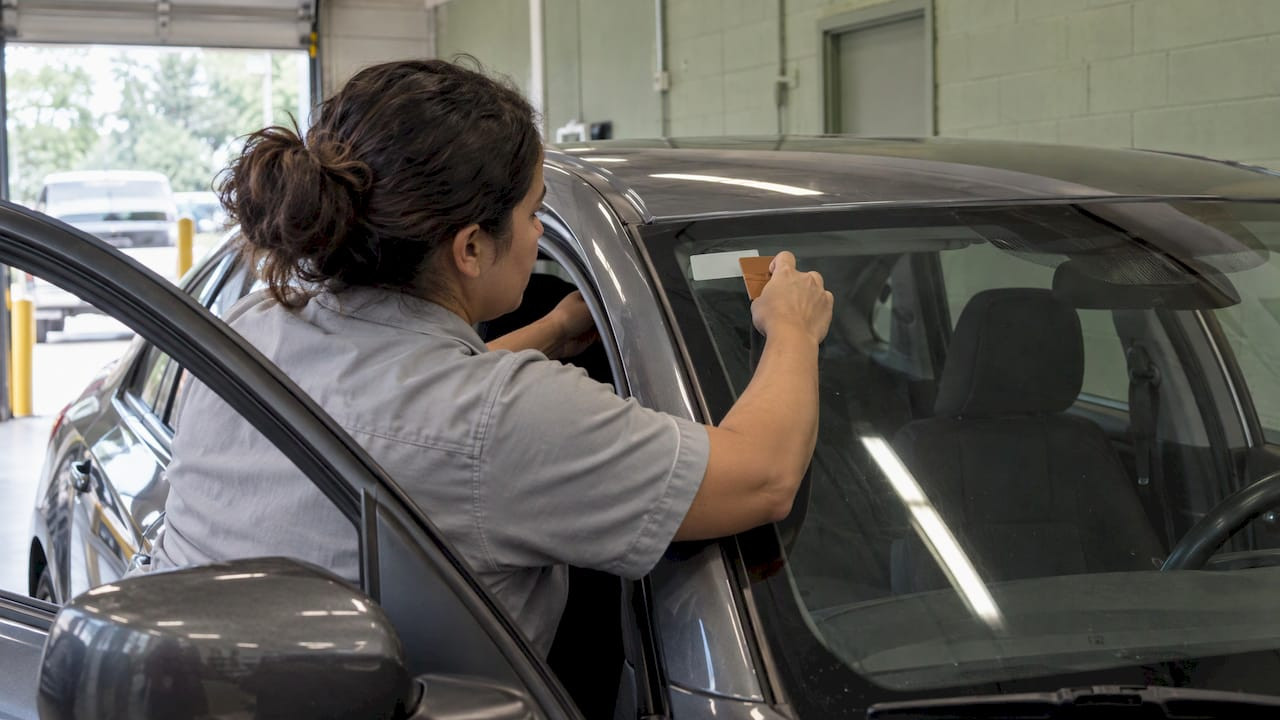
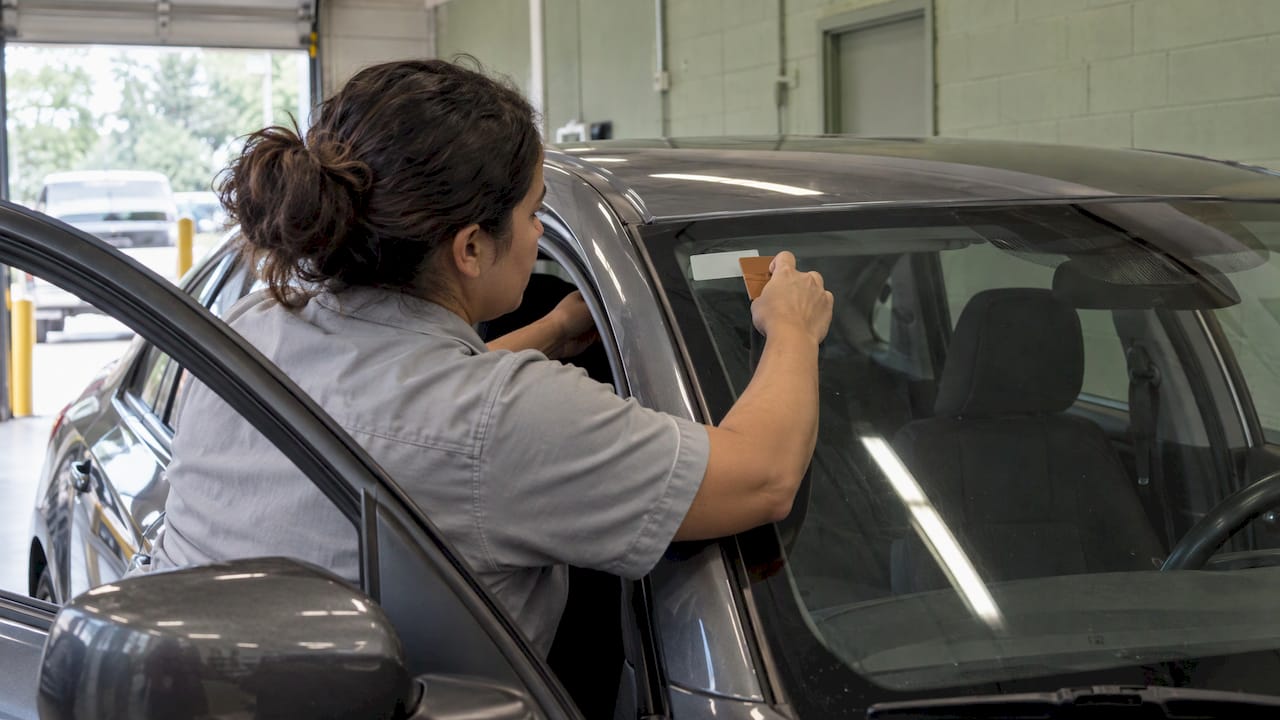
- Applying a parking decal so it holds
- Heat, sun and water: will the adhesive last?
- When a decal loses its tack
- Removing a decal and its residue at renewal
- Specifying decals: a short checklist for operators
- Our perspective
- Order permit decals in the format your lot needs
- FAQ
- Sources
Permanent, removable and repositionable: what actually differs
Parking decals use pressure-sensitive adhesive, meaning the bond forms when the decal is pressed onto the surface, with no water or heat needed. Within that family, three grades matter to an operator.
Permanent adhesive. It offers the strongest anchoring and may not remove cleanly. Oracal, a major manufacturer of graphic film, describes permanent adhesive as stronger anchoring that may not come off cleanly, with a high-tack variant intended for hard-to-stick low-energy plastics and powder-coated surfaces. For a standard permit on glass, that high-tack grade is rarely the right fit.
Removable adhesive. Oracal states that it removes cleanly within two to three years of application from most properly prepared, smooth, sealed surfaces. After three years or more, removal properties may diminish and the adhesive can become more permanent. A permit program with annual or semester renewals sits well inside that window.
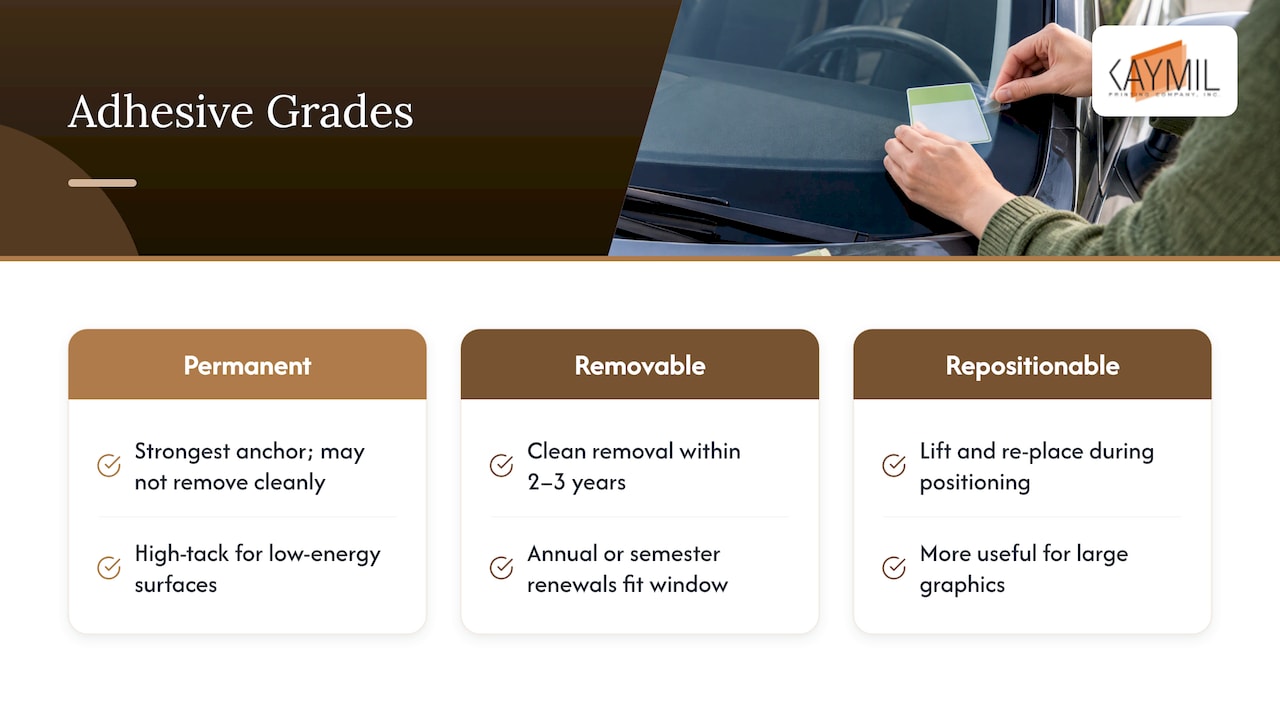
Repositionable adhesive. This grade lets an installer lift and re-place the film during positioning. It matters more for large graphics than for a permit decal that is placed once, so most permit programs choose between the first two.
Which grade fits which program
| Program type | Typical term | Adhesive priority |
|---|---|---|
| Monthly or annual garage permits | 1 year | Removable, so renewal does not leave glue behind |
| University or hospital employee decals | Semester to multi-year | Removable if under three years, permanent for longer terms |
| Municipal or disability permits | Multi-year, regulated | Tamper-evident permanent bond, per spec |
| Gated or secured lots | Any | Permanent, so decals cannot be moved to another vehicle |
The table is a starting point. The deciding questions are how long the decal stays on the glass, who removes it, and whether transfer between vehicles is a risk you need to prevent.
Tamper resistance: what a regulated spec looks like
When a permit has to prove itself, the adhesive becomes part of the security feature. Hawaii’s disability parking permit program publishes decal specifications that make a useful model for any operator writing requirements:
- The material must resist cracking, peeling, blistering or temperature change for at least 60 months on a parking placard.
- It must be flexible and of such composition that, once applied, it cannot be removed intact.
- The pre-coated adhesive must form a durable bond to clean, dry surfaces for the life of the decal.
- The adhesive must not exude from the edges, so packaged decals do not stick together.
- The protective liner must peel off without soaking, and the total thickness of decal, adhesive and liner must not exceed 0.012 inch.
Not every lot needs a 60-month, destruct-on-removal decal. The list is still useful because it shows the properties worth putting in a bid or an order: service life, behavior on removal, edge cleanliness and liner release. Municipal buyers who want a fuller spec template can use our guide to RFP-ready specs for city parking permit decals.
Matching the adhesive to the surface
Adhesion is a matter of surface energy. Smooth, rigid, high-energy surfaces such as glass and painted metal accept standard permanent pressure-sensitive adhesive readily. Low-energy plastics, powder coatings and textured finishes resist it, and that is where manufacturers specify higher-tack grades.
For parking operators, the surfaces come down to three cases:
- Interior windshield or side glass. The most common permit location, and the easiest. Glass is smooth and rigid, and a decal applied to the inside is protected from car washes and road grit. Our article on windshield permit placement that lasts covers where the decal should go.
- Painted body panels, bumpers and hang-tag alternatives. Used by some campuses and gated communities. Paint condition, clear coat age and aftermarket finishes all change how the bond behaves and how the decal comes off.
- Tinted or coated glass. Window tint sits on the inside surface of the glass, so an interior decal ends up touching the tint film. Removal there needs extra care, which we address below.
Matching the grade to the surface is also a cost decision. Specifying an adhesive more aggressive than the surface needs adds no value and makes removal harder, so the cleanest result is the lightest grade that holds for the full permit term.
Where a decal is not the right carrier at all, for example when drivers switch between vehicles, a hang tag avoids adhesive entirely. Our piece on reinforced hang tags for parking operators covers that option.
Applying a parking decal so it holds
Most lifting, bubbling and early failures trace to installation, not to the adhesive. Industry guidance is consistent on the steps.
1. Control the temperature
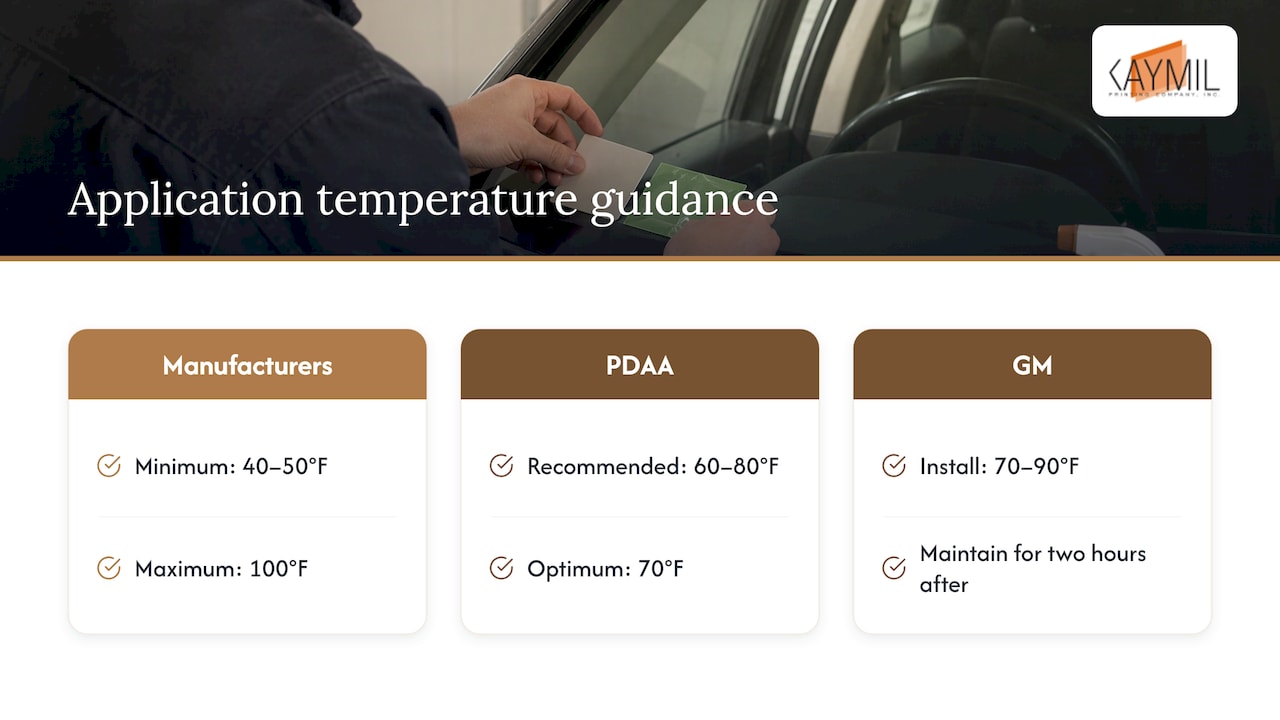
The Professional Decal Application Alliance (PDAA) notes in its VIP guide that most vinyl manufacturers specify a minimum application temperature of 40 to 50°F and a maximum of 100°F. The PDAA itself recommends a surface and air temperature of 60 to 80°F, with 70°F optimum. GM’s factory decal instructions are narrower still, at 70 to 90°F during installation and for two hours afterward.
For an operator, that means a decal handed to a driver on a freezing morning or a hot, sun-baked afternoon is more likely to fail. If your permit office issues decals in a booth, an enclosed garage office or an indoor lobby is a better installation point than the open lot in January.
2. Clean the glass properly
GM’s instructions call for washing with soap and water, then cleaning with isopropyl alcohol so no film or oil remains. Residue from glass cleaner, wax or old permits is the usual reason a new decal peels at the corners. A decal bonds to what is on the glass, not to the glass itself.
3. Position, then press
For larger decals, GM describes a wet technique: a surfactant of three drops of dish soap in 24 ounces of water lets the installer reposition the decal before the adhesive grabs. Most permit decals are small enough to place dry on the first try, but the principle holds: confirm placement before pressing hard, since pressure activates the bond.
Press with a smooth-edged squeegee, using firm, overlapping strokes from the center outward. The PDAA says to push air toward open areas. If a bubble forms, FastSigns.pdf) advises puncturing it with a pin and pressing it flat, rather than slitting the vinyl.
4. Give the bond time
The PDAA reports that adhesive wet-out averages 24 hours at 70°F, and full bond strength arrives after about 72 hours at that temperature. GM likewise advises against high-pressure washing for 72 hours. On a permit program, that translates into one line of instruction on the permit handout: do not run the vehicle through a pressure wash for three days after the decal goes on.
Heat, sun and water: will the adhesive last?
Outdoor exposure is hard on decals, but a decal inside a windshield sees far less of it than one on a bumper. Heat is the main stress: a closed car in summer can run hot enough to soften adhesive and speed up fading of printed inks. The Hawaii specification quoted above, with its 60-month requirement to resist cracking, peeling, blistering or temperature change, shows what a rigorous durability target looks like.
For permits that need to stay legible, the face material matters as much as the adhesive. Lamination and UV protection protect the print, and the adhesive then only has to hold. Two of our guides go deeper: laminated vs. unlaminated parking permits and UV protection for permits. If permits must be visible at night or on camera, see our article on reflective permit decal specifications.
When a decal loses its tack
A decal that has lifted at a corner has usually met one of three problems: a dirty surface, a cold installation, or age. The PDAA explains that colder temperatures slow or stop adhesive wet-out. Re-pressing the decal firmly in the proper temperature range helps if the surface was clean. Installers can also post-heat tight-fitting, air-free vinyl to 200 to 225°F and re-squeegee as it cools to about 100°F, but that is a trade technique for graphics. It is not a procedure to hand to drivers for a windshield.
For permits, the practical answer is simple. A decal that has lifted should be replaced, not nursed along, because a permit that peels can be read as a permit that was moved. Build a replacement path into your permit process: a set price or a free replacement on presentation of the old decal, a front-desk swap, and a clear instruction to clean the glass first.
Removing a decal and its residue at renewal
Residue is the complaint operators hear at renewal time, particularly from drivers with tint, older paint or a leased vehicle. A few facts shape how to talk to them.
- Age matters. Oracal states removable adhesive can become more permanent after three years or more. A one-year permit should come off easily. A decal left on for four summers will not.
- Heat helps, within reason. Warming the decal softens the adhesive. A hair dryer on medium is the safe tool, and a heat gun is not needed for a small decal.
- Peel low and slow. Lift a corner with a plastic edge, never a metal blade, and peel at a shallow angle.
- Treat leftover adhesive separately. Use a remover rated for glass or automotive finishes, applied to a cloth, then wash the area with soap and water.
- Protect tint. Tinted glass is where drivers have the most to lose. Our guide, protecting tint, paint and dash when removing permit adhesive, is written to be handed to drivers at renewal.
A one-page removal sheet that goes out with each renewal notice reduces desk visits and damage claims, and it costs almost nothing to print.
Specifying decals: a short checklist for operators
Before ordering, write down five things:
- Permit term. One semester, one year or several years.
- Surface. Inside glass, exterior glass, paint or another substrate.
- Removal expectation. Clean removal at renewal, or tamper-evident destruction.
- Visibility. Daylight, night or camera reading, and any sequential numbering or barcode needed for enforcement.
- Installation conditions. Who applies the decal, where, and in what season.
With those answers, the adhesive choice usually becomes obvious, and a supplier can quote the right construction on the first pass.
Our perspective
Operators rarely complain about the adhesive itself. They complain about the outcome: a permit that curled in August, or a driver who needs a razor blade to get it off in September. Almost every one of those cases starts with a decal ordered by price and size, with no conversation about term, surface and removal.
Since 1937 we have printed for parking operators, and permit decals sit alongside our valet tickets, hang tags and parking forms. Operators order from us with sequential numbering, logos, colors and security features, and that same attention belongs on the adhesive decision. State the permit term and the surface, and the construction follows.
Our view is that a decal specification should read like the Hawaii example above: a service life, a removal behavior and an installation condition, in writing. It protects the operator on enforcement, and it protects the driver at renewal.
Richard
Order permit decals in the format your lot needs
Caymil makes custom parking permit decals for lots, garages, campuses, hospitals and municipalities. Permit decals are listed on our site at $88, and we offer round and badge-shaped window decals for programs that want a distinct shape for each permit class. Browse permit decals to start an order, and give us your permit term and surface so the decal matches the way you run your lot.
Our permit decals also fit alongside the rest of the parking program: valet tickets, machine-issued tickets, hang tags and forms, all available from one supplier on the Caymil site.
FAQ
Is permanent or removable adhesive better for a parking permit decal?
For annual or semester permits, removable adhesive is the usual choice, because it is designed to come off cleanly within about two to three years. For permits that must resist transfer between vehicles, a permanent adhesive with tamper-evident behavior is the better fit. The deciding factor is how long the decal stays on and who removes it.
How long should a decal sit before the adhesive reaches full strength?
The PDAA reports full bond strength after about 72 hours at 70°F, with wet-out averaging 24 hours. Tell drivers to avoid pressure washing for three days after installation. Cold weather slows the process, so installation at room temperature gives the best result.
Why is my parking decal peeling at the corners?
The most common causes are a dirty or oily surface, installation in cold or very hot weather, and not pressing the decal firmly from the center outward. Clean the glass with soap and water and isopropyl alcohol, then apply a fresh decal at 60 to 80°F. A lifted permit is best replaced rather than pressed back down.
How do drivers remove a decal without leaving residue?
Warm the decal gently with a hair dryer, lift a corner with a plastic edge and peel slowly at a low angle. Treat leftover adhesive with a remover suited to glass or automotive finishes, applied to a cloth, then wash the area with soap and water. Drivers with tinted glass should follow our permit adhesive removal guide.
Sources
- Parking Permit Expiration Decal Specifications, Hawaii DCAB
- Digital Inkjet Media Selection Guide, Oracal Americas
- PDAA VIP Guide, 5th Edition
- GM decal installation instructions
- FASTSIGNS RTA application sheet.pdf)