Hotel Package Parking Deals: What Operators Need to Know
A hotel package parking deal, in operational terms, is the complete set of ticketing and validation supplies and workflows a hotel or parking operator deploys to deliver prepaid or validated parking benefits to guests. That includes printed vouchers, pre-validated tickets, permit hang tags, barcoded or magnetic-stripe media, and the supporting PARCS–PMS workflows that settle those benefits at exit.
Before placing a supply order or drafting an RFP, confirm three things:
- Validation journey type: ticket-on-entry/pay-on-foot, ticketless/LPR, or hybrid
- PARCS compatibility: confirm your system (SKIDATA, Amano, FLASH Parking, Scheidt & Bachmann, Flowbird, or T2 Systems) accepts the media format you intend to order
- PMS platform: Maestro, Mews, and Agilysys each handle folio posting and guest recognition differently, which affects whether digital or printed validation is the right fit
Caymil Printing Co. has supplied compatible ticket formats to hotels and parking operators across the United States since 1937. The sections below walk through every decision point, from validation model selection through procurement specs and acceptance testing.
Key Takeaways
A hotel package parking deal is the full set of ticketing supplies and validation workflows a hotel deploys to deliver prepaid or validated parking, and getting the media specs right from the start prevents the most common operational failures.
| Point | Details |
|---|---|
| Define the journey first | Choose ticket-on-entry, ticketless/LPR, or hybrid before selecting any media format or digital platform. |
| Specify security features in every PO | Sequential numbering, matched barcode symbology, and UV-stable thermal coating are non-negotiable for audit and scan reliability. |
| Require integration references | Demand production-deployed PARCS–PMS connector references for your specific vendor pair before contract signing. |
| Keep printed fallback stock | Maintain pre-numbered hang tags and validation tickets for LPR outages, plate-read failures, and manual overrides. |
| Caymil for compatible supplies | Caymil stocks and custom-prints tickets compatible with SKIDATA, Amano, FLASH Parking, Scheidt & Bachmann, and Flowbird for fast nationwide delivery. |
Table of Contents
- What Is a Hotel Package Parking Deal, and Which Validation Model Fits?
- How Do Entry/Exit Workflows Affect Your Printed Supply Needs?
- What Printed Ticket and Permit Formats Should You Order?
- Printed Supplies vs. Digital Validation: Which Should You Buy?
- What Integration Points and RFP Items Do You Need to Specify?
- How Do You Design Stacking Rules, Quotas, and Audit Controls?
- Procurement Checklist and Sample Order Line Items
- What Does a Deployment and Testing Plan Look Like?
- Compatibility Notes for Major PARCS and PMS Vendors
- What Procurement Mistakes Does a Ticket Manufacturer See Most Often?
- Caymil Supplies Compatible Tickets for Every Hotel Parking Workflow
- Sources
- FAQ
What Is a Hotel Package Parking Deal, and Which Validation Model Fits?
Parking validation programs fall into four primary models, and the one you choose determines your ticket format, settlement method, and reconciliation workload.
- Full validation: The hotel absorbs the entire parking fee. Common for loyalty-tier complimentary access and VIP packages. Printed pre-validated tickets or digital credits both work here.
- Partial time validation: A set number of hours are comped; the guest pays the remainder. Requires a PARCS that can apply a time credit at payment, which most modern systems support.
- Flat discount validation: A fixed dollar amount is deducted at exit. Simpler to administer with printed voucher books; digital systems apply the discount automatically.
- Rate-tier validation: Loyalty tier or room-rate category determines the discount level. Requires PMS-to-PARCS data pass-through to identify the guest’s tier at exit.
Billing maps directly to model choice. Prepaid credits reduce disputes and simplify accounting; per-transaction invoicing ties cost to usage but creates monthly reconciliation overhead. Partner-funded models (restaurant, event sponsor) work well with flat discount or full validation, since the funding source is clearly defined per transaction.
Pro Tip: Choose prepaid credits for hotel-funded validation and per-transaction invoicing for partner-funded programs. Mixing both in one system without clear stacking rules is the most common source of settlement disputes.
How Do Entry/Exit Workflows Affect Your Printed Supply Needs?
The credential type your facility uses determines how much printed media you actually need on hand.
Ticket-on-entry / pay-on-foot workflows require physical tickets at every entry lane. Roll tickets for dispenser printers are the standard format here. Pre-validated tickets can be issued at the front desk or restaurant and presented at the pay station to apply the discount before exit. This workflow has the highest printed-media volume.
Hybrid access approaches use LPR or RFID/keycard for registered guests and ticket-based or QR systems for transient visitors and event attendees. Hotels running hybrid systems typically carry two media types: machine-issued roll tickets for transient lanes and printed voucher books or hang tags for guest-facing staff.
Ticketless LPR-only facilities still need printed fallback stock. Network outages, plate-read failures, and rental car plates that don’t match a reservation all require a manual override. Keeping a supply of pre-numbered hang tags and blank validation tickets on hand is standard operating practice for reliable hotel parking operations.
What Printed Ticket and Permit Formats Should You Order?
Printed supply specs belong in every purchase order. The format, material, and security features you specify directly affect scan reliability, audit accuracy, and outdoor durability.
Common formats hotels and parking operators order:
- 2-part, 3-part, and 4-part valet tickets (carbonless multipart for customer copy, valet copy, accounting copy)
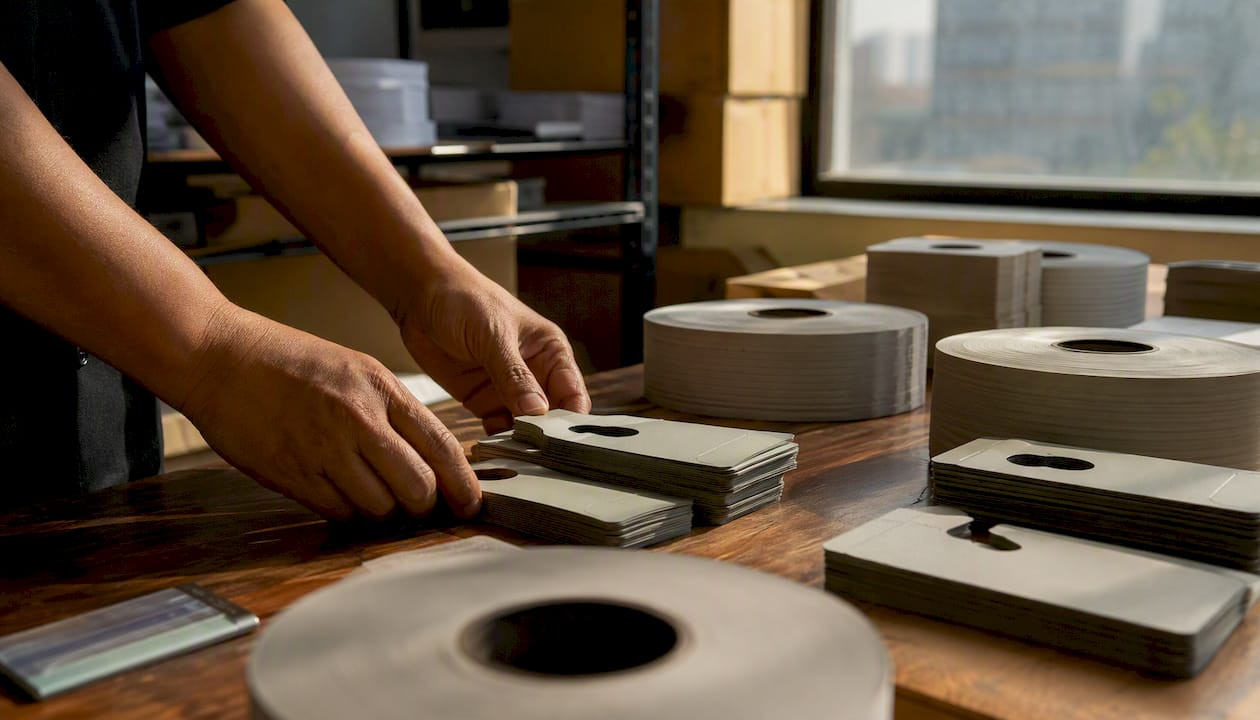
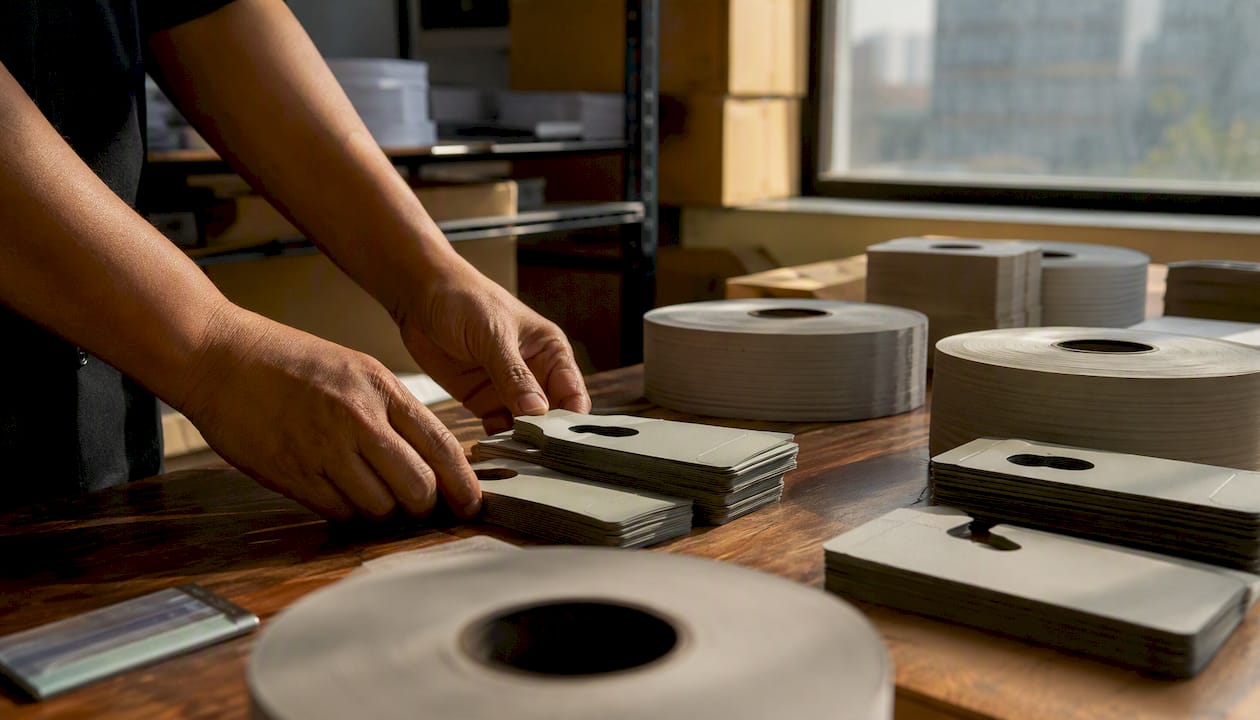
- Roll tickets for dispenser printers (machine-issued, thermal, sized to your hardware model)
- Barcoded valet tickets for scan-read validation at kiosks or exit terminals
- Permit hang tags for recurring access (employee lots, monthly parkers, VIP reserved spaces)
- Voucher books for restaurant or event validation programs
Security and operational features to specify in every PO:
- Sequential numbering for audit trails and reconciliation
- Barcode symbology matched to your PARCS scanner (Code 39, Code 128, QR, or PDF417)
- Magnetic stripe where your pay station requires it
- Tamper-resistant inks for high-value vouchers
- UV-stable thermal coating for any ticket used outdoors or in open-deck garages
Material choice follows environment. Indoor kiosk rolls use standard thermal paper. Outdoor or open-deck applications need UV-stable thermal to prevent barcode fading and exit-read failures. Hang tags require heavier cardstock (typically 80–110 lb cover stock) to survive repeated handling. Ticket media selection is one of the most overlooked variables in procurement, and wrong material is the leading cause of scanner read failures in the field.
Caymil manufactures all of these formats with custom branding, sequential numbering, and security options, and stocks millions of units for fast nationwide shipping.
Printed Supplies vs. Digital Validation: Which Should You Buy?
The right answer depends on transaction volume, integration complexity, and your team’s capacity to manage a software rollout.
Physical and virtual validations coexist in most hotel environments. Printed voucher books and barcode tickets are common, auditable, and can be set to expire after a fixed date or number of uses. Digital validation automates reconciliation and supports configurable stacking rules, prepaid credits, quotas, and role-based controls, but requires working PARCS–PMS–loyalty integrations before it delivers those benefits.
| Factor | Printed/Pre-Validated Supplies | Digital Validation Platform |
|---|---|---|
| Integration requirement | None beyond PARCS scanner compatibility | PARCS + PMS + loyalty API connections |
| Reconciliation method | Manual (sequential number audit) | Automated reports and usage logs |
| Fallback capability | Is the fallback | Requires printed fallback for outages |
| Best fit | Small properties, event-driven, outage coverage | Mid-to-large, multi-facility, loyalty programs |
| Setup cost | Low (print order only) | Higher (hardware, integration, testing) |
Digital validation supports ticket-based and ticketless journeys, automatic application at payment, multi-provider validations, configurable stacking rules, prepaid credits, quotas, and role-based controls. Those features are worth the integration effort at scale. For a 150-room property running 40 validations per day, a well-stocked printed supply program with sequential numbering and a clear reconciliation process is often the faster, lower-risk path.
What Integration Points and RFP Items Do You Need to Specify?
Four integration points determine whether your validation program runs without friction: PARCS transaction data, PMS guest recognition, loyalty platform credentialing, and revenue management system eligibility. Missing one creates gaps that show up as guest disputes or unreconciled charges.
Real-time API connections between PARCS and PMS eliminate manual front-desk friction and improve revenue tracking. Your RFP should require explicit statements on each of the following:
- Supported PARCS vendors with production-deployed connectors: SKIDATA, T2 Systems, FLASH Parking, Amano, Scheidt & Bachmann, Flowbird
- Supported PMS platforms: Maestro, Mews, Agilysys
- API fields: license-plate or ticket ID pass-through, folio posting endpoint, validation application at payment, error handling, and audit log format
- Real-time vs. batch mode options and failover behavior
- Production references for each connector (not pilot or sandbox deployments)
PMS–PARCS–loyalty–RMS are the four required integration points for a complete hotel parking validation system. Acceptance test scripts should cover: reservation add-on → arrival recognition → validation applied at exit → folio posting → reporting. Require signed acceptance criteria before go-live.
How Do You Design Stacking Rules, Quotas, and Audit Controls?
Validation policy design is where most revenue leakage originates. Technology alone does not prevent misuse; governance does.
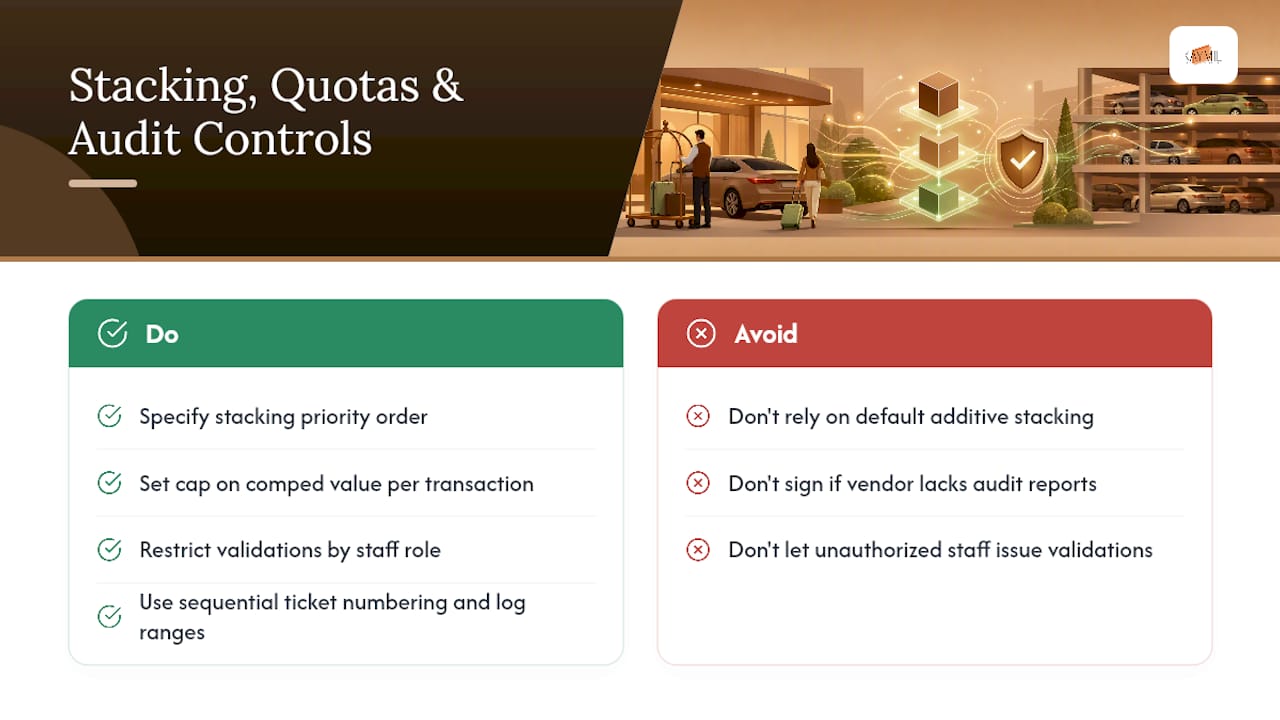
Stacking rules define what happens when a guest holds multiple validation entitlements (loyalty tier + restaurant + event). Specify a priority order, a cap on total comped value per transaction, and whether consumed value is settled against the granting party or pooled. Without explicit stacking rules in your PARCS configuration, the system defaults to additive behavior, which can zero out a transaction entirely.
Role-based permissions limit which staff can issue which validation type. Front desk staff should issue loyalty-tier and room-rate validations; restaurant staff issue flat-discount or time-based validations; event coordinators issue event-specific validations with a quota cap per event. Reducing ticketing errors through role controls is faster and cheaper than disputing charges after the fact.
Pro Tip: Require your PARCS vendor to provide a role-permission matrix and a sample reconciliation report before contract signing. If they cannot produce both, the audit capability is not production-ready.
Sequential numbering on printed tickets creates the audit trail that reconciliation reports depend on. Every voucher book and validation ticket order should include a starting number, an ending number, and a record of which staff member received which range.
Procurement Checklist and Sample Order Line Items
A structured procurement process prevents the most common ordering mistakes: wrong barcode symbology, undersized roll diameter for the dispenser, and missing sequential numbering.
Step-by-step procurement checklist:
- Define the validation journey (ticket-on-entry, ticketless, or hybrid)
- Choose the media mix (roll tickets, valet multipart, hang tags, voucher books)
- Specify material and security features (thermal grade, UV-stable, sequential numbering, barcode type)
- Confirm PMS and PARCS compatibility for the media format
- Request production samples and verify scan rates on your hardware
- Confirm lead time, minimum order quantity (MOQ), and expedited options
- Finalize imprint specs (logo, instructions, color, numbering schema)
Sample order line items to paste into a PO:
- Ticket format: 2-part carbonless valet ticket, 3.5" × 8.5"
- Paper stock: 60 lb carbonless NCR, white/canary
- Barcode: Code 128, 1.5" × 0.5", position top-right
- Numbering: sequential, 6-digit, starting at 000001
- Imprint: hotel logo, instructions, terms, one color
- Packaging: fanfold, 500 per pack
For roll tickets, specify roll diameter, core size, and whether your dispenser is an Intermec 2100 or equivalent. Roll tickets for the Intermec 2100 are a stocked format at Caymil. Setup fees apply to custom imprints; unit cost drops significantly at higher quantities, so consolidating orders across properties reduces per-unit cost.
What Does a Deployment and Testing Plan Look Like?
A phased rollout catches configuration errors before they affect revenue.
- Pilot scope: Run one entry lane and one validation touchpoint (front desk or restaurant) for two to four weeks before full deployment.
- Peak-hour stress test: Validate that scan rates hold under high transaction volume and that folio posting completes within your PMS timeout window.
- Parallel run: Keep printed fallback stock active alongside digital validation for the first 30 days.
- Failure-mode tests: Simulate network outage (manual ticket issuance), plate-read failure (manual hang-tag override), and duplicate validation attempt (stacking cap trigger).
- Staff training: Front desk and restaurant staff need a 30-minute walkthrough covering how to issue validations, how to handle exceptions, and where to find the reconciliation report.
Hotel parking solutions including PMS integration and digital ticketing reduce disputes and manual processes when deployed with proper acceptance testing. Barrier gate hardware and PMS integration fees are material line items in any hotel parking project budget and should be scoped before comparing printed-only vs. full-digital options.
Compatibility Notes for Major PARCS and PMS Vendors
Media compatibility varies by vendor and hardware generation. Confirm these specifics before ordering.
- SKIDATA: Accepts thermal roll tickets with Code 128 or QR barcodes; magnetic stripe supported on select gate models. Digital validation via SKIDATA’s own platform supports ticket and plate identification.
- T2 Systems: Primarily software-driven; confirm barcode symbology with your T2 account team before ordering custom stock.
- FLASH Parking: Cloud-based PARCS; LPR-first but supports QR and barcode ticket workflows for transient lanes.
- Amano: Long-established hardware compatibility with standard thermal roll tickets; confirm roll diameter and core size against your specific Amano gate model.
- Scheidt & Bachmann: Supports magnetic stripe and barcode tickets; confirm symbology and track format with your S&B integration team.
- Flowbird: Primarily pay-and-display and pay-on-foot; confirm ticket format compatibility for any lane-based deployment.
For PMS platforms: Maestro’s parking module supports direct folio posting with several PARCS vendors; confirm the specific connector version. Mews uses an open API model, so PARCS integration depends on the PARCS vendor’s Mews connector. Agilysys supports parking add-ons through its PMS API, but production references for your specific PARCS pairing are worth requesting before committing to a configuration. Always ask for a parking system compatibility reference from a property running your exact PARCS + PMS combination.
What Procurement Mistakes Does a Ticket Manufacturer See Most Often?
The most consistent errors Caymil sees when hotels and parking operators place orders fall into three categories.
Wrong barcode symbology is the most common. A hotel orders Code 39 tickets because that is what a previous vendor supplied, but the new PARCS scanner reads Code 128 only. Every ticket fails at the exit lane. The fix is simple: pull the PARCS hardware spec sheet before finalizing the barcode field in your PO.
Underestimating outdoor exposure is the second. Thermal tickets used in open-deck garages or surface lots without UV-stable coating fade within weeks in direct sunlight, producing unreadable barcodes at exit. UV-stable thermal stock costs marginally more per roll but eliminates a recurring operational failure.
Forgetting sequential numbering is the third. Operators order plain-stock roll tickets to save cost, then discover at month-end that they cannot reconcile issued validations against PARCS transaction logs because there is no ticket number to match. Sequential numbering is not optional for any property that needs an audit trail, which is every property.
Caymil Supplies Compatible Tickets for Every Hotel Parking Workflow
Caymil manufactures and stocks the full range of printed media hotels and parking operators need to run a package parking program: machine-issued valet tickets for high-volume dispenser lanes, barcoded valet parking tickets for scan-read validation at kiosks, 2-part valet tickets for standard valet operations, and forms for parking including voucher books and validation forms.
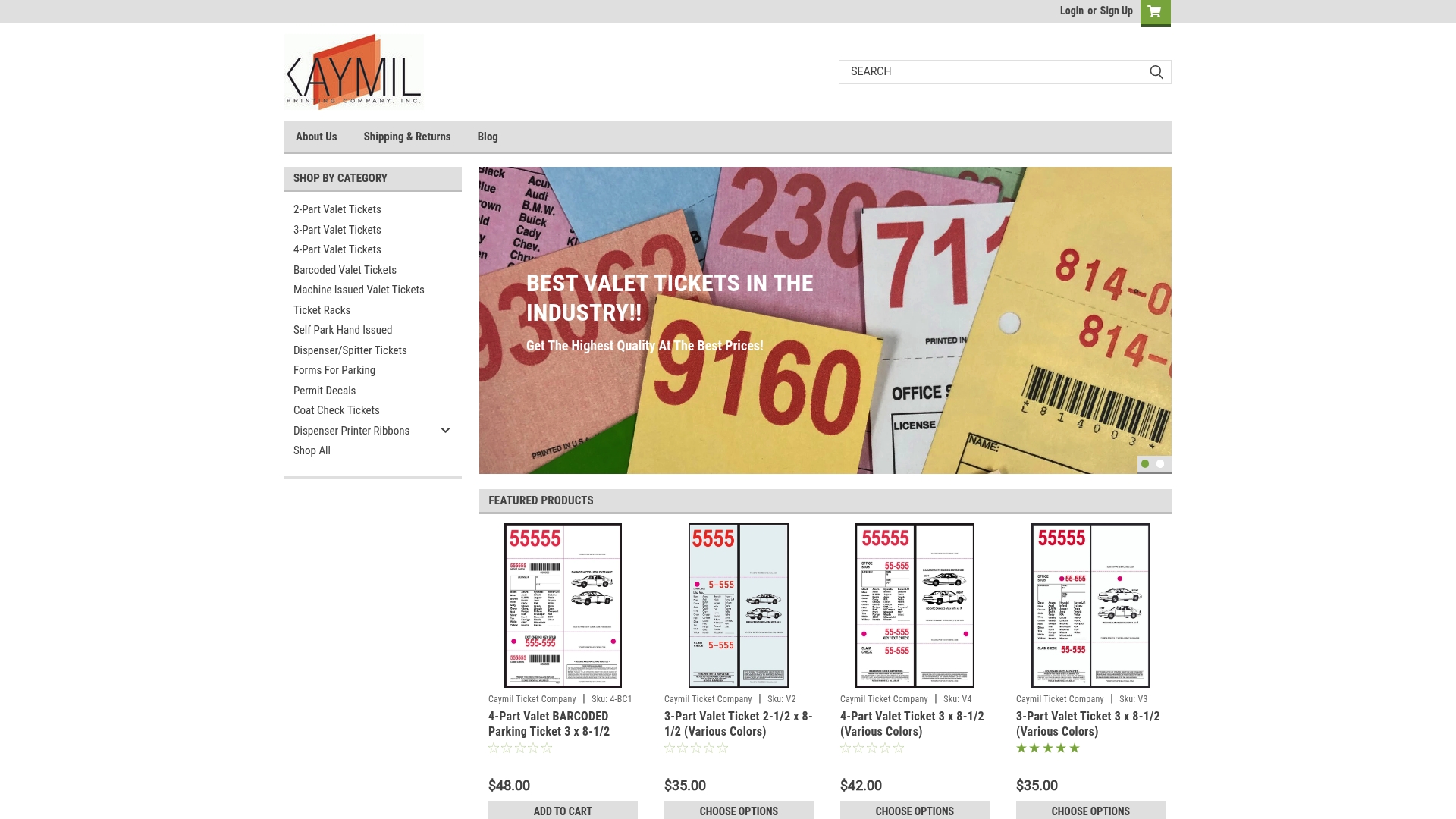
Every format is available with sequential numbering, custom branding, security inks, and barcode options compatible with SKIDATA, Amano, FLASH Parking, Scheidt & Bachmann, Flowbird, and other major PARCS systems. With millions of units in stock and fast nationwide shipping, Caymil can fulfill standard orders quickly and custom orders with short lead times. Request production samples, confirm compatibility with your dispenser model, and get a quote at Caymil.
Sources
- Parking Validation Software Systems: Digital Validation in Retail and Commercial Environments | Parking Tech
- Connecting Hotel Parking to Your Loyalty Program: A Revenue and Retention Guide | Hotel Facility Guide
- Digital Parking Validation Buyer’s Guide & RFP checklist | SKIDATA
- Parking Mobility (industry guidance)
- Validation Solutions: An Introduction — Parking Industry
FAQ
What is a hotel package parking deal in operational terms?
It is the set of printed or digital ticketing and validation supplies a hotel deploys to deliver prepaid or discounted parking, including voucher books, pre-validated tickets, permit hang tags, and barcoded or magnetic-stripe media paired with PARCS and PMS workflows.
Which barcode symbology should hotel parking tickets use?
Match the symbology to your PARCS scanner spec: Code 128 is the most widely supported across SKIDATA, Amano, and Flowbird systems, but confirm with your hardware documentation before ordering.
Do hotels still need printed tickets if they use LPR?
Yes. Printed hang tags and pre-numbered validation tickets serve as the documented manual fallback when LPR systems experience outages, plate-read failures, or rental car mismatches.
What PMS platforms integrate with major PARCS vendors?
Maestro, Mews, and Agilysys are the most commonly integrated PMS platforms; each uses a different connector model, so request a production reference for your specific PARCS pairing before finalizing the integration scope.
Where can operators order compatible hotel parking tickets?
Caymil stocks and custom-prints tickets compatible with SKIDATA, Amano, FLASH Parking, Scheidt & Bachmann, and Flowbird, with sequential numbering and barcode options available for fast nationwide shipping.
Recommended
- Hotel Parking’s Role in the Guest Experience - Caymil Printing Co., Inc.
- Hotel Self-Park vs Valet: What Travelers Need to Know - Caymil Printing Co., Inc.
- Optimize hotel parking: Integration, valet, and guest experience - Caymil Printing Co., Inc.
- Why Hotels Need Custom Parking Solutions That Work - Caymil Printing Co., Inc.