
Scratch-Off Permit Panels: A Guide for Parking Operators

For a parking operator, a scratch-off permit panel is the printed panel on a daily or event permit where the driver scratches off the month, day and year to activate it. It lets you sell permits in advance and in bulk, and the driver chooses the date. Because the date is the driver’s own mark, the design of that panel decides how well the permit controls your lot. The panel needs clear date fields, a coating that scratches off cleanly, and a permit that carries a number, your branding and a way to spot tampering.
The phrase also turns up in the trucking trade, where a “permit panel” is a metal holder for fuel-tax stickers. That is a different product for a different buyer. This guide is for the people who run lots, garages, hotels, casinos and venues.
TL;DR
- A scratch-off permit is activated when the driver scratches off the month, day and year, so one printed stock serves any date within your rules.
- Universities such as the University of South Florida sell daily scratch-off permits at an office, so visitors can buy ahead and choose the day later.
- Specify the date panel layout, sequential numbering, branding and security features before you order, because they decide how fast your attendants can verify a permit.
- Train attendants to check three things in seconds: the scratched date, the permit number and whether the permit sits where they can see it.
- Caymil prints custom temporary parking permits and permit decals with sequential numbering, logos and security features for operators.
Table of Contents
- What a scratch-off permit panel is
- Why the panel matters for revenue and control
- What to specify in the panel design
- How to run scratch-off permits step by step
- Common mistakes with date-panel permits
- A different product with the same name: truck permit panels
- Our perspective
- Order permits built for your lot
- FAQ
- Sources
What a scratch-off permit panel is
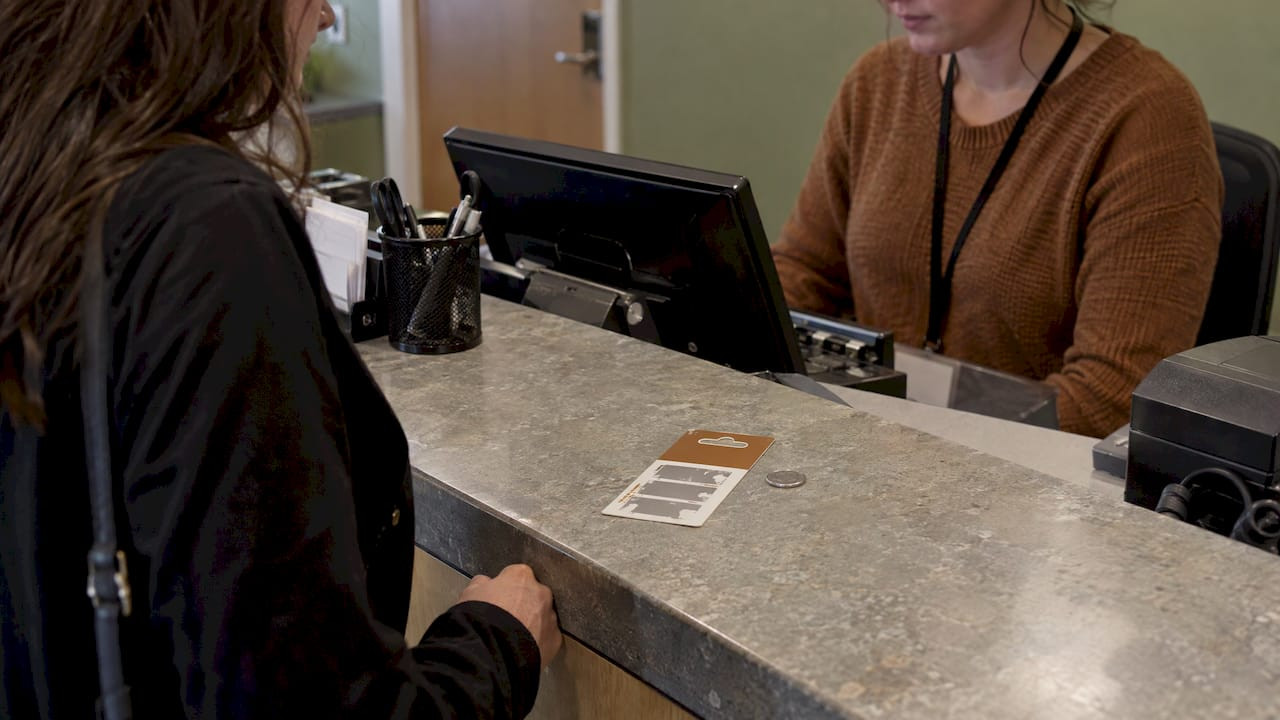
A scratch-off permit is a printed permit with a row of date fields covered by a thin opaque coating. The driver scratches off the coating over the month, the day and the year they will park. Until they do, the permit is not valid for any day. Once they do, the revealed date shows attendants and enforcement staff exactly when the permit applies.
The “panel” is that date area. Sometimes it is the whole permit. On a hang tag or a larger card it may be one block among several, next to the lot name, the permit number and the rules.
The format suits operators who sell more permits than they can date at the counter. A visitor center, a hotel front desk, a campus parking office or an event box office can hold a stack of identical permits and hand them out without writing anything. The driver does the dating.
Where operators already use them
The University of South Florida is a clear public example. Its parking office describes daily scratch-off permits as a way to buy in advance and pick the date by scratching off the month, day and year. They are sold from its Parking Services Building and its Campus Information Center, alongside an online permit for drivers who prefer to print one.
The same logic fits other settings:
- Hotels and casinos that give a complimentary or discounted day of parking to guests of a package or promotion.
- Hospitals that sell visitor permits to families who come back on different days.
- Event venues that want one stock of permits for a season of events, with the date chosen on the day.
- Contractors and vendors who need parking for a single day on a site you manage.
- Garages and lots that sell books of daily permits to employers, who hand them out to staff.
Why the panel matters for revenue and control
A permit that anyone can fill in with a pen can be reused, backdated or copied. A scratch-off panel narrows that. The coating, once removed, cannot be put back convincingly, and the date it reveals is fixed. An attendant can tell at a glance whether a permit was used and for which day.
That helps in three ways.
- Revenue. Each permit is a prepaid day. When the date is scratched and the permit is numbered, you can reconcile permits sold against permits seen in the lot.
- Enforcement. Staff read one clear date instead of a handwritten one. Disputes drop because the date is not open to interpretation.
- Counter speed. Nobody has to write or stamp a date at the point of sale. Lines at the office or desk move faster.
Our own guide on scratch-off tickets for parking operators goes deeper on the revenue side. This article stays on the panel itself: what to specify, how to display it and how to check it.
What to specify in the panel design
Most problems with scratch-off permits come from details that were not decided before printing. Work through these points with your printer before you approve a proof.
Date fields that read quickly
The fields need to be large enough to read through a windshield or from a vehicle window. A common layout gives the month, the day and the year their own boxes. Print the month names or numbers in a fixed order, so that a driver scratches one value per row and the attendant reads one value per row.
Decide whether you want a year field at all. If permits are valid only in the year printed, you can print the year and save a field. If you sell permits that could be used the following year, keep the year field.
Numbering
Sequential numbering gives every permit a unique identity. It lets you log batches handed to a hotel desk, an employer or a vendor, and it makes a lost or stolen batch traceable. Print the number where an attendant can see it without touching the permit, and repeat it on any stub or tear-off you keep for your records.
Branding and lot information
Your logo, lot or facility name and a short rule line (for example, the zones where the permit is valid) tell drivers and staff that the permit belongs to your operation. Custom colors help you tell permit types apart. A visitor permit in one color and a vendor permit in another can be sorted by eye from a distance.
Security features
Because a permit stands in for money, security matters. Options include tamper-evident construction, unique numbering and designs that are hard to copy on an office printer. Our guide to tamper evidence for parking permits covers how to apply a permit so that removal and transfer between vehicles are easy to spot, and how attendants can check one in seconds.
Format: card, hang tag or decal
The panel can sit on different carriers, and the right one depends on how long the permit is used and how it is displayed.
| Format | Best for | Display | Notes |
|---|---|---|---|
| Dated daily card | Visitors, one-day vendors | On the dashboard | Fast to hand out, easy to move between vehicles |
| Hang tag | Repeat visitors, short stays | Hung from the rearview mirror | Visible from outside, reusable if the date panel is not the only control |
| Windshield decal | Longer-term permits | Inside the windshield | Harder to transfer, better for fixed terms |
If you are deciding between a tag and a decal, our comparison of hang tags and windshield permits lays out which one fits which lot.
How to run scratch-off permits step by step
The permit itself is only half the system. The routine around it is what stops leakage.

Step 1: Define who can buy and where
Decide which sales points carry permits: your office, a hotel desk, a box office, an employer account. Fewer points means easier reconciliation. Record the number range each point receives.
Step 2: Set the advance-purchase and validity rules
Write down how far in advance a permit may be bought and whether it is valid for the whole day or for set hours. USF, for example, states that its daily permit is valid for one day only and can be bought up to 14 days in advance. You set your own rules, but print them or post them. A driver who knows the rule scratches the right date.
Step 3: Tell drivers how to scratch
A line on the permit or the handout is enough: scratch off one month, one day and one year, then display the permit face up. Drivers who scratch the wrong date are the main source of disputes, so say it once and clearly. A coin does the job, and drivers should be told to scratch gently so that the number beneath stays readable.
Step 4: Position the permit where staff can see it
The permit should be visible without the attendant opening a door. Tell drivers where to place it: dashboard, mirror hanger or inside the windshield. Our notes on removing permit adhesive are worth sharing with your team if you also use decals, since drivers care how a permit comes off their glass.
Step 5: Check three things on every walk
Attendants should check:
- The date. Is the scratched date today, and is only one date revealed?
- The number. Does it fall in a range you issued, and has it been logged before?
- The placement. Is it displayed as required and not altered?
This takes seconds when the permit is designed for it.
Step 6: Reconcile and reorder
At the end of each day or week, compare permits sold against permits seen. Because the stock is numbered, you can see which batch ran down. Reorder before a busy season rather than during it. For events, our temporary event permit printing guide shows how to plan quantities and lead time, and our guide to the day-of-event parking permit covers the day-of side.
Common mistakes with date-panel permits
Printing too small. A panel that looks fine on a proof is unreadable from three feet away in glare. Test the size at the distance an attendant stands.
Skipping numbering. Without numbers, you cannot trace a batch. One missing stack is then a guess rather than a figure.
Using one color for everything. When visitor, vendor and staff permits look the same, attendants stop reading them closely.
Leaving rules off the permit. If the zone or hours are not printed, every unusual case becomes an argument at the gate.
Letting permits sit at too many desks. Each extra holder is another place to lose track of stock. Give contractor-style permits a defined owner, as in our guide to contractor parking permits.

A different product with the same name: truck permit panels
If you arrived here looking for stainless steel holders that display fuel-tax stickers on a truck cab, that is a vehicle accessory for trucking fleets. Under the International Fuel Tax Agreement, the decals must be placed on the exterior of both sides of the cab, and failing to display them correctly can bring a citation or a trip permit purchase, according to the Oregon Department of Transportation. It is not a parking product, and the rest of this guide does not cover it.
Our perspective
A permit is only as good as the last second of an attendant’s attention. If the date is hard to read, the number is missing or the permit looks like every other one, the attendant waves the car through and the revenue is gone.
Since 1937 we have made tickets and permits for operators, and we build them around that moment. Sequential numbering, logos, custom colors and security features are options on our custom parking tickets and permit products, because each one makes a permit faster to check and harder to misuse.
Our advice is to decide the rules first, then print them. Fix who sells the permits, how far ahead, for which zones, and make the permit say so. A well-designed permit does most of the enforcing before anyone reaches the gate.
Richard
Order permits built for your lot
Caymil manufactures stock and fully customized parking permits, temporary parking permits and permit decals, with options for sequential numbering, logos, security features and custom colors. Operators in parking, hospitality, healthcare and events order directly online and receive nationwide shipping. Start with our parking permit decals, or tell us what your lot needs through our custom parking tickets and permits.
If your permits are part of a valet or ticketed operation, the same numbering and branding logic applies to our valet tickets with barcodes and our ticket racks that keep stock organized at the stand.
FAQ
How does a driver activate a scratch-off permit?
The driver scratches off the coating over the month, the day and the year they plan to park. The revealed date is the day the permit is valid. Until the coating is removed, the permit does not apply to any date.
Can one stock of permits serve different dates?
Yes. Because the driver chooses the date, you do not have to print a separate permit for each day. You can keep a single numbered stock at your office, desk or box office and set an advance-purchase window, as USF does with its 14-day rule.
What should be printed on a scratch-off permit besides the date?
At minimum, the lot or facility name, a unique permit number, the valid zones and the hours. A logo and a color code for each permit type help attendants sort permits from a distance. Security features add a further check at the gate.
Is a scratch-off permit the same as a hang tag?
No. A scratch-off permit describes how the date is set, while a hang tag describes how the permit is displayed. A hang tag can carry a scratch-off date panel, and so can a card or a decal, depending on how long the permit is used.
Are scratch-off permit panels for trucks the same thing?
No. Truck permit panels are metal holders for fuel-tax decals on a cab. Parking scratch-off panels are printed date fields on a permit that you issue to drivers.
Sources
- University of South Florida: Visitor/Daily Permits
- Oregon Department of Transportation: Motor Carrier Education Manual